South African macadamia growers and processors report that 2025 has highlighted several market trends shaping long-term sector stability. Speaking to Farmer's Weekly, Hartman said that "2025 has reminded us that success in the macadamia industry depends on collaboration. Growers and processors must make informed, strategic decisions to secure a sustainable future for South Africa's macadamias." The year started with a favourable outlook before the United States applied a 30 per cent import tariff on South African products. Hartman said that despite the tariff shift, the processor he represents "honoured its price commitments and even accelerated payments to growers, helping cash flow in an industry still recovering from post-pandemic lows."
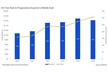
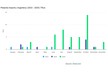
Market dynamics in the in-shell segment remain difficult, with reliance on exports to China noted as a key risk. According to Hartman, China indicated during MacDay 2025 that it is moving toward greater self-reliance and reduced dependence on South African supply. He said China's investment in cracking capacity and rising domestic production gives it stronger leverage in price negotiations. He added that China's expanding processing capacity means it "could in the future directly compete with South Africa in the kernel market," adding pressure on kernel pricing. While in-shell exports have slowed, kernel demand remains stable. Hartman said that 2025 showed a widening price gap between kernel styles, with whole kernels in styles 0 and 1 achieving higher returns than halves or pieces. He noted that growers increasingly feel the effect of variety choice, with Beaumont, traditionally used for in-shell trade, often producing halves when cracked.
He also highlighted kernel usage, stating that halves are "ideal for snacks, confectionery, cereals, and even cooking," supported by targeted marketing to expand demand. On grower-processor coordination, Hartman said the sector cannot influence market prices but can adjust variety decisions and cracking efficiency. He explained that cracking outcomes depend on both genetics and postharvest handling, and that the processor he represents places emphasis on precision to maintain throughput and manage per-unit processing costs. He said that maintaining a reliable grower base supports factory efficiency.
Hartman described 2025 as a period of adjustment for growers and processors, noting that "we have seen first-hand how growers' variety choices, processing efficiency, and market agility all interact to determine success." He said the trends observed this year will influence future production and marketing strategies, and that decisions taken at both farm and factory levels will affect long-term viability.
Source: Farmer's Weekly