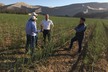
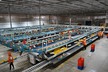
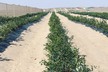
Over the next four weeks, we will provide an overview of Peru's fruit and vegetable sector, focusing on the growing and packing activities in the southern regions of Ica and Arequipa. We will showcase fifteen agro-exporting companies and some trade associations. In this first part, we discuss the country's geography, demography, politics, and economy. Tomorrow, the focus will shift to national data and statistics on fruit and vegetable production and export.
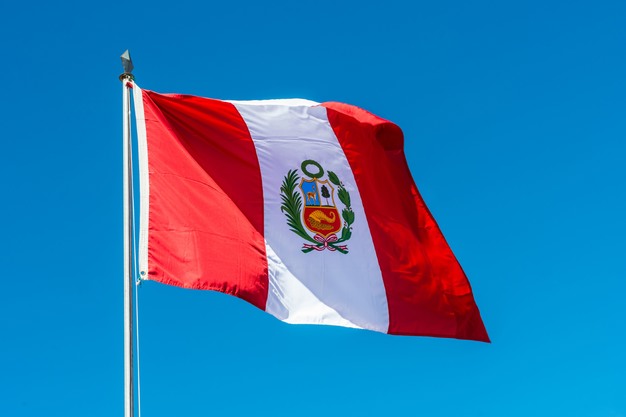 © ID 36037075 © Pixattitude | Dreamstime.com | Dreamstime
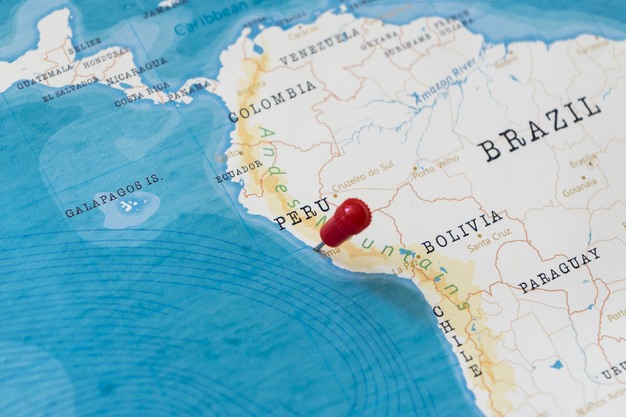
Peru is located on South America's west coast, sharing borders with Ecuador, Colombia, Brazil, Bolivia, and Chile. Its Pacific coastline stretches over 3,000 km. The country is quite large, about 2.5 times the size of Spain and up to 30 times the size of the Netherlands. Peru is divided into three main natural regions: the Coast, a desert strip running parallel to the Pacific; the Andean Highlands, crossed by the Andes mountain range from north to south; and the Amazon Rainforest, situated east of the mountains. These diverse landscapes support a rich and varied biodiversity.
Peru has a population of around 34 million, growing at about 1.1% annually. Approximately 60% live along the coast, 26% in the highlands, and 14% in the jungle. The main language is Spanish, spoken as a first language by over 80% of Peruvians, with Quechua (17%) and Aymara (2%) being the next most common. Over 10% of Peruvians live abroad. Since 2016, there has been a notable increase in Venezuelan migrants entering the country.
Economy
In recent decades, Peru has experienced significant economic growth, mainly driven by mining. Peru is one of the world's largest producers of copper, silver, zinc, gold, lead, and tin—as well as hydrocarbons, tourism, and agricultural and fisheries exports. However, the Peruvian economy still remains vulnerable to fluctuations in international commodity prices, domestic inequality, and high levels of labor informality.
 © ID 139735282 © Hyotographics | Dreamstime.com | Dreamstime
According to the World Bank, Peru is currently classified as an upper-middle-income economy. Between 2000 and 2024, the incidence of poverty (measured by the $3-a-day standard) dropped from 25.5% to 5.1%. In 2024, GDP per employed person was around $30,000 (compared to about $128,000 in the Netherlands). The minimum living wage is S/1,130 ($335). Real GDP is projected to grow about 3 per cent in 2025 (versus just over 1 per cent in the Netherlands). However, structural challenges such as low productivity, significant regional inequalities, and a weak institutional framework remain.
Recent Political Situation
Since 2016, Peru has been facing a prolonged political crisis, marked by clashes between the Executive and Congress and widespread public distrust. A pivotal moment occurred on December 7, 2022, when President Pedro Castillo attempted to dismiss Congress, an act considered a self-coup that led to his removal. His successor, Dina Boluarte, assumed office, but her administration faced substantial protests, especially in the Andean and Amazonian regions, where indigenous communities highlighted longstanding exclusion and called for early elections. These demonstrations intensified perceptions of inequality between the urban coast and rural areas.
Despite recent economic growth, the legitimacy of institutions was weakened by corruption scandals and ongoing inequalities. In 2025, young people from Generation Z organized new protests driven by exhaustion with corruption and limited opportunities. Meanwhile, the security crisis worsened, with numerous extortions and murders linked to mafias, especially against transport workers. This situation led to Boluarte's resignation in October 2025. The president of Congress, José Jeri, temporarily took over, while a state of emergency was declared in Lima and Callao to address the rising violence.
Remarkable Growth
Despite political instability, Peru has maintained careful macroeconomic policies, characterized by low inflation (2% in 2024), a relatively low unemployment rate (4.8% in 2024), public debt of around 33% of GDP in 2024 according to CEIC, a stable exchange rate since 2021, and a strong financial system. Along with the optimism and resilience of economic actors, especially large and small companies, these factors have helped the Peruvian economy perform very well in recent years, particularly in key sectors such as agriculture and agro-exports.
Additionally, the Peruvian fruit and vegetable sector expects substantial growth in the near future, driven by innovation, efficiency, and productivity improvements, the opening of new markets, and the development of key infrastructure projects, as we will explore in the coming weeks.