For months, Greece has been in turmoil due to a major scandal involving illegal subsidies amounting to millions of euros, which came to light last May. Farmers are holding strong protests across the country, the government sees its image being severely damaged, and CAP policies are coming under stronger criticism.
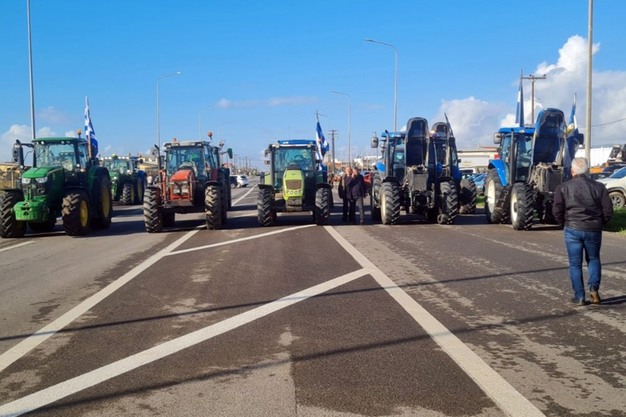 © 902.gr
Protesting farmers block with tractors the Greek Prime Minister's airport exit. ©902.gr
At the center of the scandal, which spans several years and for which the total amount of illegal subsidies has not yet been determined, are fake farmers, private offices filing subsidy declarations, major data companies acting as technical consultants to the state body responsible for paying subsidies (OPEKEPE), directors of the organization itself, and two former Ministers of Rural Development and Food from the current government. The scandal broke out last May following the intervention of the European Chief Prosecutor, Ms. Laura Kövesi.
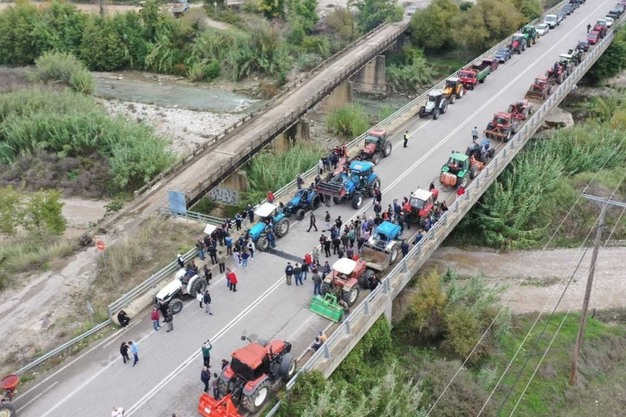 © 902.gr
Stills from recent farmer rallies, triggered by the illegal subsidies scandal. ©902.gr
Since then, investigations, in which the Greek Parliament also participates through a special inquiry committee, have revealed similar cases involving separate groups that have been pocketing large amounts of EU subsidies without being entitled to them. Criminal case files have been formed for organized crime groups, and there have even been reports of threats against OPEKEPE inspectors who tried to carry out their duties. Even the head of OPEKEPE's Internal Audit Department, Ms. Paraskevi Tycheropoulou, herself has faced administrative persecution from her own service as a result of her role in the revelations.
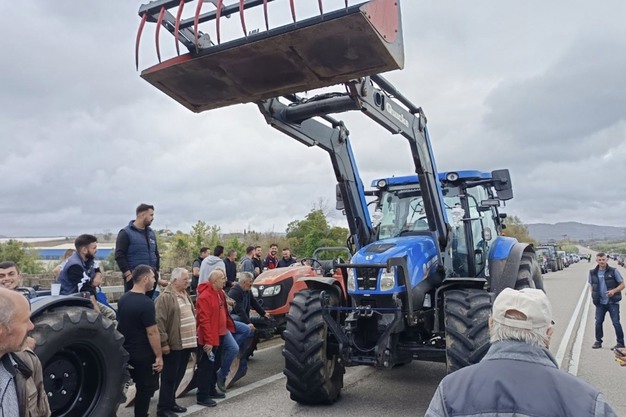 © 902.gr
Stills from recent farmer rallies, triggered by the illegal subsidies scandal. ©902.gr
The foundation of the illegal subsidies lies in the CAP regulation that grants payments based on the size of agricultural land rather than actual production, a system long criticized by Greek farmers. Combined with several legislative provisions introduced in Greece over the years by different governments, based on the same regulation and approved by Brussels, the result was that people with no farming activity but large agricultural landholdings, even largely fake ones, were receiving subsidies. Illegal subsidies were also issued for supposed organic farming plots, although no evidence has surfaced of falsely labeled organic products entering the market.
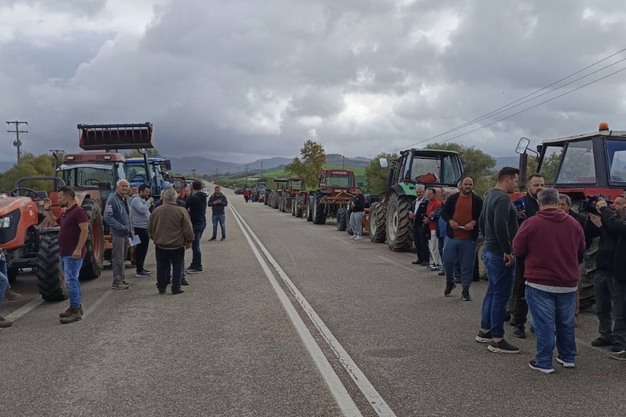 © 902.gr
Stills from recent farmer rallies, triggered by the illegal subsidies scandal. ©902.gr
On a political level, the scandal, for which the two questioned Ministers have not provided convincing explanations in their testimonies before the parliamentary inquiry committee, has further damaged the Greek government's image in the eyes of the public. The government is accused of exploiting the illegal subsidy mechanism to secure electoral support. Farmers' federations also point to the CAP itself as responsible, as its regulations allowed such scandals to occur, while, according to data presented in Parliament, over 80% of Greek farmers receive less than 5.000 euros in subsidies.
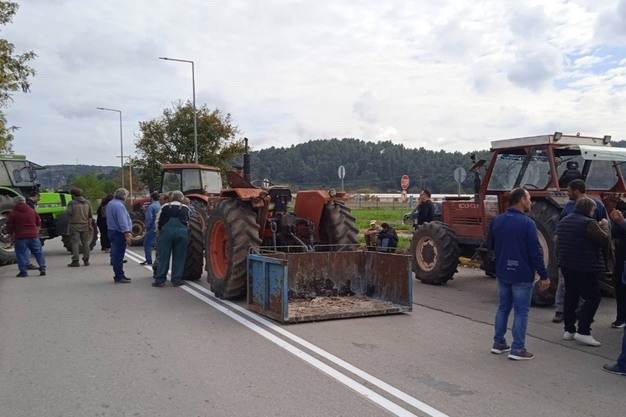 © 902.gr
Stills from recent farmer rallies, triggered by the illegal subsidies scandal. ©902.gr
Subsidies constitute a crucial part of Greek farmers' income. For that reason, the deprivation of millions of euros from legitimate beneficiaries due to their illegal redistribution, the accumulation of €1,1 billion in unpaid subsidy arrears following the government's suspension of payments, including amounts owed since 2024, the €415 million fine imposed by the European Commission on Greece for the scandal, and the prospect of further CAP subsidy cuts from 2027 have enraged Greek farmers and livestock breeders, who are already facing great difficulties in carrying out their work (serious animal diseases and mass culling of infected animals, incomplete compensation for crop losses caused by adverse weather, low producer prices, etc.).
Local and regional farmers' and breeders' unions have been staging dynamic protests across Greece, both localized and large-scale, from the time the scandal erupted until today. Indeed, last summer was the first in the history of Greece's farmers' movement to see such large-scale mobilizations. The strongest mobilizations of recent days took place on Tuesday, November 11, in front of the headquarters of the Ministry of Rural Development and Food in Athens, and in Alexandroupoli, where farmers with tractors blocked the Prime Minister's departure route from the local airport.
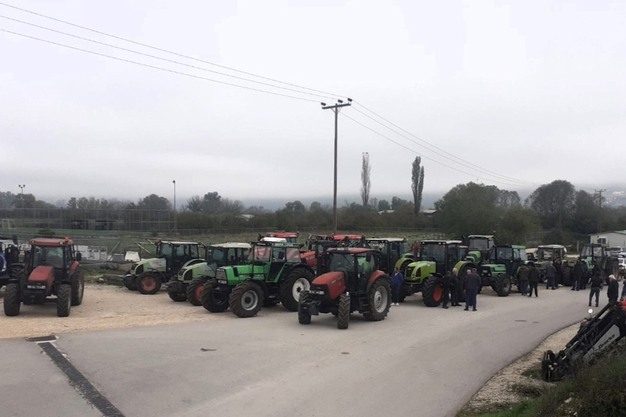 © 902.gr
Stills from recent farmer rallies, triggered by the illegal subsidies scandal. ©902.gr
The coming winter, traditionally a period of intensified farmer protests, is expected to bring a new wave of escalated and coordinated action, this time nationwide, as, amid this tense climate, the coordinating body of farmers' unions is set to meet in the coming days.
Among their longstanding demands, such as reducing production costs and establishing minimum guaranteed prices for products, the farmers' unions are calling for subsidies to be linked to actual production and real livestock numbers. They demand that not a single euro from the state budget or the CAP funds be used to pay the fines, insisting instead that the ministers, OPEKEPE officials, and illegally subsidized individuals bear the cost. They also demand that both political and criminal responsibility be assigned to all those involved, that all misappropriated funds be returned to legitimate farmers and breeders, and that private companies be excluded from future subsidy declaration procedures.