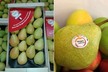
 © Crownfruit"Asian consumers have evolved significantly over recent years," remarks Stefaan Marais, CEO of Crownfruit, the Asian import and trading arm of South African exporter Fruitworks. "Historically, demand leaned toward smaller or more affordable fruit sizes, reflecting more price-sensitive purchasing behaviour. These days, we're seeing a growing preference for medium to larger fruit. They are generally more premium in price and perceived value, and this shift highlights rising disposable incomes and a greater willingness to pay for quality."
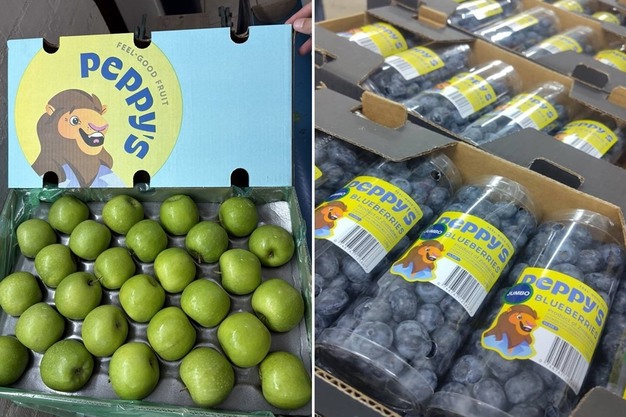
Right: "Only top-grade fruit is packed into our proprietary in-house brands Peppy and Crownblu."
The city-state of Singapore produces very little of its own fruit and vegetables owing to constraints on land and scale. It therefore does not impose tariffs or import quotas on food and agricultural products. Certain countries of supply have stricter entry controls (like South American tropical fruit, bananas and mangoes from certain countries).
Marais remarks that visual appeal remains non-negotiable. "Across the region, there is a consistent emphasis on high colour, uniformity and freshness. These attributes signal quality and care in handling, and even when purchasing smaller or more economical sizes, buyers continue to prioritise fruit that meets their high standards."
The Singapore-based company supplies fruit to clients in Singapore, Thailand, and Malaysia, and also trades products to a mix of retail and wholesale customers in most Asian countries.
Markets such as Singapore are increasingly retail-focused, driven by strong supermarket and e-commerce growth, while Malaysia and Thailand continue to maintain substantial wholesale segments. Crownfruit sources all grades of fruit, from juicing and class two to premium-quality fruit of a wide range, not only from South Africa but from 31 countries of origin.
 © Crownfruit
Strong orange market dipped end October
The last citrus from South Africa is coming in; after November, they will transition to Egyptian citrus. This season, Crownfruit had intentionally reduced the amount of soft citrus from South Africa, a category typically oversupplied in their key markets.
Oranges played a bigger role in their citrus campaign than in 2024: for the season, the industry did 25% more oranges, he says. Singapore and Malaysia took 24% more than last year. Over the past ten weeks, he says, they pulled 48% more orange volume than last year.
"We received more Western Cape oranges this year due to better quality and volumes, and not necessarily because of the higher US tariffs. Usually, the Western Cape's late citrus fell in a period when Asia was not prioritised, but that was different this year. The orange market performed well up until late October, but it has since softened."
Quality of cherry crop improves
The first cherries from the Western Cape were loaded last week, and initial arrivals have been very promising, he says. Crownfruit has included South African cherries since 2019, typically from mid-October through December. "We have already received several shipments, all transported by airfreight. The early cherries from some producing regions experienced some quality challenges, but conditions have since improved, and the latter part of the early crop showed better quality."
South Africa has exported 35% more cherries in total than last year this time, but he notes, the bigger volumes lie ahead: the Western Cape only came into production about two weeks ago. The Far East has taken more than 200% more cherries from South Africa than in 2024 year to date.
"Chile has a big crop, and we are uncertain if all the volume will go to China, and how it will play out in other Asian countries," he remarks. Some customers in Asia show a preference for Chilean and Australian cherries. Crownfruit believes preceding Chilean cherries with South African cherries gives continuity, variety, and consistent quality throughout the season.
South African strawberries gain traction
Their Asian markets prefer Granny Smith, Royal Gala/Beauty, and Red Fuji apples, he adds, along with a preference for blush pears and Packhams.
"The demand for strawberries is increasing. Australia has always been a big player in our markets (their logistical cost and timeline to get into our markets are very competitive). But South Africa has also seen better traction in this past year in Southeast Asia."
In addition to South African blueberries, they also import blueberries from Zimbabwe and Namibia, which complement the supply window and strengthen the continuity of their offering, he says. Blueberries are also obtained from Morocco, Spain, Turkey, Ecuador, Egypt, Peru, and China. "These berries are packed under our Peppy brand, ensuring the same high standards and consistent presentation across origins."
Marais continues: "South African fruit is widely regarded among the top global suppliers to Asian markets, often ranking within the top five, and in some categories even the top three. The country's produce is valued for its excellent quality, competitive pricing, and reliable delivery timelines, all of which make it highly attractive to buyers across the region."
For more information: Stefaan Marais
Crownfruit
Tel: +65 8655 9769
Email: [email protected]
https://www.crownfruit.sg/