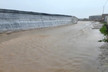
Unseasonal rainfall and strong winds linked to Cyclone Mantha caused agricultural losses estimated at about US$19.3 million across 29 districts of Bangladesh, according to the Department of Agricultural Extension (DAE). The storms, occurring from late October to early November, affected 125,926 farmers and damaged 32,450 hectares of cropland, of which 6,235 hectares were completely destroyed.
The northern region experienced the highest impact, with 16 districts reporting losses worth roughly US$17.2 million. Rajshahi Division was the worst hit, with Rajshahi, Naogaon, Chapainawabganj, and Natore districts alone suffering damage of about US$12 million. In these areas, 1,649 hectares of crops were wiped out, including 585 hectares of Aman paddy and 180 hectares of vegetables.
Additional damage was recorded in Bogura (US$3.5 million), Dinajpur (US$470,000), and Rangpur (US$1.25 million). Crops affected nationwide include transplanted Aman paddy, vegetables, potatoes, onions, chillies, maize, mustard, garlic, banana, papaya, black gram, sweet pumpkin, groundnut, grass pea, betel leaf, and strawberry.
Farmers across the affected districts reported early harvesting and reduced yields due to flooding and subsequent pest attacks. "The rain came out of the blue, submerging my nearly one-hectare Aman paddy. The crop needed another 10-12 days to ripen. But I had to harvest early and ended up with less than half the usual yield," said Akbar Ali from Gaibandha's Gobindaganj upazila.
In Nilphamari, farmer Rashedunnabi Manik said, "More than two bighas (0.67 hectares) of Aman paddy were inundated. I've lost around Tk 45,000 as the crop later suffered pest attacks."
Farmers in Tangail, Munshiganj, and Joypurhat also reported damage to paddy and vegetables caused by heavy rainfall and waterlogging. "It will be difficult for me to recover without government assistance," said farmer Malek Talukder from Tangail's Bhuyapur upazila.
In Munshiganj, vegetables grown on 54 hectares were damaged, with total losses estimated at US$36,000. Farmer Alamgir from Sadar upazila said, "About 80 percent of my paddy has been damaged by rain. This year, I will have to buy rice instead of selling it."
Officials said data collection and field assessments are ongoing. "Normally, paddy shouldn't be damaged just by rain. As far as we know, there hasn't been any major damage to paddy in the district. However, we are collecting field-level information to assess the situation," said Tajul Islam, a district training officer at the DAE.
Meteorologists reported that October rainfall was 35% above average, continuing into early November under the influence of Cyclone Mantha. Data show erratic rainfall patterns have persisted since September, with repeated flooding of seedbeds and early vegetable fields, disrupting seasonal planting cycles.
Source: The Daily Star