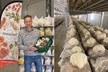
The European market continues to establish itself as a key destination for tropical root exports from Central America. Agromar Fresh, operating in Costa Rica and Honduras, successfully maintains consistent shipments of cassava and okra—niche products with increasing popularity among Latin, African, and Arab communities in Europe.
 © Agromar Fresh
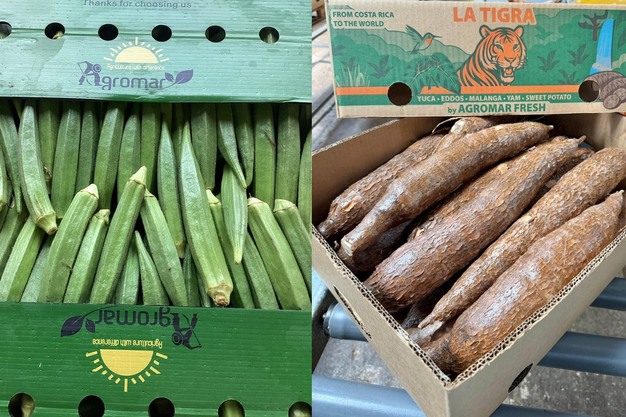
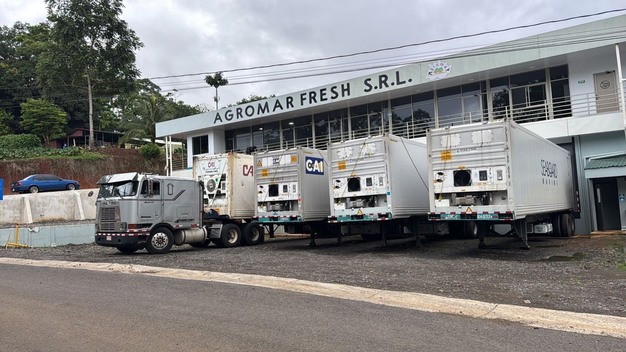
"We mainly export cassava from Costa Rica and okra from Honduras. Our current weekly volume is about 200 tons, roughly equivalent to 10 containers, and our markets include Spain, Portugal, France, the United Kingdom, and Italy," stated Daniel Miranda and Julio Pineda, representatives of Agromar Fresh. The company also supplies markets in the United States, Canada, and Puerto Rico, operating through its own distribution network in Europe.
 © Agromar Fresh
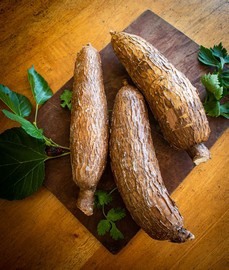
However, production faces challenges due to climate change. "In Costa Rica, there is a significant shortage of cassava. Rainfall is becoming more irregular, and the seasons are no longer predictable. This complicates agricultural planning, from land preparation to harvesting," says Miranda. Currently, the company manages around 250 hectares and is adapting by diversifying its crop mix to maintain a steady supply year-round.
In Honduras, okra production also faces labor challenges. "Labour has become scarcer, especially during the coffee harvest, which competes directly with the horticultural sector," explains Pineda. Still, the company maintains a steady flow of fresh vegetable exports, including Asian products such as long squash and rambutan.
Prices in the European market are more stable than those in the North American market, although they have different quality standards. "Europe pays better, but is stricter in the presentation of the product. In the United States, the requirements are different, which means that each market has its own demands," Pineda stated.
 © Agromar Fresh
"Cassava remains a niche product, primarily consumed by immigrant communities. However, opportunities are emerging as new trends emerge, particularly among Europeans seeking natural, gluten-free options. Currently, the company concentrates on fresh produce but intends to expand into value-added and processed lines in the future," he concluded.
 For more information:
Julio César Pineda
Agromar Honduras
Costa Rica
Tel.: +506 8702 1025
Email: [email protected]
https://agromarcr.com/
Daniel Miranda
Agromar USA
Email: [email protected]
https://agromarcr.com/