How can food losses be minimised throughout the supply chain? To answer this question, the INFLEX project was launched. "The project aims to increase knowledge to measure and optimise the relevant factors affecting quality changes throughout the fruit export supply chain," explains Sarah Matthys of KU Leuven. "In this way, we aim to minimise food losses and increase consumer perception, thereby increasing the value and market of Belgian fruit."
This project, funded by VLAIO, involves several partners, including VIL, Optiflux, BelOrta, Bel'Export, KU Leuven, and VCBT. "From these goals, we want to develop innovations such as monitoring in the chain, predictive supply chain management, optimal selection of export products, new preservation methods during storage and transport, and model-based design strategies for refrigeration technologies," she explains. The research project is divided into different aspects handled by various partners and is expected to be completed by the end of 2026.
 © Dreamstime
From picking to transport
"For example, VCBT is investigating how origin, picking time, and storage conditions influence fruit transportability, intending to select fruit that remains of high quality for longer. KU Leuven then tests models, including Computational Fluid Dynamics (CFD) for heat and mass transport, and a kinetic model for quality changes during storage."
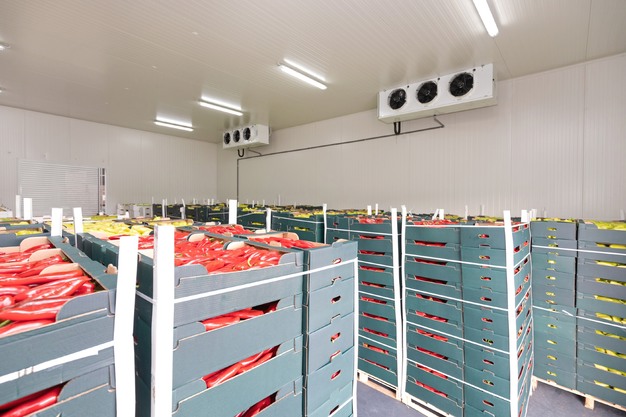
Within this project, Optiflux is designing a refrigerated container for long-distance transport, she points out. "This should enable both active and passive preservation. They have also developed DCA (Dynamically Controlled Atmosphere) technology as their own preservation solution. This is used in storage cells where fruit boxes are covered with a plastic sleeve, in which sensors monitor gas conditions. As soon as the oxygen or CO₂ level is too high or too low, it is automatically adjusted. An additional advantage is that different fruits can be stored simultaneously, as long as the temperature is similar, because each compartment is individually controlled for gas conditions."
Environmental impact
Sarah herself is focusing on a sustainability study within the project. "I collect as much data as possible from project partners or, if necessary, from literature and existing databases. Using this, I establish the full lifecycle and calculate the environmental impact. We then analyse which stages make the largest contribution to that impact: is it cultivation, transport, or something else? Food and weight loss in the chain are also taken into account, as they affect the overall environmental impact."
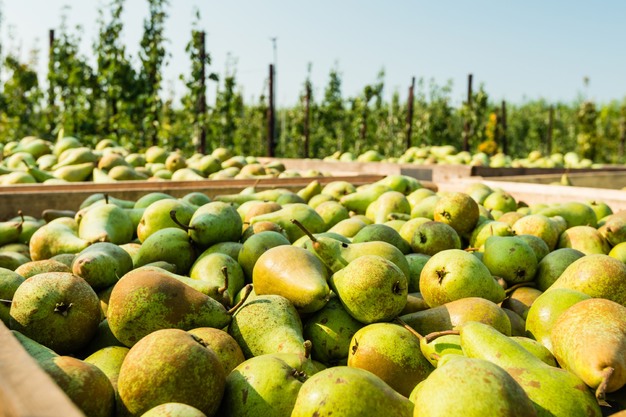
"I examine both realistic and hypothetical scenarios. Realistic scenarios include, for example, exporting pears to China by ship, or exporting pears, blueberries, redcurrants, and cherries within Europe by truck. In addition, I study hypothetical scenarios, such as air transport of berries and cherries to China, which may be highly polluting. We are also investigating whether export by ship would be more sustainable than air freight for some products. This way, we can determine which routes are most interesting from an ecological point of view."
 © Dreamstime
Difference
This analysis looks at various aspects of cultivation, preservation, and packaging. "For cultivation data, we use information from a previous LCA (Life Cycle Analysis) study within our research group for blueberries, based on three Belgian farms. For the other fruits (pears, cherries, and redcurrants), we rely on literature. The preservation phase includes washing, sorting, pre-cooling, and storage at BelOrta, with three preservation techniques: Standard cooling, DCA, and ULO (Ultra Low Oxygen)."
"Packaging varies depending on the type of fruit. Soft fruit is usually packed in MAP (Modified Atmosphere Packaging), while pears, as top fruit, are packed differently. For transport, I take into account various means of transport (ship, truck, plane), as well as refrigerated containers and internal logistics, such as forklifts and cranes at the port of Antwerp. Food and weight losses are also included in the analysis, as they can vary depending on storage technique or packaging."
Interest
Comprehensive as it is, is there also interest from the industry in such research? "There is definitely interest from the sector, especially in understanding how storage techniques affect environmental impact. There are indications that techniques such as DCA and ULO use less energy than standard refrigeration, but this still needs to be confirmed. If these techniques both improve quality and reduce energy consumption, that would clearly be an advantage, for example, for cooperatives."
For more information:
Sarah Matthys
KU Leuven
[email protected]
www.kuleuven.be