The 2025 season has marked a turning point for South Africa's macadamia industry. According to Shane Hartman, CEO of Global Macadamias, three factors are shaping the sector's future: low in-shell prices, widening price gaps between kernel styles, and closer grower-processor cooperation.
"2025 has reminded us that success in this industry depends on collaboration. Growers and processors alike must make informed, strategic decisions if we want to secure a sustainable future for South Africa's macadamias," said Hartman.
The year started with optimism, but shifted after the United States imposed import tariffs on South African macadamias. Despite this, Global Macadamias maintained price commitments and advanced payments to growers to support liquidity.
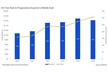
Hartman warned that dependence on in-shell exports to China remains the biggest risk. At the recent MacDay hosted by Macadamias South Africa (SAMAC), Chinese delegates indicated that local production was expanding and that the country was less reliant on South African supply. "China is unlikely to increase prices paid for in-shell macadamias," said Hartman, adding that investments in cracking capacity could make China a competitor in kernel exports.
To reduce exposure, South Africa must continue investing in local cracking facilities and developing kernel markets. While in-shell exports have slowed, kernel demand has held firm, especially after U.S. tariffs redirected trade.
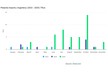
Price gaps between kernel styles have widened. "This year more than ever, growers have felt the effect of their chosen varieties," said Hartman. With fewer in-shell sales, varieties like Beaumont that yield halves are producing more of this grade. Whole nuts, particularly styles 0 and 1, remain in strong demand and command higher prices.
Hartman noted that growers still control two key factors: variety selection and processing. "Even the best crop can lose value if the processor lacks the right equipment or does not pay attention to detail," he said. Efficient handling and modern cracking technology are key to maintaining quality and returns.
Despite reduced national volumes, Global Macadamias upheld grower payments through efficient operations and economies of scale. "The more nuts we process, the lower our per-unit cost. That translates into better prices for growers," said Hartman.
He concluded that the year has underscored how variety choice, processing efficiency, and adaptability determine the industry's resilience. "The decisions we make now, both on farm and in the factory, will define the industry's stability and long-term viability."
Source: Farmers Review Africa