The early departure of tourists from Greece, the mass shipment of Italian grapes to Eastern Europe, as well as the low-priced Turkish grapes that serve as an attractive alternative, leave little room for the Greek product, notes Mr. Grigoris Papoutsis, owner of the Greek export company Alfa Papoutsis. "Until September 20, the market was good, because there were many tourists in Athens and the islands. Unlike last year, when the tourist flow lasted until mid-October, this time sales are down by 50%. In addition, Eastern Europe has been flooded this year with Italian grapes, and in view of this, many buyers have turned to Turkish grapes to take advantage of their lower price."
 © Alfa Papoutsis
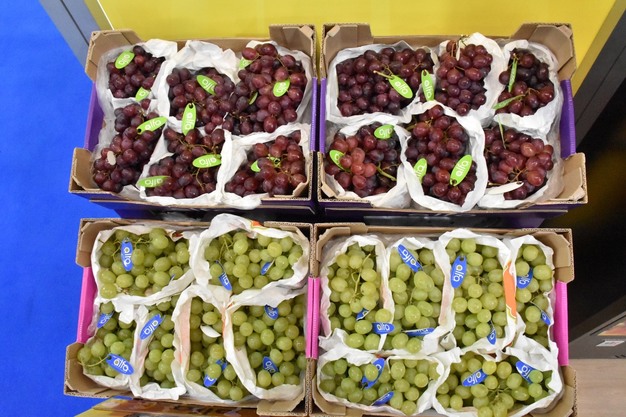
The Greek company is currently trading grapes from Kavala. As its owner explains: "The harvest in Corinth ended in mid-October and in a poor way. The rain that fell at the end of September caused cracking in the Thompson Seedless grapes, in many of which the right cultivation techniques were not applied, and excessive focus was placed on increasing size, which came at the expense of proper Brix development. After the rains, the harvest continued for about ten more days with Bloom Fresh varieties, which are more resistant. The Thompson Seedless grapes were excluded from the fresh produce market, and by mid-October, they had already begun to be sent for winemaking. I estimate this amounts to about 5.000 tons."
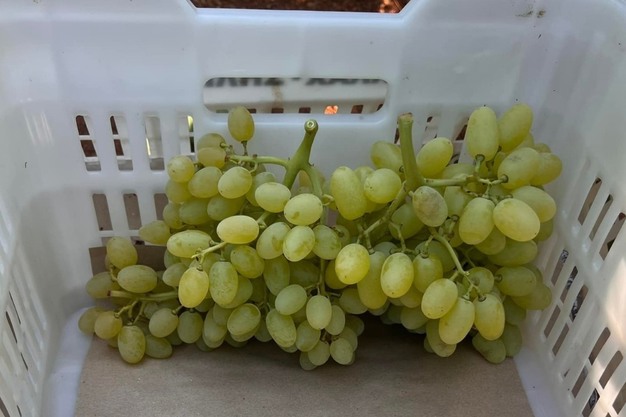
"We made our transition to grapes from Kavala. Last year, when the grape quantity was low, we did this at the end of August, but this year, from mid-October. Kavala has a large volume this year, around 25–30.000 tons, while by mid-October, I estimate that about 7–8.000 tons had already been marketed," Mr. Papoutsis points out.
 © Alfa Papoutsis
Finally, export opportunities are narrowing. "I think that Kavala will be able to remain in the market until around November 10, even though there is a lot of product, and I'm not sure if it can all be sold. Apart from the grapes that have already been sold, the Bulgarian buyers will probably take around 5–6.000 tons, while another 10.000 tons will go to all other destinations combined. That still leaves quite a surplus, and we are talking about fresh produce. There is no point in buying what remains in cold storage in Corinth either. After all, 90% of the stored volume has been in cold rooms since the end of August," concludes the Greek exporter.
For more information:
Grigoris Papoutsis
Alfa Papoutsis
Tel: +30 274 105 1950
Mob: +30 694 712 1138
Email: [email protected]
https://alfapapoutsis.gr/index_en.html