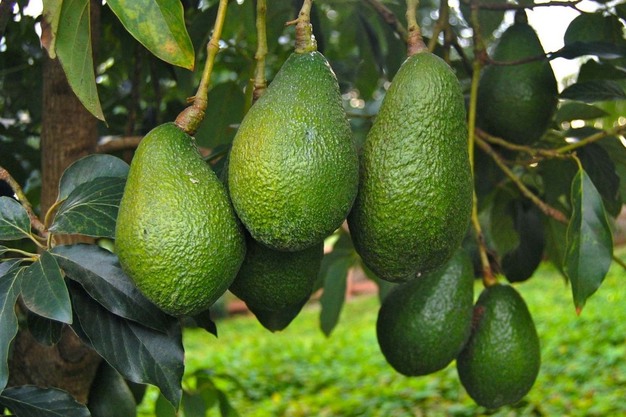
A new research project funded by Hort Innovation and delivered in partnership with the CSIRO is investigating how tree carbohydrate levels affect avocado production across Australia. The initiative aims to develop a non-contact, scalable method for measuring carbohydrate dynamics in avocado trees to support improved orchard management.
The study builds on earlier work (AV19006) that demonstrated the potential of near-infrared spectroscopy to estimate carbohydrate levels in avocado leaves and stems under laboratory conditions. The current phase seeks to adapt this technology for field application, using artificial intelligence and unmanned aerial vehicles (UAVs) to enable orchard-scale monitoring.
 © Hort Innovation
According to Hort Innovation, understanding carbohydrate fluctuations within avocado trees can help growers make more informed management decisions, potentially reducing yield variability and improving production efficiency. The project will focus on developing a practical, commercial-scale system that growers can use to track carbohydrate patterns in real time.
Project leader Everard Edwards from CSIRO said, "Carbohydrates influence both crop loads and vegetative growth in avocado production. By pairing imaging technology with AI, we can explore how carbohydrate levels impact key stages of avocado production. These deeper insights into the physiological drivers of avocado production will help growers to fine-tune orchard management practices and respond to seasonal challenges."
The project is scheduled to run until September 2027. If the field trials are successful, testing will expand to multiple regions across Australia to ensure applicability in different growing conditions. The long-term goal is to assess the potential for commercialisation of the technology and integration into orchard management systems.
The research is funded through the avocado research and development levy and contributions from the Australian Government.
 © Hort InnovationFor more information:
Shannon O'Mara
Hort Innovation
Tel: +61 (0) 427 142 537
Email: [email protected]
www.horticulture.com.au