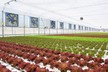
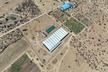
As Greece's southernmost island prepares for the winter cucumber season, the propagation lines at AGRIS Horticulture are in full swing. From its Crete facility in Ierapetra, the company is producing hundreds of thousands of young plants that will soon fill greenhouses across the region and beyond.
"The main transplanting period in Crete for winter cucumbers is from the end of September till the first ten days of November, and the largest amount of the production goes for export," explains Damianos Kintzonidis, Plant Director at AGRIS Horticulture. "We sow the scion and rootstock from the beginning of September until the beginning of October. We need about 12 to 16 days, depending on the rootstock type, until grafting. The plants then stay in the healing chambers for seven days, and a week later, after transplanting to pots, they're ready to be delivered. The total cultivation period is about 30 days."
Scaling precision
This season alone, AGRIS will deliver 800,000 grafted cucumbers. Kintzonidis credits the company's consistent results to its technical discipline and skilled workforce. "The key stages are the good quality for grafting of rootstock and scion, stem thickness is very important, the quality of the grafting procedure, and the climate conditions in the healing chambers. The consistent good quality of our plants distinguishes us from the competitors."
AGRIS operates under strict ISO 9001 protocols during all propagation stages. "Agris quality means a full and strong root system, uniformity, and plants free of diseases," Kintzonidis adds. "This mode of work is crucial to producing high quality in large-scale production."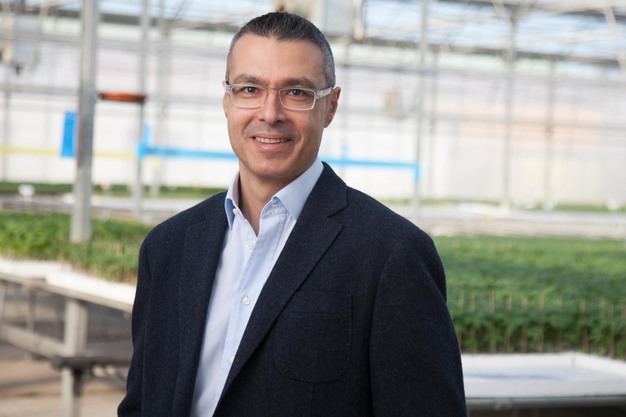 © Agris
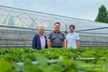
Damianos Kintzonidis
Mediterranean advantage
Unlike northern European propagation systems, AGRIS takes advantage of the island's unique climate. "The winter cucumber is transplanted to the region of Ierapetra, which is located in the southeast of Crete," says Kintzonidis. "The climate is very good, with a lot of radiation and very mild winters, so it's possible to cultivate cucumbers without heating."
That mild climate has made Crete one of Greece's most important greenhouse zones. "Fifty percent of Greece's greenhouses are located there. As a propagator, it's very important for us. We supply growers in all Balkan countries, including Bulgaria, Serbia, Albania, North Macedonia, and Romania, from our facility at Kleidi."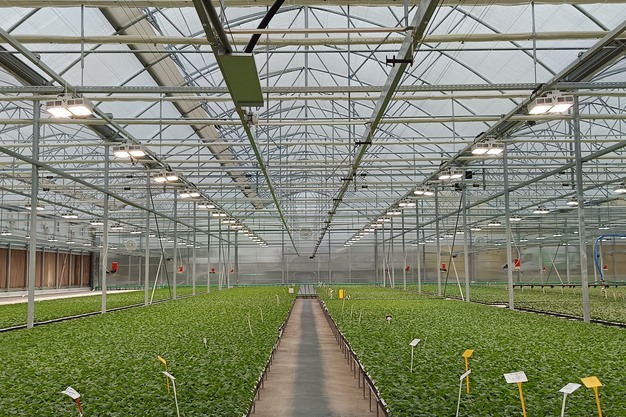 © Agris
Rootstock resilience and light innovation
Behind the company's strong performance is a deep investment in both genetics and technology. "The rootstocks we use are resistant to cold conditions and soilborne diseases like nematodes and Fusarium," says Kintzonidis. "Usually these are interspecific varieties Cucurbita maxima x Cucurbita moschata, and in recent years also Cucumis sativus. These varieties have been developed by seed companies for winter cultivation without heating, so they have good yield and resilience."
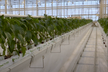
AGRIS has also spent years optimizing light management for propagation. "We are heavily investing in supplementary light and healing chambers. After many years of research and development, we found the right spectrum of supplementary light provided by LED lamps, which gives the best quality plants. We have LED lamps during all the stages of the grafting propagation, with different light recipes in each stage, before grafting, healing, and hardening. The healing chambers also have a fully controlled environment."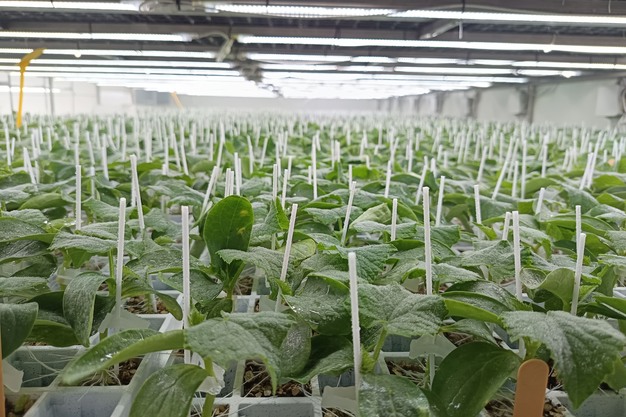 © Agris
Sustainability and efficiency
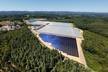
Alongside technological progress, AGRIS has introduced measures to reduce waste and energy use. "We're trying to reduce the waste of plastic trays, so we've installed a washing and disinfection line to reuse the trays as much as possible," says Kintzonidis. "We've also installed a solar panel park, 1.5 MW, to meet our electricity needs."
The company's investments in quality and sustainability reflect a wider transformation across Southeast Europe's propagation industry. "We've seen in the last few years a big increase in demand for grafted plants, so we are focusing on that market and have invested in increasing our production capacity and quality by making new healing chambers and new greenhouses equipped with LED lamps. We've now reached a grafting capacity of one million plants per week."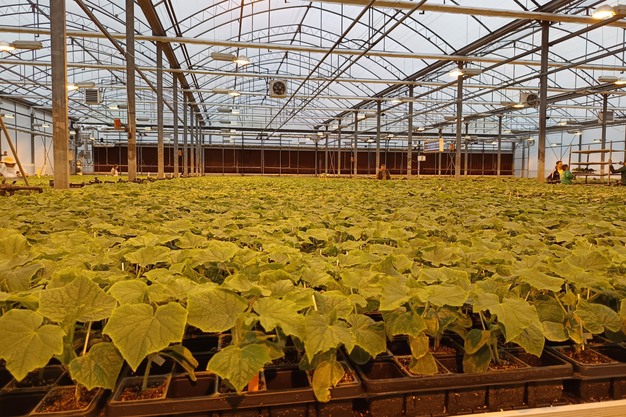 © Agris
Adapting to a changing market
As the market consolidates, AGRIS's scale and technological depth are becoming key advantages. "The sector is changing. Small propagators are going out of business or focusing on regular plants rather than grafted ones, mainly due to high labor and energy costs. On top of this, you must invest in high technologies to minimize your losses and remain sustainable."
Looking ahead, AGRIS plans to keep expanding its use of automation and energy systems. "For the upcoming years, we will investigate the use of grafting machines, dynamic lighting, and CHP, combined heat and power production," says Kintzonidis. "Agris is always looking for new technologies to reduce labor costs, reduce energy costs, and increase plant quality."
For more information:
Agris Horticulture 
Damianos Kintzonidis, Plant Director
[email protected]
www.agris.gr