The demand for organic foods is still on the rise, and here, mushrooms play a prominent leadership role. At REO, a Belgian cooperative, this segment has become a heavyweight: mushrooms account for over 60% of organic sales, says product manager Pieter Declercq.
 © REO
© REO
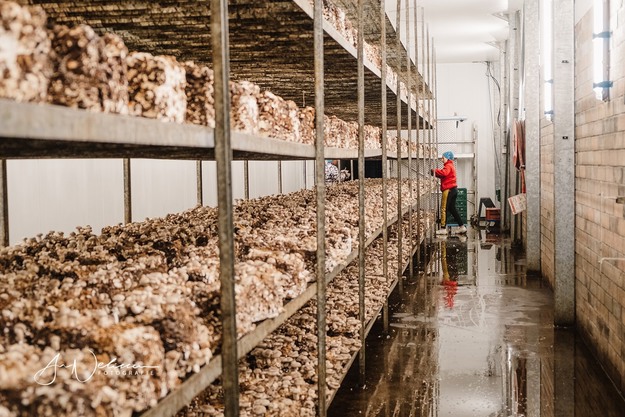
The switch to organic began more than a decade ago. That was to escape conventional price pressure. The range was brought in under the Tomabel quality brand, which further accelerated growth. The assortment has expanded from chestnut and oyster mushrooms to include shiitake, nameko, and shimeji, among others. "Today, we're the largest supplier of Belgian organic mushrooms. That's only possible thanks to our cooperative approach: relatively small growers who stand strong together by joining forces," says Pieter.
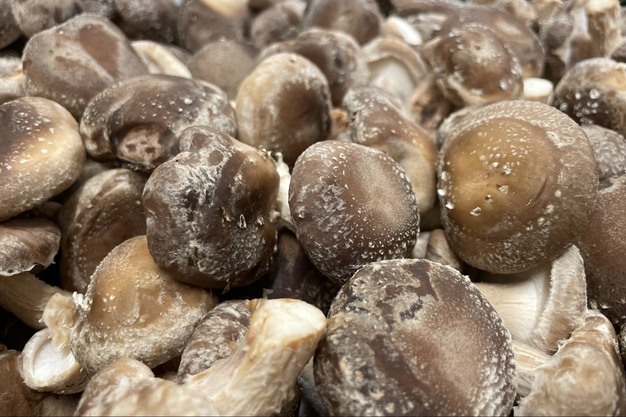 © REOshiitake
Ten years ago, shiitake mushrooms were still considered exotic gold. These days, consumers have no trouble finding them in supermarkets. "Retail has played an important role in that. Once they include a variety in their shelves all year round, a stable base volume is created," Pieter explains. New varieties are gaining ground, too. Besides shiitake, eryngii, and beech mushrooms are now well established. Maitake seems to be next in line.
That broadening of the range poses challenges in production planning, though. "Demand fluctuates greatly, depending on, say, the weather. Consumption is higher in the fall and winter. At such times, growers and their cooperatives must make good mutual agreements."
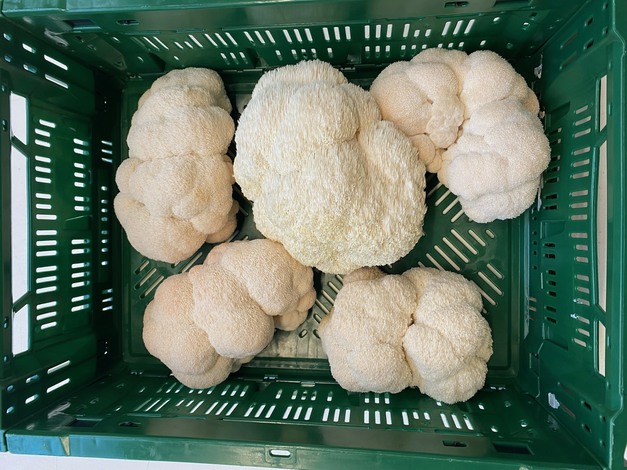 © REOPom pom blanc
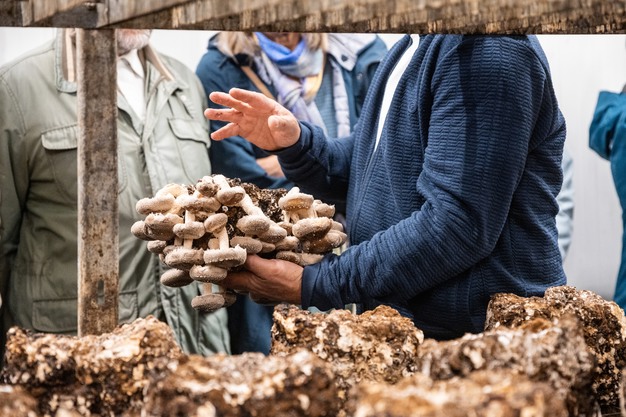
Sustainability is a common thread throughout the sector. Mushrooms often grow on agricultural waste streams like straw and sawdust. After harvesting, growers return the substrate to the agricultural sector as a soil improver or to biogas plants. Other waste streams are reused, too. "Oyster mushroom stems are considered a waste product, but now companies use them to make vegetarian burgers. They have the same fiber structure as chicken breast and are flavor-neutral. An ideal meat substitute," says Declercq.
Growers are also always looking for ways to reduce energy consumption. Innovations like underground cooling and river water pre-cooling drive down costs. However, the biggest challenge remains the substrates' plastic packaging.
 © REO
© REO
Organic mushrooms have a promising future. Veganism and the search for sustainable protein sources are driving demand. But, says Pieter, coordination is needed to avoid oversupply and price fluctuations. "If supply grows too quickly, you end up with the problem that potatoes are currently facing," he says.
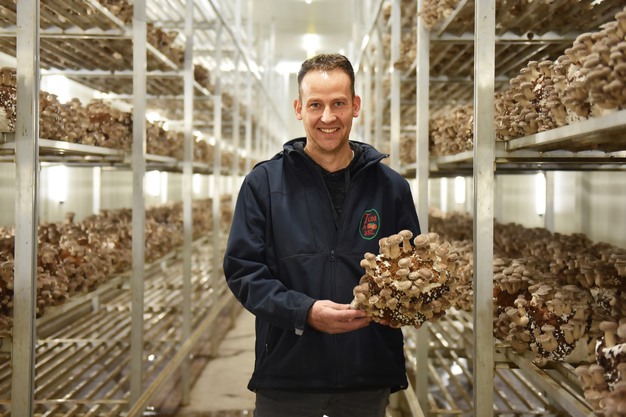 © REOGrower Koert
Too much is being produced, resulting in plummeting prices. We don't want that." That is why, he explains, partnering with REO is essential. "That's the power of the cooperative. By uniting growers and making agreements, we keep the market stable," Pieter concludes.
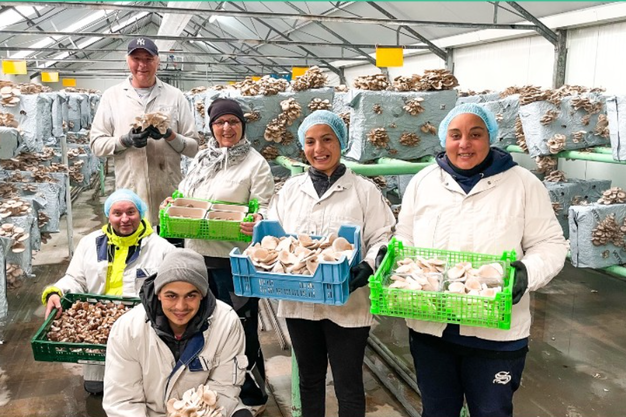 © REOGrowers De Kromme Boon
For more information:
REO
Tel. +32(0)51 23 12 11
[email protected]
www.reo.be