In recent years, aromatic herbs have been arousing interest not only in Spain, but throughout Europe. There has been a greater diversification in their uses, as well as industry support and better integration in the catering industry and in homes, as end consumers are searching for recipes on social media and are also becoming increasingly knowledgeable about nutritional aspects.
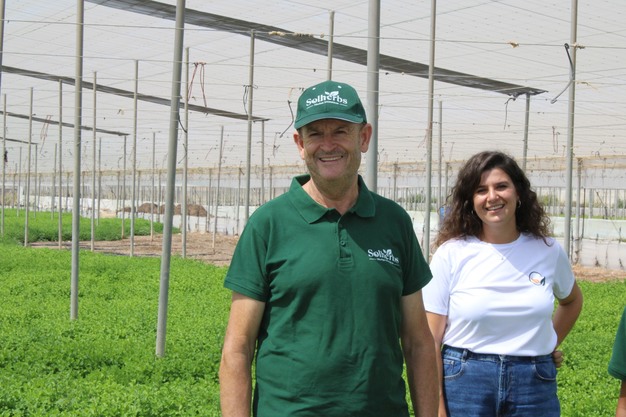
"When we started, about 10 years ago, we worked from October to May, but customers demanded a summer supply. Three years ago, we decided to give a try to supplying aromatic herbs also in summer, and we have succeeded after a lot of effort," says José María Artero, manager of Solherbs.
 © Lydia González
"In addition to parsley, coriander, mint, dill, spinach, and chard, we also offer thyme, rosemary, methi or purslane, among others, to the United Kingdom, Germany, Poland, and the Netherlands. Soon, we will also enter Ireland and the Nordic countries. In season, we cultivate around 700 hectares, and in the summer, around 300 hectares, and all in all, we produce around 2 million boxes of herbs per year.
"Producing in summer was a difficult challenge, because solar radiation can easily burn the herbs and cause losses. To compensate, we have to plant more hectares to ensure a quality production. Energy expenditure is another added difficulty, given that the herbs need their temperature to quickly drop from 30ºC to 2ºC."
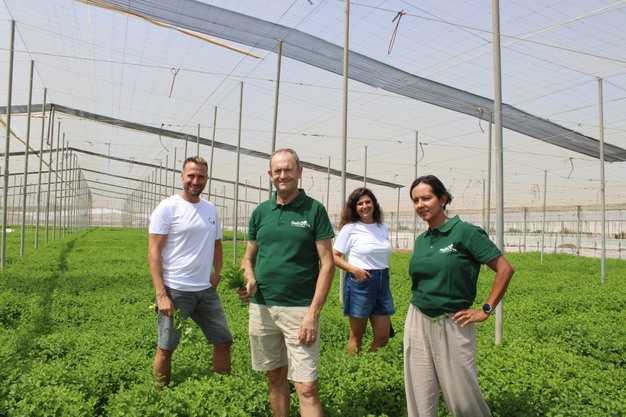
Murcia is an ideal region for aromatic herb cultivation, "Given its mild winter temperatures. In summer, we grow in the higher areas, seeking cooler nights for the plants. This has been a very important step for Solherbs."
 © Lydia González
According to Artero, one of the reasons why aromatic herbs have experienced significant growth in the last five years "is their boom in the industry, with a major shift towards high-quality nutrition. Spinach is a superfood, and it has become clear that people want products with high nutritional value, such as spinach drinks or lemon and mint energy drinks. Vegetable creams with parsley or coriander are another example. Social media shows celebrity chefs and influencers using herbs, and that is promoting their consumption."
"I remember when broccoli was first introduced in Murcia; it was hardly known and very little was grown, and today it is one of the main products of the region. The same has happened with aromatic herbs; the way people cook has changed, and new market trends are increasingly boosting their demand."
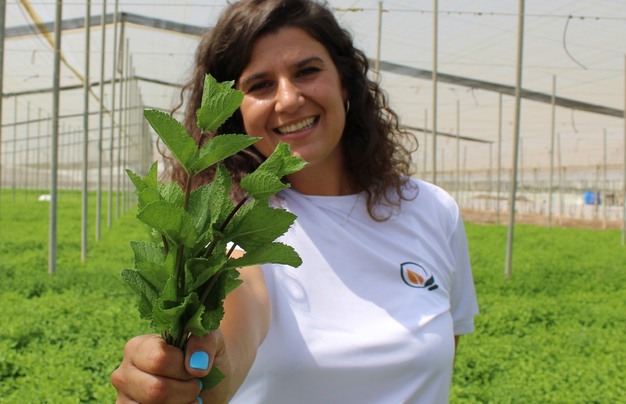
"Some people still have the idea that spearmint is for cocktails; however, it has many more uses in both the catering industry and in homes. We know this based on the volumes we are loading daily."
Each country needs a different format, depending on the grammage and type of box. For Artero, "this entails additional effort, because you have to adapt to the customer's needs, but we believe that serving exactly what they want is fundamental."
 © Lydia González
As far as sustainability is concerned, the manager says that "we are very concerned about water use, although, in general, in Murcia, due to the structural drought we are suffering, the agricultural sector is highly aware of the importance of water saving. We use probes and drip irrigation to administer the water needed by the plantation. In summer, it needs an extra supply, but in winter, with the morning dew and the rapid growth cycle, let's say 50 days in the case of coriander, water consumption is reduced." As far as treatments are concerned, "we use the most natural ones, aiming for zero waste."
In the near future, "we see heavy storms, floods, and hail as phenomena to be reckoned with by anyone working in agriculture."
After Covid, investment funds have shown interest in Murcian agricultural companies, but in these businesses, "there is no guaranteed profitability; it is not an easy sector and you can't run things from an office. You have to be on the plantation and see it every day."
Herbs are still an unmechanized sector. "We work with fully traditional methods. You need specialized labor, which represents added costs, but there is no machinery able to cut bunches of aromatic herbs. Eventually, we will see such a job paying better than some university degrees," says the manager.
For more information:
José María Artero
Solherbs
Tel.: +34 651 86 85 05
Tel.: +34 651 30 92 83
[email protected]
www.solherbs.es