Rio Grande do Norte ended September 2025 with a trade surplus of US$48.2 million, driven in large part by fresh produce exports. According to data from the Secretariat of Economic Development, Science, Technology, and Innovation (SEDEC/RN), the state exported US$77 million worth of goods and imported US$28.8 million.
Fruit exports lead
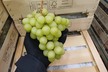
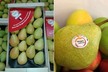
Fruit played a central role in the month's export profile. Fresh watermelons generated US$16.9 million, while fresh melons brought in US$15.4 million. Together, these two crops accounted for US$32.3 million, placing fruit alongside mining products as key contributors to the state's trade balance.
The main destinations for Rio Grande do Norte products in September included Canada with US$24.1 million in purchases, followed by the Netherlands (US$23.7 million), the United Kingdom (US$12 million), Spain (US$2.7 million), and Mexico (US$2 million). These five countries represented 83.7% of the state's total exports.
Transport profile
Maritime shipping was the dominant mode of transport, moving US$48.6 million in goods, or 63.1% of total exports. Air transport followed with US$27.5 million, while road and hand transport accounted for smaller shares.
Imports were also concentrated through maritime channels, with US$26.5 million arriving by sea, compared to US$2 million by air and US$258,000 by road.
Trade outlook
Despite a second consecutive monthly decline in fuel oil shipments, the state's fruit sector helped maintain a positive balance. Deputy Secretary of Economic Development Hugo Fonseca said global conditions continue to weigh on some products.
"The effects of the tariff hike imposed by the US government still persist on some products, but even in this scenario, we have observed a significant increase in the diversification of exports and the opening of new markets, which has contributed to the balance of trade with a surplus," he said.
Fonseca added that despite pressures such as the Selic rate at 15% and international geopolitical and economic uncertainty, Rio Grande do Norte has maintained competitiveness. "In a still-challenging global environment, marked by a 15% Selic rate and uncertainties arising from geopolitical conflicts and international economic tensions, Rio Grande do Norte reaffirms its capacity for adaptation and competitiveness. This trajectory is the result of collaborative work between the government, the productive sector, and institutions that, in our state's belief, are in sustainable and innovative growth."
Source: Abrafrutas