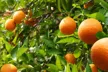
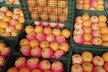
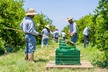
Blood oranges may offer a new option for cold-hardy citrus growers in North Florida, South Georgia, and South Alabama. Research is underway to determine whether the fruit can be commercially viable in these areas.
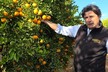
Muhammad Shahid, assistant professor of horticulture at the University of Florida Institute of Food and Agricultural Sciences (UF/IFAS), presented his work on blood oranges during the Cold-Hardy Citrus Field Day and Workshop at the North Florida Research and Education Center in Quincy on October 1.
Currently, most U.S. blood orange production comes from California. Shahid noted that limited plantings exist in the Southeast, but believes there is potential for regional production to supply markets earlier. "There are a few small plantings here, maybe one or two in this region, but most of the blood oranges are from California. If we develop blood orange production for this area, we will be 40 days earlier than California. That's an advantage," he said.
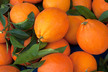
The fruit's dark red color comes from anthocyanins, a type of antioxidant. Shahid explained that temperature plays a key role in the development of the characteristic pigmentation. "This red color is developed with the cooler temperatures. If you grow the blood oranges in the south (Florida), you will not get that color because there are not enough cooler nights and cooler temperatures. But here (in North Florida), we have that and all of the requirements," he said.
Harvest timing is another factor. Shahid estimated that blood oranges in the cold-hardy region could be harvested in December, about one month earlier than California's January timeframe. He added that prices for blood oranges can be two to three times higher than other citrus varieties.
UF/IFAS researchers are currently studying five blood orange varieties to gather production data. Shahid expects more detailed information on fruit quality and harvest windows in two to three years, when the trees under study begin to bear fruit.
Source: Citrus Industry