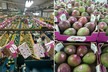
If you're looking for a fruit that contains ten times more vitamin C than kiwi and thirty times more than strawberries or oranges, you'll have to head to the tropics—Brazil, for instance. We're talking about acerola, which is also organically grown in Suriname. At Triple A Organic Farm, the cultivation is close to receiving full Demeter certification for biodynamic farming.
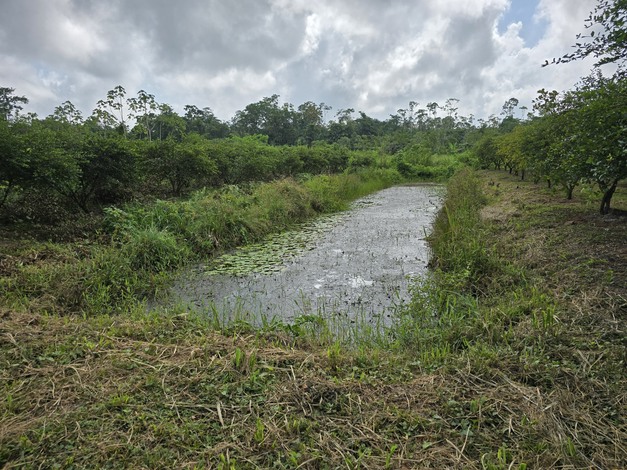 © Fresh PublishersPonds are situated between the cherry trees, specifically for the Demeter certification
In appearance and size, acerola looks very similar to a cherry. In Suriname, when people talk about "cherries," they almost always mean acerolas. The fruit has a thin skin, soft and juicy flesh, and a refreshing, sweet-tart flavor similar to that of a sour cherry. Although it can be eaten fresh, acerola is most often used for juices, jams, or processed into powder as a vitamin-rich supplement.
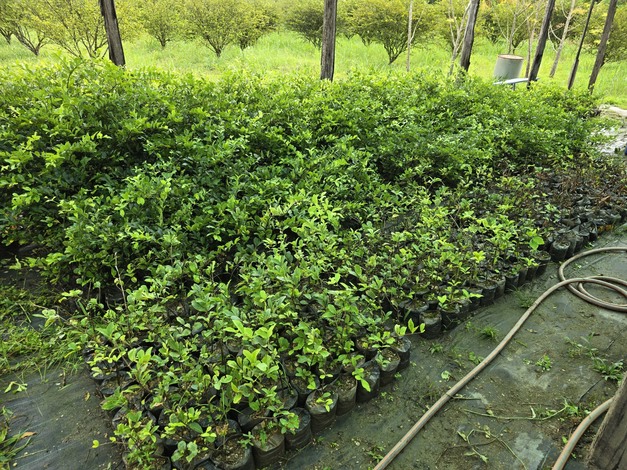 © Fresh PublishersOwn plant cultivation
At Triple A Organic Farm, Adit Moensi grows all his acerola seedlings himself. During Suriname's mining boom, Adit worked for Suralco. When that era came to an end, he decided to dedicate himself to agriculture. "I was convinced that farming and horticulture could play a key role in diversifying Suriname's economy," he explains. "Acerola seemed like a perfect fit; it's a typical Surinamese fruit, and there's strong demand in Europe and the United States because of its extremely high vitamin C content. In fact, global supply can't keep up with demand," says Adit, founder and driving force behind Triple A Organic Farm.
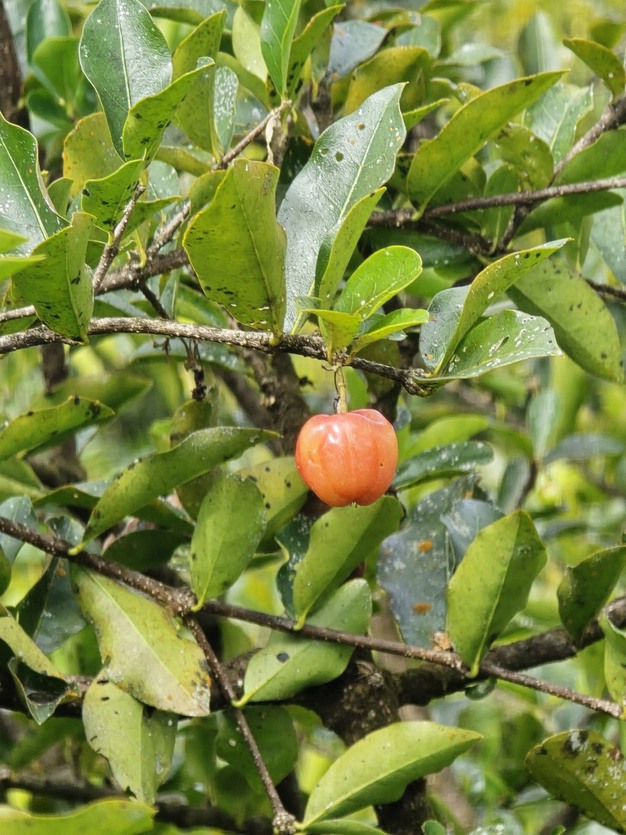 © Fresh PublishersThe acerola berry, or cherry, is well-known in Suriname and is widely processed into drinks
Adit started small, with three hectares on the former sugarcane plantation Welbedacht in the Commewijne district. But expansion plans for another 44 hectares are already in motion. The farm is close to receiving Demeter certification for biodynamic production. "Organic acerola earns up to three times the price of conventionally grown fruit, which more than offsets the higher production costs," Adit notes.
You won't easily find these delicate berries at local markets, their shelf life is just too short. "But most Surinamese know the fruit well, and many even have a tree in their own backyard. It's the go-to home remedy for a cold or the flu," Adit says with a smile.
The freshly harvested acerolas are carefully washed before being sold. Adit supplies them in one-kilo packs to local juice producers, and as frozen pulp or even ice-cube-sized portions to supermarkets. His frozen pulp is particularly popular among the Brazilian community in Suriname. Beyond the local market, Adit also exports to a buyer in Germany who takes full containers of frozen pulp. "At the moment, I can ship two containers a year. Once the new fields are planted, I'm aiming for one per month. Although the U.S. market is interested too, my focus for now is on Europe.".
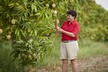
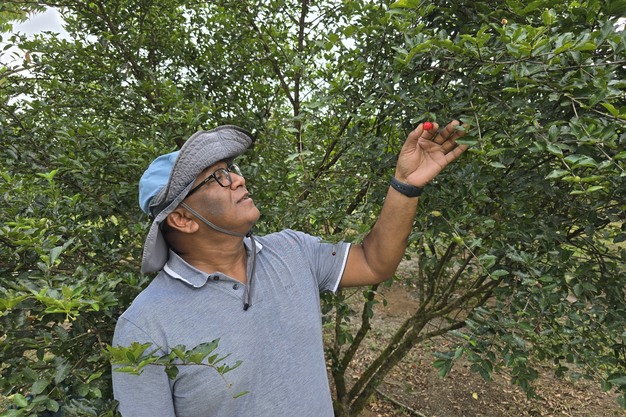 © Fresh PublishersAdit with a solitary acerola cherry that escaped the pickers
Processing and freezing take place at a partner facility that dedicates an exclusive, certified organic line for Adit's production. "From 1,000 kilos of fresh acerola, we obtain about 750 kilos of pulp, which is flash-frozen at -30°C and stored at -20°C. The frozen pulp is shipped to Europe in 175-liter bins, where it's mainly used to boost the vitamin C content in various fruit juice blends."
The next big step, Adit says, is producing acerola powder through freeze-drying. "That's where the real value lies; it's lighter to ship and has a higher price point. But the equipment investment makes it a long-term goal."
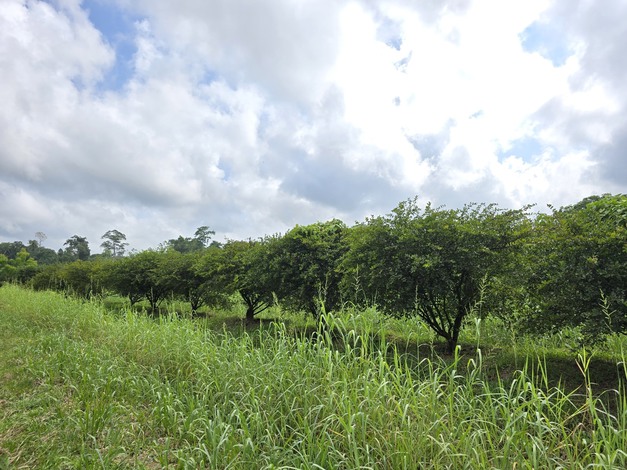 © Fresh PublishersHectares of acerola shrubs
When it comes to competition, Adit isn't too worried. "Brazil is the world's largest supplier of frozen acerola pulp, but they don't produce it organically. Plus, demand keeps growing," he says confidently. "We also have an advantage with our local variety, Boma 1/8, which is perfectly suited to Suriname's climate and naturally resistant to pests and diseases."
For the planned expansion, Adit can rely on government support through NOFA, an agricultural investment fund offering loans in Surinamese dollars at 5.5% interest. "That might sound high, but regular interest rates here range from 10 to 15%. To make the most of the land, we're also considering intercropping ginger between the acerola rows—it's another high-demand product in Europe, especially the organic kind."
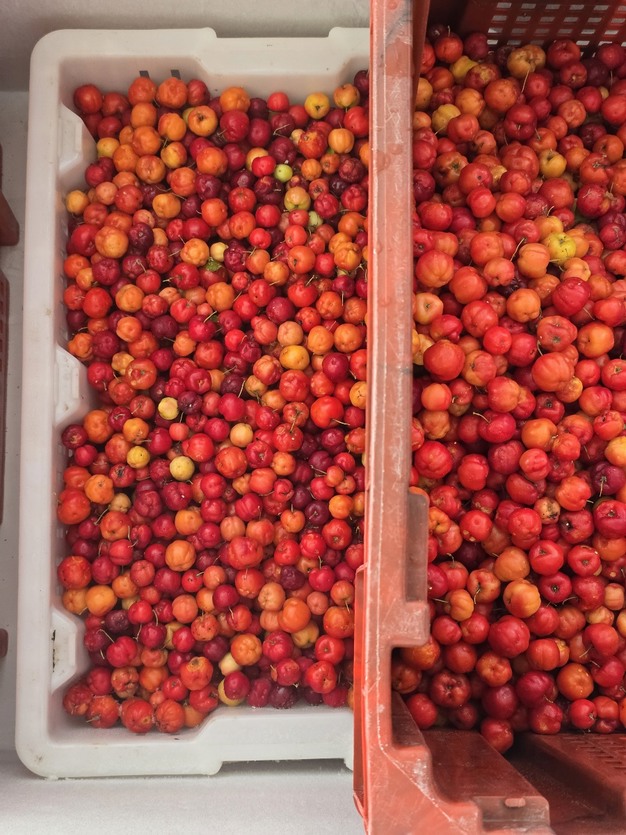 © Fresh PublishersBins full of acerola cherries
Adit is also preparing a pilot project with cocoa, using an agroforestry system. While establishing the acerola beds, he keeps strips of secondary forest intact to serve as windbreaks, where the Trinitario cocoa variety will be planted.
Having gathered extensive knowledge of acerola cultivation since his mining days, Adit now hopes to share his expertise with others. "I want to help new growers get started with this vitamin powerhouse," he says. "It's definitely a profitable crop—each hectare holds about 400 trees, and each tree can yield up to 60 kilos of fruit per year. That's about 20 to 24 tons per hectare, and one person can manage roughly two hectares. Besides teaching the cultivation techniques, I can also supply planting material," concludes the ever-enthusiastic Adit Moensi.
 For more information:
Adit Moensi (managing director)
Triple A Organic Farm NV
East-West Connection KM 31 #1215
Welbedacht – Commewijne (Suriname)
Tel: +597 8810180
[email protected]