The University of Maine's Aroostook Farm has completed a $3 million renovation, funded through the Maine Jobs & Recovery Plan (MJRP), to advance research on potato varieties and support the development of Maine's agricultural workforce.
Located in Presque Isle, Aroostook Farm is part of the Maine Agricultural and Forest Experiment Station (MAFES) and has served as a research hub for more than a century. The 425-acre facility supports breeding efforts such as the Caribou Russet potato, which is currently the top seed potato variety planted in the state.
 © University of Maine
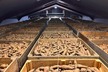
The renovation includes upgrades to research infrastructure, such as a former potato storage facility now converted into a laboratory equipped with DNA phenotyping tools, imaging equipment, optical sorters, and sensors. These additions are intended to improve the evaluation of yield, quality, and disease resistance in experimental potato varieties. In the fields, new drones will monitor nearly 6,000 test plots, collecting data on crop responses to changing weather conditions and pest pressures.
The Caribou Russet, bred to be disease-resistant and tolerant of climate stress, has been cited as contributing to Maine's position as one of only three U.S. states where potato production increased between 2000 and 2022. The potato sector in Maine has an estimated annual economic impact of $1.3 billion and supports approximately 6,500 jobs, according to a recent report from the University of Maine.
Developing a new potato variety typically takes 10 to 12 years, requiring concurrent testing of multiple candidate lines. The updated facilities aim to speed up this process by allowing more simultaneous assessments. Irrigation, field data collection, and lab analysis are expected to benefit from the improvements.
The $3 million investment is part of a broader $35 million MJRP allocation to the University of Maine System, designed to support recovery and growth using federal pandemic relief funds. The modernization project also received contributions from the Maine Potato Board and Farm Credit East, ACA.
The renovation includes support for student internships at Aroostook Farm, providing applied research opportunities for students from the University of Maine, the University of Maine at Presque Isle, and the University of Maine at Farmington.
The Aroostook Farm renovation is one of four MJRP-funded capital projects intended to support Maine's natural resource industries. Additional projects currently underway on the Orono campus include the Sustainable Aquaculture Workforce and Innovation Center, the Green Engineering and Materials Factory of the Future, and the Food Innovation Lab. These initiatives also received Congressionally Directed Spending with support from U.S. Senators Susan Collins and Angus King.
For more information:
Samantha Warren
University of Maine
Tel: +1 207 632 0389
Email: [email protected]
www.umaine.edu