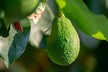
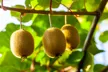
In New Zealand, feijoas are grown throughout the North Island, Canterbury, Nelson and Marlborough. Unfortunately, the guava moth - a monitored pest threat to feijoas - has been in the country for around 20 years and it’s slowly moving south. It can also decimate other crops such as macadamia, pears and citrus and is common in Northland and Auckland.
President of the New Zealand Feijoa Growers Association and small-scale grower Roger Matthews is a trained scientist. He is both interested in and understands the complexities of growing orchards, from genetics to the study and control of pests endangering the industry.
Roger believes the research should be carried out in Australia, but unfortunately this type of grant can only be used in New Zealand. He said: “The NZFGA were granted $300,000 from the Sustainable Farming Fund for research into the guava moth. We’ve tried pheromone traps, but they only attract males, and it only needs one male to mate with hundreds of females, so it is ineffective scientifically.”
A PhD research project is being carried out to identify attractants to the fruit food sources, with a potential outcome of chemically re-creating them to encourage females to lay where there is no food source, and their larvae die.
Source: sunlive.co.nz