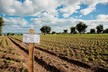
The Protected Geographical Indication (PGI) "Calahorra Cauliflower" expects its certified production to grow by 30% this campaign; a trend they hope to maintain by expanding to new markets. This was announced by Adolfo Nájera, member of the board of the Association of Calahorra Cauliflower Producers. He also said that the PGI has covered about 100 hectares this season, and a production of around 2 million units is expected.
This year's campaign is being favoured by the optimal temperatures registered during the winter, which were not as extreme as on other occasions, which combined with the adequate levels of moisture has led to a good plant development.
Since the creation of the PGI in 2003, the product has already managed to arrive to the whole of Spain. Particularly in the North, in regions such as the Basque Country, Navarra, Catalonia or Galicia, besides Madrid, which is also one of our vegetable's main consumer.
The next step, he said, was to go overseas, where demand is already being detected from clients in central and northern European countries, such as Germany, Austria, Great Britain and Scandinavia.
He believes their product stands a good chance in those markets, as it is "very compact," resists processing really well and has a long shelf life.
He stressed that the PGI has European certifications confirming the use of environmentally friendly growing techniques, such as integrated production, and that pesticide levels are way below the permitted level, "almost at zero."
Nevertheless, the PGI has not made any exports yet, as the production is still too small to cover international demands, he says.
The current main competitor for Calahorra cauliflowers is the French region of Brittany, which "ships huge volumes and is constantly producing," he pointed out, which practically makes them "Europe's cauliflower larder."
In this sense, he pointed out that Calahorra "largely depends on the weather," which can cause supply shortages at some points and over supply at others, which has an impact on prices.
To avoid this, research is being conducted to find new producing areas in La Rioja with milder weather conditions to complement the current production.
Another very important aspect, according to the PGI, is the promotional effort to get consumers to recognise the product, as well as its health benefits, with special emphasis on the younger demographic.
To this end, the Regulatory Board has renovated the product's image and has prepared TV promotional campaigns. It has also taken part in a gastronomic contest at national level to promote different ways to cook cauliflowers.
They also plan to attend the next editions of fairs such as Fruit Attraction, in Madrid, Alimentaria, in Barcelona, or Fruit Logistica, in Berlin.