Whereas many companies in greenhouse horticulture opt for specialisation, Tomato Masters decided to take a different course. The company, originally focused on tomatoes and based in Deinze, and part of the cooperation Tomeco, expanded into peppers in 2023. Through VLAM, peppers, together with the wider Belgian vegetable range, have recently received additional exposure as an export product.
 © Jannick Flach | FreshPlaza.com
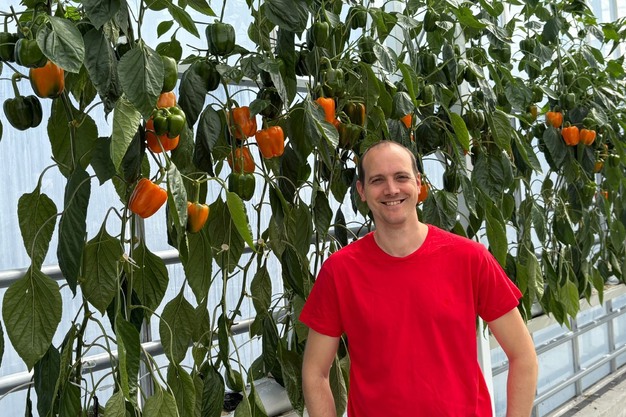
Tomato Masters' decision was not driven directly by market ambition, but mainly by increasing risks in tomato cultivation. "We are indeed originally specialised in tomatoes, as the name suggests," laughs Tom Vlaemynck, third generation within the Deinze-based company. "However, in 2023, we decided to experiment with peppers because of the virus pressure in tomatoes. Instead of switching completely to resistant varieties, we deliberately chose to spread the risks by growing different crops." Initially, this included three crops: tomatoes, cucumbers, and peppers. Later, cucumbers were dropped, but peppers remained.
That strategy was partially adjusted in the years that followed, but the pepper crop remained. "That mainly has to do with how well pepper cultivation proved to fit within the company in practice. It is a good complement to labour and provides additional risk diversification. In consultation with Coöperatie Hoogstraten, through whom we market our products, we decided to continue with it. As long as it performs well, we will keep it that way."
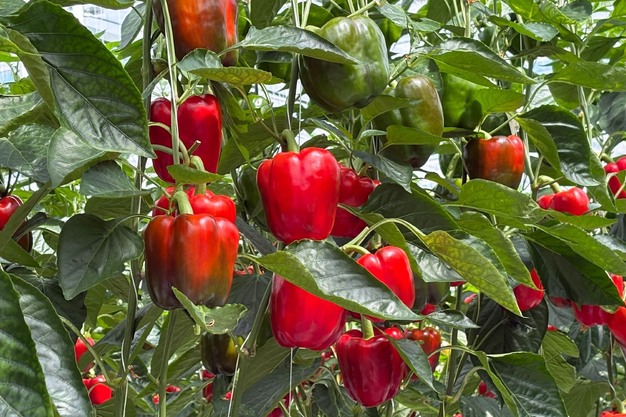
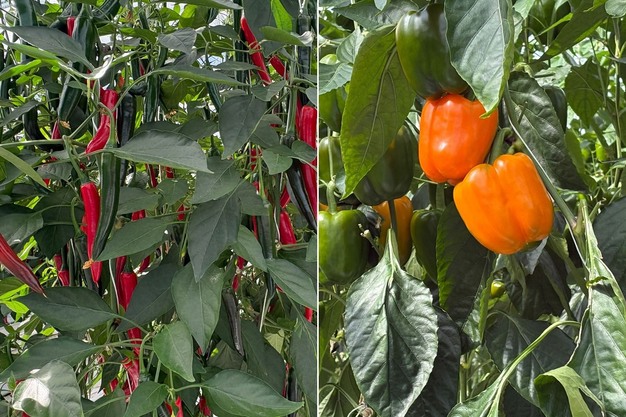
A conscious decision was made to focus on red and yellow peppers. "Red and yellow are the basis, because that is where the most sales opportunities lie. We then added orange because another grower stopped production, and it fit within our cultivation schedule. We effectively took that over one-on-one. Green peppers, however, are not part of our production because they do not fit our cultivation approach." The company currently grows about 3 hectares of red peppers, 3 hectares of yellow peppers, and 2.4 hectares of orange peppers, along with a smaller acreage of snack peppers. By comparison, tomato cultivation covers about 12.5 hectares.
 © Jannick Flach | FreshPlaza.com
Export potential towards France and Spain
There is clear sales potential, as reflected in VLAM's export figures. Germany and France, in particular, are important export markets for Belgian peppers. Whereas exports to Germany have remained stable at around 5,000 tons in recent years, worth 10 million euros, France has shown strong growth. Export volumes to France have almost doubled compared to 2016, reaching around 15,000 tons worth 24 million euros. That accounts for almost 10 per cent of the total value of exported vegetables to France.
A newly emerging market is Spain. Whereas exports of Belgian peppers to Spain were negligible 10 years ago, volumes have increased tenfold in the last three years compared to 2016. Although volumes are still not comparable to those shipped to France, exports of more than 1,500 tons, worth almost 3 million euros, indicate clear growth.
Market under pressure, but perspective remains
There are, however, challenges within the pepper market. According to Tom, the market is dynamic and sometimes unpredictable. "Last year, for example, was not a good price year, and even now the market is still weak at the start of the new season. There is a lot of supply, including from Spain. Then you see prices come under pressure."
Still, he expects the market situation to change. "Spain drops off towards the end of May, and everyone then enters a production gap. The market can recover quickly after that. You see that more often. If supply and demand shift, things can turn around quickly."
 © Tomato Masters
In the longer term, he remains positive about the position of Belgian peppers. "Demand is growing, while the acreage in Belgium is actually decreasing. The decision to start with peppers was also taken at the time in consultation with the cooperative, which was actively looking for additional production. So there are definitely opportunities. Customers are also explicitly asking for Belgian products."
Cultivation challenges differ
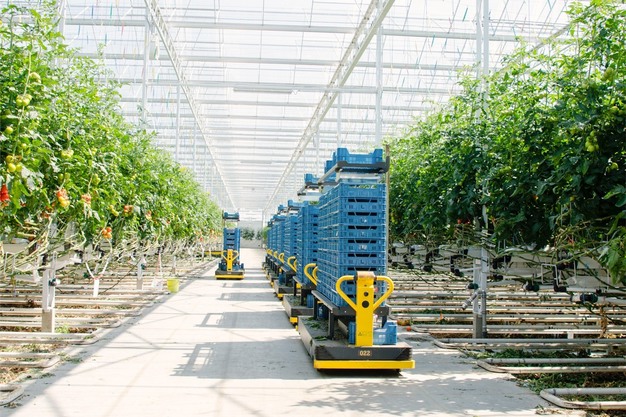
From a cultivation perspective, the switch to peppers also proved not to be a straightforward extension of tomato production. "The biggest challenge is biological control. Whereas tomato growers have relatively few problems with aphids, this is much more difficult to manage in sweet pepper cultivation. Moreover, there are few effective remedies available, which makes a strong preventive approach essential. In practice, this has already led to some quality losses in production, but we are learning more every year."
At the same time, there are advantages. "Climate control is less intensive. With tomatoes, you have to make adjustments almost daily, whereas with peppers, this is far less frequent. On the other hand, mistakes become visible later and are harder to correct. If a pepper plant stalls, it takes a long time to recover. Sweet pepper is somewhat more forgiving than tomato, but you have to work differently. Starting irrigation later and continuing longer with smaller applications was really a learning process for us."
Tom also sees advantages in combining crops. "In terms of labour and organisation, sweet pepper presents different challenges. The crop has clear harvest peaks and troughs, which makes staff scheduling more complex. In tomatoes, labour is distributed more evenly throughout the season. The advantage of a combined farm like ours is that staff can be shifted between crops."
 © Jannick Flach | FreshPlaza.com
Expansion with peppers
Meanwhile, the company is already looking beyond standard peppers. "A next step has now also been taken with the launch of snack pepper cultivation. This will help determine whether there is room for more niche products within the pepper segment and related crops. This development fits within the broader strategy of distinguishing ourselves not only in tomatoes but also in other crops. In the coming period, we will evaluate which further steps can be taken in this regard."
"Peppers are marketed through Coöperatie Hoogstraten," he explains. "Unlike some other products, peppers are not part of the Tomeco story. This is mainly because it was initially uncertain whether cultivation would remain structural. However, with the introduction of peppers, we are now investigating market opportunities together with Tomeco. That cooperation is still in an exploratory phase, looking at possible differentiation and new sales channels."
Diversification as future strategy
Looking back, Tom is satisfied with the choices made. "When we started with three crops at once, everyone thought we were crazy. And to some extent, they were right, because it involved risks. But it worked out well for us. The first few years helped with that. We were also fortunate that the first years were good, both for cucumbers and sweet peppers. If that had been different, you might look at it differently."
For the future, diversification remains a conscious strategy. "It provides flexibility and diversification. It is more complex, but it also makes you less dependent on one crop. And in this sector, there is no luxury."
 © Jannick Flach | FreshPlaza.com
For more information:
Tom Vlaemynck
Tomato Masters
Stokstormestraat 14a
9800 Deinze
[email protected]
www.tomatomasters.be
Nele Van Avermaet
VLAM
+32 2 552 80 32
[email protected]
www.vlam.be