Persistent rain delays across parts of South Africa are expected to compress the lemon season, with northern and southern production areas likely overlapping over the next couple of weeks, says Jako van Lill, commercial director of DKI Global. "The challenge this season is not necessarily the crop size alone, but rather how volume is timed and spread across markets during peak periods."
Nevertheless, when they emerge from this period, he believes lemons as a commodity could still perform well. Lower export volumes from Argentina, together with reduced crops expected from Türkiye and Spain, are expected to support demand. At the same time, Egypt remains an important factor in the market, particularly with its competitive pricing into certain destinations.
Geopolitical instability has, however, added another layer of uncertainty to global citrus trade flows. "With South African citrus exports expected to reach between 210 and 215 million 15kg cartons this season, market diversification and disciplined volume management will become increasingly important."
Van Lill continues: "The Middle East is an important market for South African citrus, with an estimated 20 to 30% of exports moving into the region across various categories. It remains particularly important for lemons, navels and Valencias. If that region cannot absorb its normal citrus volumes, the industry will need to carefully manage alternative market allocations into destinations such as the UK, Canada, Russia and Asian markets, particularly markets that can become saturated quickly."
Meanwhile, lemon prices in the Middle East have softened over recent days following a period of unusually firm pricing driven by temporary shortages. He believes this reflects a market correction rather than a collapse in demand.
He's been encouraged by how the South African citrus industry, together with its partners in the Middle East, has continued finding ways to keep trade moving despite longer transit times, route changes and rising costs.
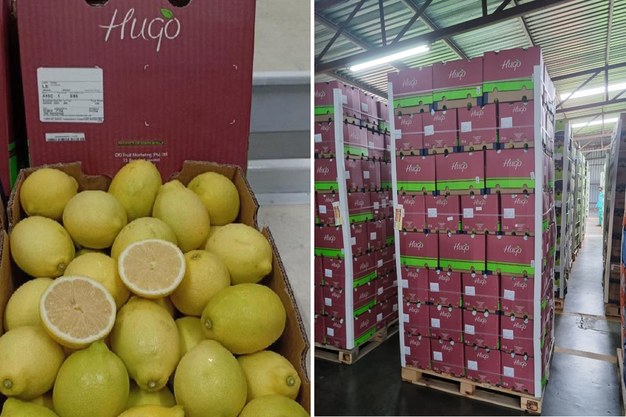 © DKI Fruit
Chinese citrus loom larger every season
Chinese citrus exports, including lemons, are becoming increasingly noticeable in Middle Eastern and other global markets: a reflection of the expanding Chinese citrus export industry.
"China's citrus industry is becoming increasingly relevant in global export markets. Yes, their population is very large and will absorb a significant portion of their production, but," he says, "their growth across citrus, blueberries and grapes has been substantial. Over the next five to ten years we are likely to see growing Chinese citrus presence in a number of traditional Southern Hemisphere markets. I've already noticed a steady increase in Chinese product over the past three to four years."
That said, Van Lill believes there remains a strong place for South African fruit within the right seasonal window. Their Star Ruby grapefruit programme will include their first zero-rated shipment to China this season.
No end to cost increases
The broader agricultural industry continues to face rising input and logistics costs, with ongoing pressure from fuel, fertiliser and packaging-related expenses. "The impact of fuel prices will become more evident in the coming months, while fertiliser prices have already risen significantly."
Van Lill believes the season will reward exporters who remain disciplined in market selection, logistics execution, quality management and programme management. "This season is becoming less about how much fruit can move, and more about how well risk and timing are managed across the value chain."
 For more information:
Jako van Lill
DKI Global
Email: [email protected]