"In April 2026, we've seen a 20% growth in the Mexican mango season compared to 2025 and 2024," says Yamil Gómez Cid, general manager of Mangos Mexico, who warns that this growth could be affected by climatic factors in the coming months.
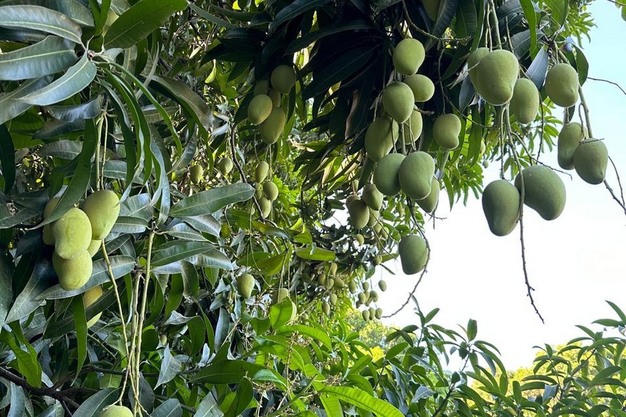
The current season is mainly underway in the south of the country, with Chiapas and Oaxaca in the spotlight; however, the focus is now shifting to the north, especially to states such as Sinaloa and Nayarit, where high temperatures and atypically warm winters have had an impact on the production. "The heat shocks have caused some fruit loss, to a similar extent to what occurred in Peru two seasons ago," says Gómez.
 © Mangos México
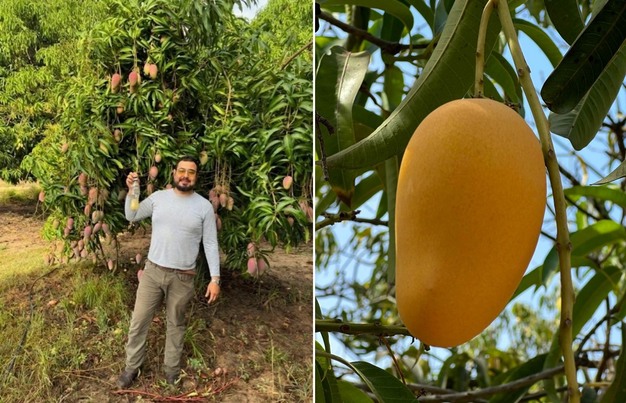
Despite this, he highlights the resilience of certain varieties. "The Ataulfo variety is the one that has better resisted the negative effects from the weather, and fortunately, it is also the most common one in Nayarit," he says. In terms of quality, the balance is still positive. "It has not been compromised; in fact, the conditions in the south have allowed an increase in the volume exported."
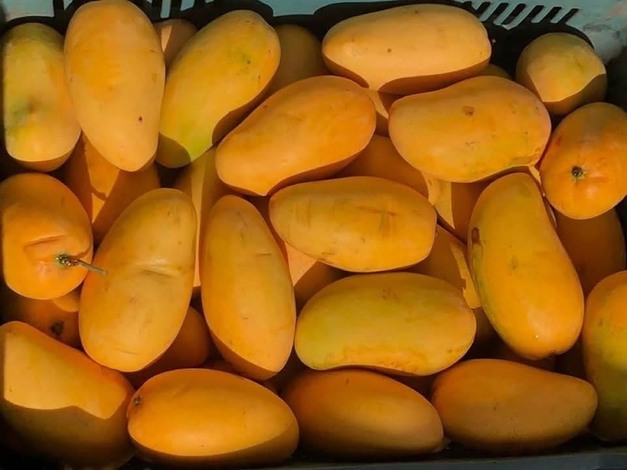
On the economic front, producers are facing a difficult scenario. The rising cost of inputs, energy, and fuel has had a direct impact on profitability. "Producers have been hit particularly hard by prices this year. The price of export mangoes subjected to hydrothermal treatments, which account for around 95% of shipments, stands at 4 to 5 dollars per 4 kg box, and the rising cost of fertilizers has really hit people's pockets," he says.
One of the main challenges is the high dependence on the U.S. market. "90% percent of mango exports are intended for the United States. This, which used to be an advantage, is now becoming a weakness," says Gómez. In this sense, the sector is at "a turning point," in need of diversifying its destinations.
 © Mangos México
On the international scene, competition is also setting the tone in the market. Peru and Brazil are consolidating their position as Europe's main suppliers. "Mexico might be the king of mangoes in the United States, but Peru and Brazil are the kings in Europe," says Gómez. However, rather than competing directly, the campaigns tend to complement one another. "There is no clear competition; rather, our production periods are complementary," he says.
"Other suppliers, such as Ecuador and Colombia, are gaining ground, although they aren't offering large volumes. In Colombia's case, sugar mangoes have been given a push in specific niches. They are not competing in terms of volumes with Peru, Brazil, or Mexico," he says.
 © Mangos México
Europe, with its more than 400 million consumers, is perceived as a strategic alternative, while markets such as Canada, China, and Korea are also on the radar for the medium term. "There is an urgent need to rebuild trade relations with Europe," he says, pointing out that on that continent, the presence of Mexican mangoes isn't very significant.
There are also opportunities in product diversification. Currently, between 90% and 95% of exports correspond to fresh fruit. "We are ignoring the huge potential of value-added goods such as pulp, dehydrated or frozen products," he says.
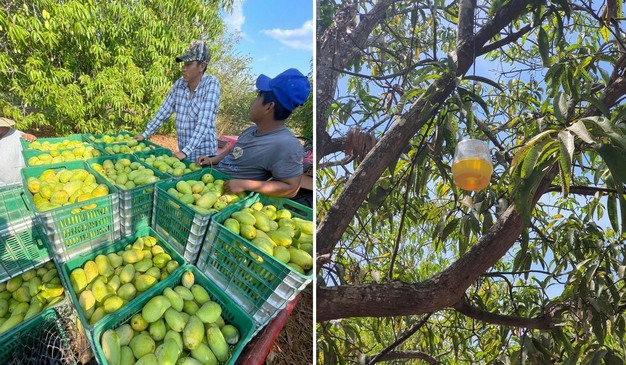 © Mangos México
Regarding phytosanitary protection, there have been advances in pest control. "Last year, the rate of larvae-infested batches reached 1.5%, and this year we are down to 0.8%," says Gómez. However, he also mentions the appearance of new pests as a result of climate change.
For the end of the season, climatic uncertainty is still the biggest threat. We hope to be able to maintain or even increase our current export volume," he says.
For more information:
Yamil Gómez Cid
Mangos Mexico
Tel.: +52 1 33 2950 1719
[email protected]