Greenhouse growers of tomatoes, cucumbers, and peppers face challenges at the end of the season when plastic twines become entangled with plant material and cannot be easily separated. These materials must be transported for incineration, which adds cost. Disposal costs are expected to increase as European regulations on agricultural plastics tighten.
An alternative is being explored
Cordenka GmbH & Co. KG is a German company with a long history, operating with a focus on technical viscose used in tire reinforcement fabrics. Around five years ago, the company applied this expertise to greenhouse horticulture, resulting in a product known as Cordenka Growth.
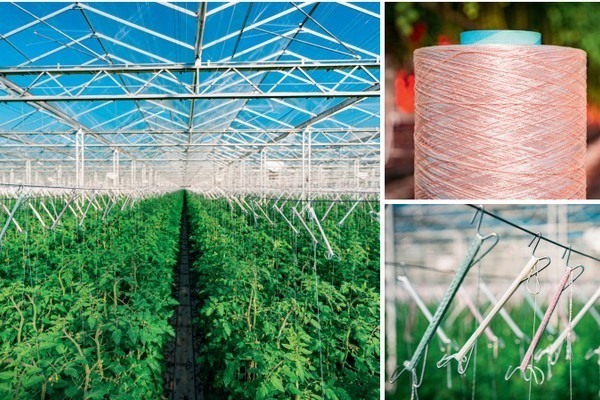 © Cordenka
Plastic twine is widely used in greenhouse production due to its low purchase cost, but disposal creates additional costs. "After harvest, plant material and plastic must be separated and disposed of separately," explains Torsten Zöller, sales manager at Cordenka. "Plants end up in the compost bin, while plastic Twine is incinerated, at best. Time, costs, logistics. And plastic disposal is becoming increasingly expensive, not just in Germany but throughout Europe."
Another concern is the potential release of microplastics from plastic twine during prolonged use in greenhouse conditions. This issue is being monitored by retailers and regulatory authorities.
Cordenka Growth is a support yarn made from natural cellulose derived from tree-based raw materials. Unlike some compostable yarns that require industrial composting conditions, this material decomposes under standard conditions within three to six months. It can be processed together with plant material at the end of the season and left in the field, avoiding separation and external disposal.
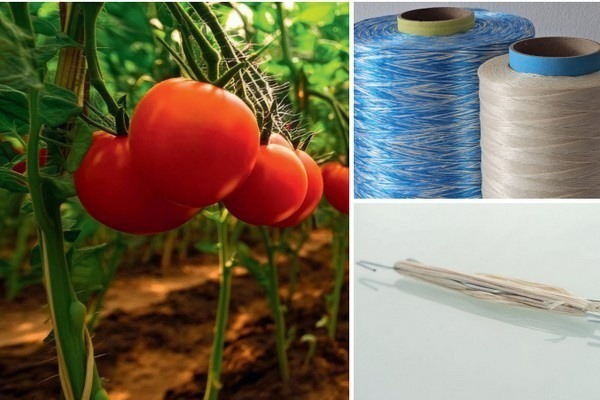 © Cordenka
"The material is completely biobased, biodegradable, and leaves no residue," Zöller states.
The twines are available in different tensile strengths for crops such as tomatoes, cucumbers, peppers, eggplants, zucchini, and fruit crops, including raspberries and blueberries. The strongest version supports mature tomato plants weighing up to 50 kg and can be used with both hook and knot systems. A flat-structured variant has also been introduced to increase contact surface and reduce pressure on plant stems.
The product is in use in Germany, Italy, Belgium, the Netherlands, and France across different production scales. "Despite the challenging international situation," says Zöller, "we have seen growth of more than 200% compared to the previous year. The market is realizing that this is not an ideological choice, but an economic one."
In Europe, distribution is handled by Royal Brinkman
"I could imagine a specific 'Free of Microplastics' label in the future," Zöller says, "so that the end consumer knows directly, from the point of sale, that the product was grown 100% sustainably."
 © CordenkaFor more information:
Alessandro Ercoli
Cordenka
Tel: +39 375 6860864
Email: [email protected]
www.cordenka.com