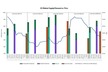
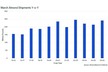
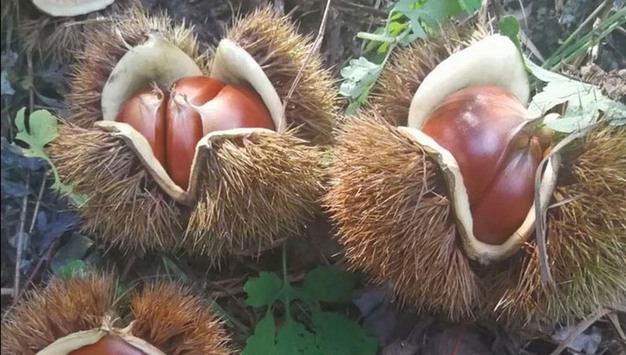
Major chestnut-producing regions in China have entered a critical stage of their annual growth cycle. Areas such as Tai'an and Linyi in Shandong Province typically begin sprouting and flowering in mid- to late April, with the harvest season concentrated between early September and early October. The industry-wide opening date for harvesting is generally around September 5.
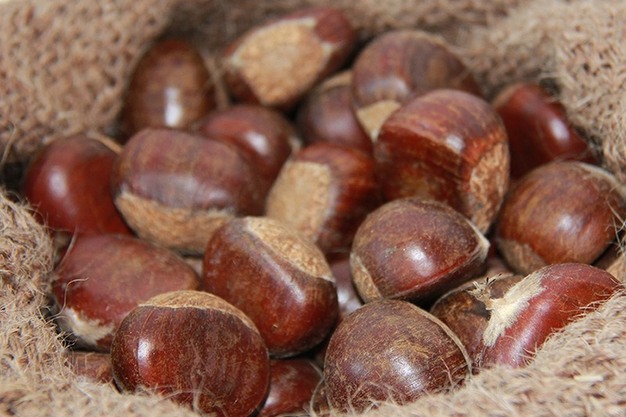
Tai'an Yihang Chestnut Origin Factory is a chestnut processor and exporter based in Shandong Province. The company's fresh shelled chestnuts and frozen peeled chestnut kernels are mainly exported to more than 20 countries and regions, including Southeast Asia, the Middle East, the United States, South Korea, and Europe, with an annual export volume exceeding 100 refrigerated containers. According to Mr. Sun, the company's sales manager, "Climate conditions in core production areas such as Hebei and Shandong were generally favorable during the 2025 season, with ample sunshine and stable weather during the ripening period, which supported sugar accumulation and flavor development. As a result, chestnut production increased significantly compared with 2024, with more uniform sizing and quality, as well as a higher proportion of premium-grade fruit."
 © Yihang
"However, with increased production, the supply–demand balance has also shifted," Mr. Sun pointed out. "Although farmgate purchase prices this season are slightly higher than during the same period last year, consumer demand remains relatively cautious. The market is showing a clear trend of 'premium quality commanding premium prices,' further widening the price gap between high-grade and standard fruit."
"From a market cycle perspective, chestnut sales typically begin in September when the new crop enters the market and continue until around the Spring Festival of the following year, with September to December being the peak shipping period. This phase places high demands on companies' inventory management and supply capabilities."
Regarding exports, Chinese chestnuts have generally maintained a steady upward trend in recent years. Mr. Sun noted that the industry is gradually shifting from traditional exports of whole, in-shell chestnuts toward higher value-added products such as frozen chestnut kernels and ready-to-eat items, with faster growth seen in processed products. This reflects evolving consumption patterns in overseas markets.
"From the perspective of overseas demand, Tai'an chestnuts enjoy strong recognition in multiple markets due to their sweetness, powdery texture, and ease of peeling. Taishan chestnuts and Hebei chestnuts are particularly popular among consumers in Japan, South Korea, Southeast Asia, the Middle East, and among overseas Chinese communities. With the growing emphasis on healthy eating, chestnuts, as a natural food product, are increasingly accepted by local consumers, with applications expanding into baking, desserts, stews, and ready-to-eat snacks."
Regarding industry competition, Mr. Sun believes that differentiation among exporters mainly lies in supply chain capabilities and product structure. Companies with direct access to production areas, standardized production systems, and well-developed cold chain infrastructure have clear advantages in maintaining consistent quality and ensuring year-round supply. In addition, as international markets impose stricter requirements on food safety and compliance, companies with established export experience and comprehensive certification systems are better positioned to build long-term, stable partnerships.
 © Yihang
Tai'an Yihang Chestnut Origin Factory operates seven cold storage facilities and produces approximately 8,000 tons of fresh chestnuts annually. The company currently offers fresh in-shell chestnuts, frozen chestnut kernels, and ready-to-eat small-packaged products to meet diverse customer needs. It has obtained FDA, HACCP, and ISO 22000 certifications. "We aim to further expand into markets in Europe, North America, South Korea, the Middle East, and Southeast Asia, and are seeking long-term partners, including importers, wholesalers, bakery companies, foodservice channels, supermarkets, and e-commerce brands."