Vegetable importers are facing rising freight costs across multiple transport modes, with container rates increasing from key growing regions while fuel surcharges and supply chain disruptions add pressure across the produce supply chain.
Container shipping rates are increasing on major routes. Importers report that rates from South America have risen from $5,000–$6,000 to $8,000–$9,000 per container. For shipments from Egypt, container costs are reported to exceed $11,000 for delivery to U.S. markets.
"There are a lot of reefer containers stuck in Egypt right now," one importer noted.
Container positioning issues are adding to the situation, with shortages in key locations and equipment not available where required.
From Asia, freight rates from China are reported at $3,600–$4,000 per container. However, service reliability remains an issue, with delays reported. One importer described a shipment dropped at Mexico's West Coast that will be delayed by more than a month.
 © Mintec/Expana
Ground transportation and fuel surcharge pressures
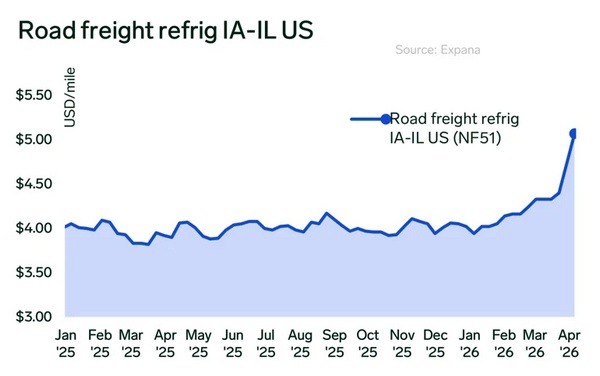
Domestic freight costs are also increasing, driven by higher fuel prices. Importers report fuel surcharge notifications from Northeast producers set to begin in mid-May, with some paying over $9,000 for domestic truck transport to destination markets.
Fuel cost increases are affecting multiple areas. Bunker fuel increases are adding around $0.05/Lb to the cost of production when moving from South America to North America. Diesel prices are affecting ground transport costs across the logistics network.
Packaging costs are also affected. Polyethylene terephthalate resin shortages, linked to oil supply disruptions, are increasing plastic packaging costs.
Margin pressure and pricing volatility
Freight rate changes are creating challenges for importers working with contracted pricing. Sources report that cost changes between the contract agreement and shipment can reduce margins.
"It's both inbound and outbound; the risk is real," said a vegetable trader. "You contracted on a delivered basis. By the time it ships, the price has changed."
Importers report that logistics and packaging costs are rising at the same time, increasing overall cost pressure. The petroleum-based nature of packaging materials means that energy price increases affect multiple cost components.
Industry sources indicate that the current conditions may extend beyond short-term disruption, with energy infrastructure damage in the Middle East expected to take years to repair, which may keep costs elevated.
Source: Mintec/Expana