The first greenhouse strawberries of the season were harvested on schedule in week 15. "The Opera variety marks the start of the season for us, and we're quite satisfied with the quantities and quality so far," reports Ralf Hensen, a strawberry grower in Swisttal, Rhineland. Larger quantities are expected starting in week 17/18, he adds.
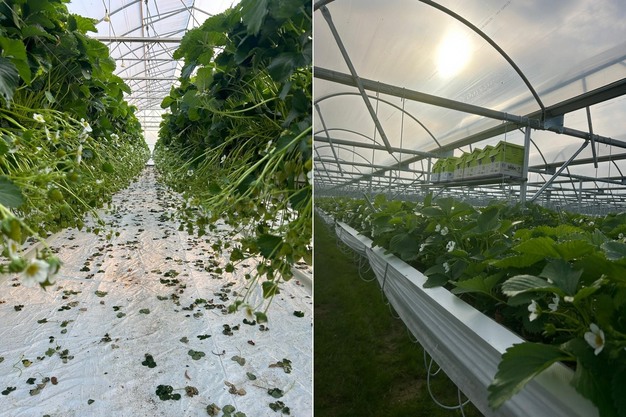 © Hensen/SanLucar
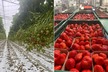
Opera strawberries (left) in a plastic tunnel
Current producer prices are roughly at the same level as last year. A livable price, according to Hensen. "Given the renewed rise in labor and energy costs, we should actually be getting more for our product. At the same time, we are also gradually reaching the consumer's pain threshold. A price increase would only have a negative impact on sales, and that wouldn't help us producers either. If we can maintain the current prices more or less throughout the rest of the season, I think we have reason to be happy."
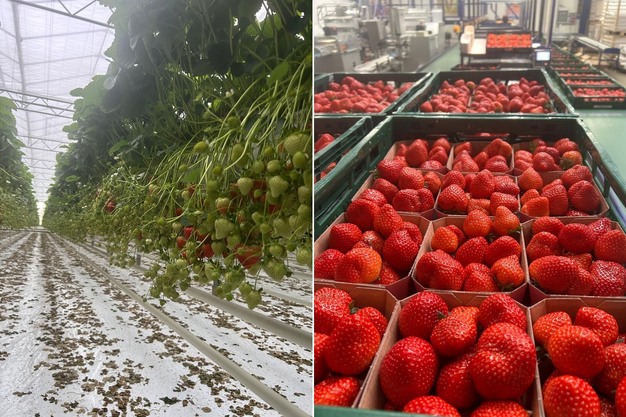 © Hensen/SanLucar
A glimpse into strawberry cultivation in a greenhouse
German strawberries continue to enjoy a high standing in local food retail, Hensen adds. Retailers are also on board, promoting domestic fruit right from the start of the season, "not so much through price, but with attractive, eye-catching secondary placements at the point of sale," Hensen emphasizes. The German peak season still runs from mid-May to mid-June. "During this period, both open-field strawberries and greenhouse-grown produce flood the market, so retailers are generally well-supplied. From mid-June onward, supply then gradually becomes scarcer again."
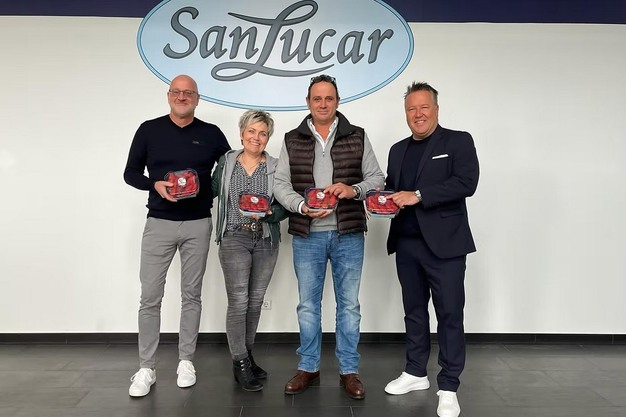 © Hensen/SanLucar
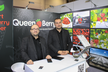
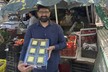
Irmgard and Ralf Hensen (center) with the management of their marketing partner SanLucar.
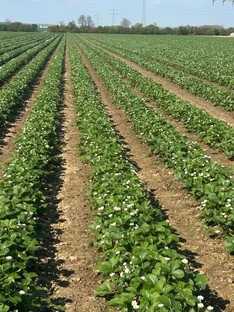 © Hensen/SanLucar
Energy costs threaten the future of greenhouse strawberries
Hensen grows strawberries under glass on a total of 6 hectares. Starting in the first week of May, he gradually begins harvesting the rack-grown strawberries, which are cultivated on over 30 hectares, followed by open-field strawberries, which continue to grow and thrive on around 60 hectares. "We have gradually reduced our open-field acreage in recent years in favor of protected cultivation on trellises. Meanwhile, greenhouse capacity has remained the same: due to high energy costs and the CO₂ tax, expanding capacity here is out of the question for us for now. I also do not categorically rule out the possibility that, in the medium to long term, we will grow only everbearing varieties in the greenhouse, as these also require less energy," he concludes.
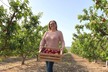
Right: A glimpse into open-field cultivation: At peak times, Hensen employs up to 350 seasonal workers, primarily from Romania.
For more information:
Ralf and Irmgard Hensen
Fruchthof Hensen
Doktor-Josef-Ströder-Str. 25
53913 Swisttal
Tel: +49 (0) 2255 / 8219
[email protected]
www.fruchthof-hensen.de
www.facebook.com/emilerdbeere/