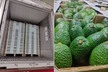
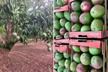
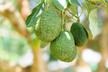
Mango exporters from Mali are increasing their focus on the Moroccan market after the European Union suspended imports due to phytosanitary issues linked to fruit flies.
"We are relying entirely on the Moroccan market this season, along with the British market, to export our fruit," said Niama Djefaga, operations manager of SCS International.
In 2020, imports from Mali reached 3,500 tons, representing 44 per cent of Morocco's total mango imports. Concerns have been raised about the potential impact on local production and phytosanitary risks.
MP Aicha El Kout warned that Malian exporters are redirecting fruit that does not meet European standards to Morocco. She noted that fruit flies remain a risk for local production, including citrus.
In September 2025, the European Union suspended mango imports from Mali following repeated interceptions linked to fruit flies since 2022. In 2024, the EU accounted for around 80 per cent of Mali's mango exports, valued at nearly US$11 million. During the last season, more than 63 shipments were intercepted at EU borders due to contamination.
Ali Chettour, president of the Moroccan Association for Consumer Rights Protection, stated that all imported and locally produced food is subject to control by ONSSA to ensure compliance with health and safety standards. He emphasised the need for monitoring and consumer information.
Morocco's mango imports have increased in recent years, reaching 15,600 tons in 2024, up 10 per cent year-on-year and nearly double the levels recorded in 2019 and 2020. Imports have grown by around 15 per cent annually since 2020.
In 2025, imports reached 2,500 tons in January and February, around three times the volume recorded in the same period last year.
Imports continue throughout the year, with a peak between March and May. Supply is mainly sourced from African countries, particularly Mali and Senegal.
Source: Hespress English