A long-term study from Michigan State University and the University of Wisconsin shows that while heat remains the strongest driver of Colorado potato beetle abundance, other weather and landscape factors also play key roles in predicting outbreaks.
Michigan State University researchers analysed 16 years of data and found that, although heat is the primary predictor of beetle emergence and abundance, environmental factors such as precipitation, air saturation, and soil moisture also influence population trends.
 © Michigan State University
The project was led by Abigail L. Cohen, working with Benjamin Bradford, Russell Groves, and MSU entomologist Zsofia Szendrei. The research was funded by a USDA-SCRI grant led by Szendrei.
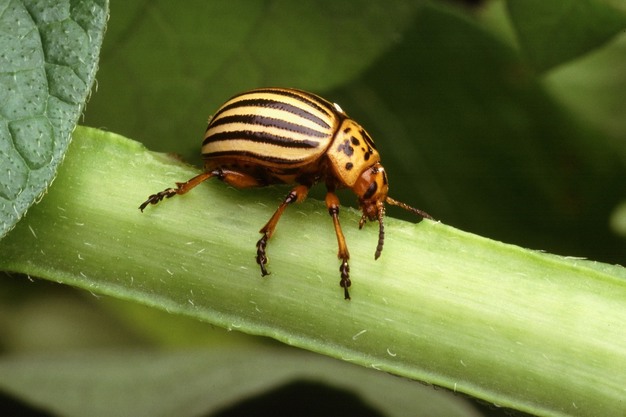
The study aimed to identify environmental triggers behind outbreaks of the Colorado potato beetle, a pest affecting potato production. Researchers combined long-term datasets and applied two modelling approaches to predict beetle populations and explain year-to-year variation.
Results show that, in addition to temperature, precipitation, air saturation, and soil temperature during overwintering periods contribute to population dynamics. Extremely high temperatures were linked to increased beetle numbers, while very low temperatures did not reduce populations to the same extent.
"This research grew out of a larger effort to decrease our reliance on neonicotinoid insecticides in potato production and combine new pest management programs with pest prediction and decision-making tools," Cohen said.
The research team is now working on forecasting models to predict the timing and severity of beetle emergence at the start of the growing season. These tools are intended to support earlier planning and improve pest management strategies under changing climate conditions.
For more information:
Michigan State University
Tel: +1 517 355 4663
www.canr.msu.edu