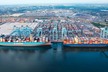
Crude oil prices have increased in recent weeks following military action involving the U.S. and Israel in Iran and the closure of the Strait of Hormuz, a route accounting for close to 20 per cent of global oil supply. Rising energy costs have led shipping carriers to introduce fuel-related surcharges.
Carriers including CMA CGM, OOCL, COSCO, and Maersk have implemented temporary Emergency Bunker Surcharges (EBS). CMA CGM stated that higher fuel costs are affecting "not only sea transportation but also inland operations across all modes, affecting the overall cost of moving containers throughout the supply chain."
 © Mintec/Expana
Maersk has also introduced an emergency rate for cargo already in transit to several Middle East ports. The company stated, "We are implementing this Emergency Freight rate to arrange alternative routing to the final destination, including finding potential storage solutions, additional charters, and so forth."
Shipping disruption remains concentrated in the Middle East region. However, market participants expect an increase in global freight rates due to higher fuel costs and the introduction of surcharges.
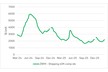
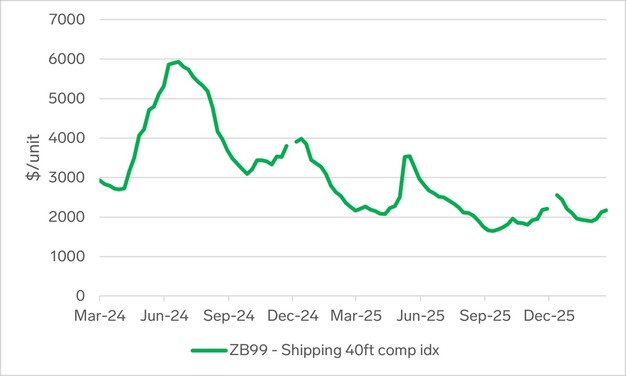
On March 19, the Global Shipping 40-foot Container Composite Index rose by 2 per cent week on week to US$2,172 per unit. Sources indicate that this increase was linked to pricing adjustments following the Chinese Lunar New Year and expectations of higher demand, as most surcharges had not yet taken effect.
With surcharges expected to be implemented by the end of March, further increases in freight rates are anticipated in the short term.
Source: Mintec/Expana