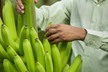
A fungal disease has affected banana and plantain production in Venezuela following a phytosanitary emergency declared in 2023. The National Institute of Integral Agricultural Health confirmed the presence of Fusarium Tropical Race 4 in producing areas, including Aragua, Carabobo, and Cojedes. The soil-borne fungus can remain in the ground for more than 20 years and impacts banana and plantain crops.
In the Renacer community in Aragua, 20 hectares of bananas and plantains, which have been cultivated since 2018, were lost due to the outbreak. "When the disease hit, the entire plantation began to deteriorate," said farmer Lesbia Margarita García. "We had to chop down the banana trees. I cried a lot because I had worked with them for years."
Authorities implemented measures to remove infected crops and support soil recovery. The Food and Agriculture Organization of the United Nations provided seeds, tools, biosecurity inputs, and technical training to support a transition to alternative crops.
Under the program, producers introduced corn, cassava, beans, chili peppers, and pumpkin. Crop rotation and the use of natural fertilizers are part of soil management practices. "Planting corn gave us a harvest that benefited everyone," García said. "These lands do not give up."
The initiative targets high-risk production areas through biosecurity measures, alternative crop systems, and monitoring. FAO has also supplied laboratory equipment and a multispectral drone to support early detection and phytosanitary control.
At the national level, Venezuela has implemented an action plan to manage TR4, including training, awareness programs, and coordination between institutions and producers. International collaboration continues through the World Banana Forum and the Global Network on TR4.
Source: Greater Belize Media