A group of Australian vegetable growers and industry representatives visited New Zealand's North Island from 24 to 29 August 2025 to examine production systems, technologies, and management practices used across New Zealand's horticultural sector. The tour focused on crop management, pest and disease control, labour, succession planning, and operational and environmental considerations. Participants reported that growers in both countries face similar pressures, while New Zealand operations offered alternative approaches worth assessing in Australia.
 © AUSVEG
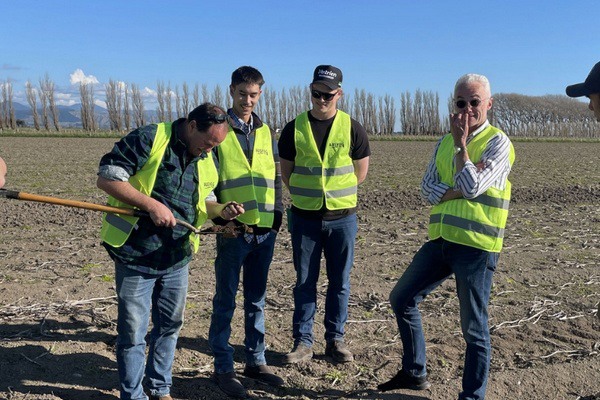
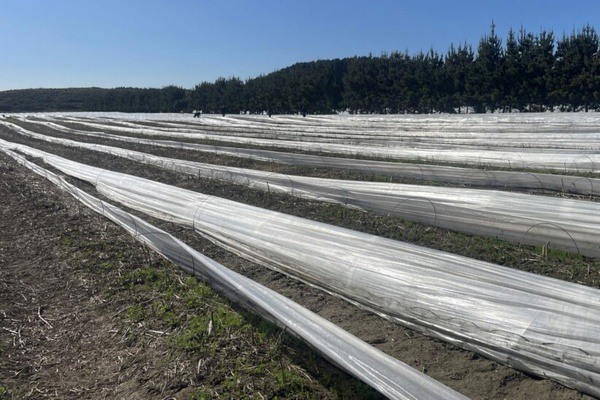
The first visits in the Horowhenua region included Lewis Farms, a family operation producing asparagus and hydroponic berries. The use of plastic tunnels to warm soil and bring forward harvest windows, labour sourced through the RSE scheme, and an in-house grading system were key points of discussion. At Moleta's Potatoes in Opiki, growers observed low soilborne pest pressure attributed to a nine-to ten-year rotation and reliance on basic machinery. Potato production in the region has declined as dairy has expanded, while tomato potato psyllid and zebra chip have increased management challenges.
A biosecurity briefing at Wellington Airport outlined New Zealand's passenger screening system and its role in reducing pest risk for horticulture. Later, a visit to Hot Lime Labs covered ongoing research into CO₂ capture from waste wood for greenhouse enrichment. Participants also viewed retail produce at Moore Wilsons and attended a dinner with New Zealand vegetable growers.
 © AUSVEG
The New Zealand Horticulture Conference in Wellington provided sessions on technology uptake, workforce programs such as the RSE scheme, and pest and resource management. Presentations on automated weed control and consumer behaviour prompted discussion on the applicability of these topics in Australia.
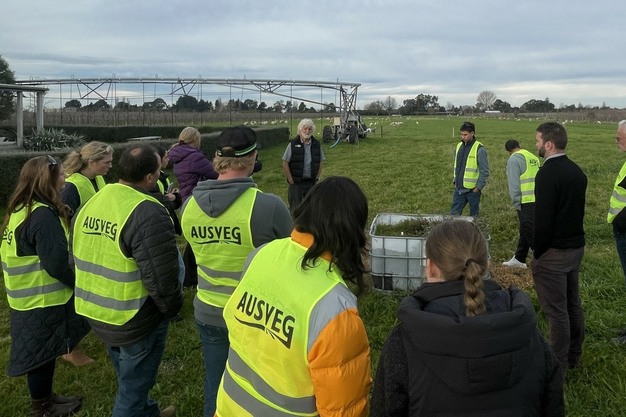
In Hawke's Bay, Apatu Farms outlined management adjustments following cyclone-related silt movement and debris deposition. The business manages vegetables, grapes, and apples, using GPS-guided equipment, frost protection tools, and strict crop-by-crop profitability analysis. At LandWISE Inc., participants viewed field-scale trials focusing on tillage, nitrogen testing, and biodiversity plantings. Bayley Produce demonstrated automated packing systems, frost-prevention tools, and the use of biodegradable film to accelerate crop development for early-season access.
 © AUSVEG
Discussions across all sites highlighted shared themes: reliance on seasonal labour schemes, pressures on margins, changing pest dynamics, and strategic allocation of land and resources. Participants noted operational discipline and rotation planning as recurring features in New Zealand systems. Several growers indicated that elements of workforce management, resource efficiency, and crop profitability assessment observed during the tour may apply to their own farms.
 For more information:
AUSVEG
Tel: +61 (0) 3 9882 0277
Email: [email protected]
www.ausveg.com.au