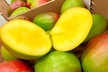
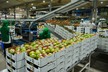
 © ASOCIACION PERUANA DE PRODUCTORES Y EXPORTADORES DE MANGO - APEM"Peru harvested 223,000 tons of mango in the 2025/26 mango season, i.e., 22% less than the 286,000 tons it produced in the previous season and 8% less than the 243,000 tons initially projected. The drop confirms a trend largely driven by weather. The plants were stressed after a record year, and the minimum required for uniform flowering was not reached," stated Keyner Gamarra Azabache, president of the Peruvian Association of Mango Producers and Exporters (APEM).
The irregularity began early with high night temperatures that reduced flower induction. This was followed by an "unusual cold spell in late November and early December," which delayed ripening and caused fruit abortions. Later, rains in January and February impacted quality, particularly in Motupe and Casma.
 © ASOCIACION PERUANA DE PRODUCTORES Y EXPORTADORES DE MANGO - APEM
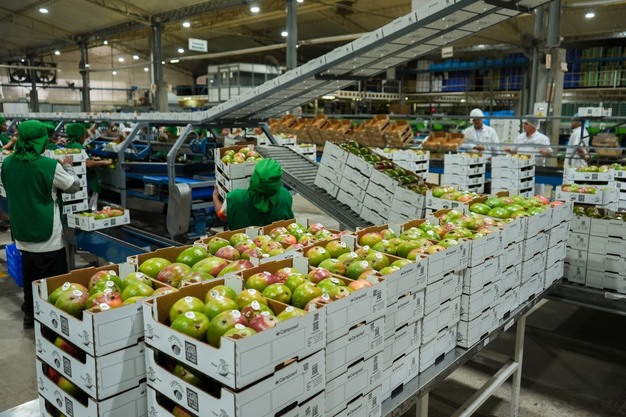
"The result was a highly concentrated campaign, with an upturn between weeks 2 and 5, reaching 20,664 tons in week 3, which is 19% higher than in the previous year. However, the start was very slow: only 1,071 tons were recorded in week 44, compared with 2,731 tons in the previous cycle," he said.
The season was also marked by discrepancies between producers and exporters over the field price. "Some producers temporarily interrupted the harvest in December. Prices could not be aligned with local expectations because the international market never reached levels that justified a higher raw-material price," Gamarra stated. The stoppage lasted three days and did not alter overall shipment behavior, though it created momentary uncertainty.
 © ASOCIACION PERUANA DE PRODUCTORES Y EXPORTADORES DE MANGO - APEM
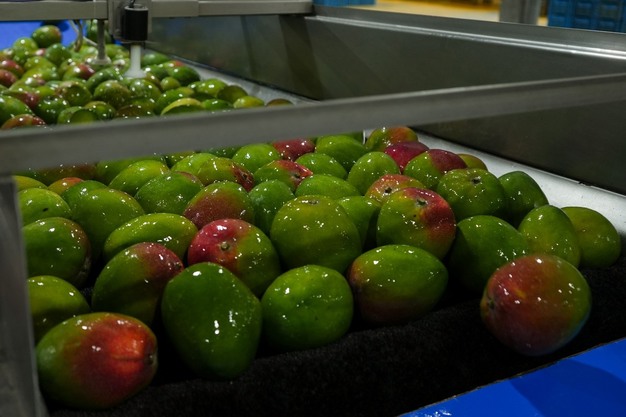
"The United States was the primary destination with 84,200 tons (38%), followed by Europe with 112,377 tons. In Europe, the Netherlands contributed 33%, the United Kingdom 6%, and Spain 5%. Asia and Latin America represented smaller portions, with Chile receiving about 5,100 tons. Panama, Guatemala, and Mexico each accounted for less than 1% of the total," he stated.
 © ASOCIACION PERUANA DE PRODUCTORES Y EXPORTADORES DE MANGO - APEM
Although the supply was absorbed, prices remained unchanged despite the lower volume scenario. "There was a disconnect between the producers' expectations and the actual market conditions," the president of APEM stated. "This was not an isolated incident but a sign of a broader disconnect between the field and the market. While producers base their expectations on local costs and perceptions, exporters respond to global signals. Closing this gap is crucial for the industry's sustainability."
 © ASOCIACION PERUANA DE PRODUCTORES Y EXPORTADORES DE MANGO - APEM
Weather forecasts have once again placed the Piura region- which represents 65% of national production and accounts for 31,000 ha- at high risk. The intensity of El Niño remains unknown. "We are only monitoring the situation; there is still an 80% chance of neutral conditions," Gamarra stated. According to NOAA reports dated May 4, 2026, "there is an active El Niño Watch. Short-term forecasts (May-July 2026) suggest neutral conditions will likely persist, with about an 80% probability. However, the long-term outlook (June-August 2026) shows a significant increase in the likelihood of El Niño developing, with a 61-70% probability."
 © ASOCIACION PERUANA DE PRODUCTORES Y EXPORTADORES DE MANGO - APEM
Summarizing the campaign's lessons, he emphasized the need to analyze the market more quickly and to advance precision farming to boost technical efficiency amid the growing challenges of climate change.
Gamarra concludes with a warning to the industry: "Quality is no longer a competitive advantage; it is a requirement." He emphasizes that Peruvian mangoes compete not just on quality or volume, but on precision—whether in production, harvesting, logistics, or market analysis. In the future, the most successful seasons won't necessarily be the largest, but those executed with the highest level of precision.
 For more information:
Keyner Gamarra Azabache
Peruvian Association of Mango Producers and Exporters (APEM)
Peru
Tel: +51 991 711 971
Tel: +51 977 609 604
Email: [email protected]
www.peruvianmango.org