More than 400 million people experience a urinary tract infection each year, and some epidemiological studies estimate that more than half of all women will develop at least one in their lifetime. Most UTIs are caused by pathogenic strains of Escherichia coli, and the antibiotic fosfomycin is often used as first-line treatment. However, rising antibiotic resistance is driving the search for alternative approaches.
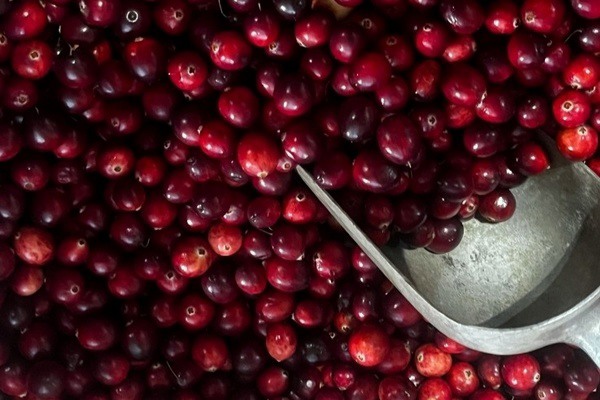
New findings published in Applied and Environmental Microbiology show that cranberry juice may support antibiotic activity in laboratory conditions. Researchers found that in 72 per cent of uropathogenic E. coli strains tested, cranberry juice enhanced the effectiveness of fosfomycin and reduced the emergence of resistance-related mutations. Lead author Eric Déziel, Ph.D., from the Institut National de la Recherche Scientifique in Montreal, noted that the results are preliminary and based on lab-grown strains.
 © American Society for Microbiology
The study does not confirm whether cranberry juice has the same effect after consumption. "We don't know if the metabolites will reach the infection," Déziel said. Further research is needed to determine whether and how cranberry juice could influence treatment outcomes.
Cranberry juice has long been used as a traditional remedy for UTIs. Earlier assumptions linked its effect to acidity, but more recent studies suggest compounds in the juice can prevent bacteria from attaching to cells in the urinary tract. This study is among the first to examine its interaction with antibiotics.
The researchers found that cranberry juice appears to influence how bacteria absorb fosfomycin. The antibiotic enters bacterial cells through channels used for sugar uptake. Substances in cranberry juice appear to increase this uptake, allowing more of the antibiotic to enter the cells. Resistance is often linked to mutations affecting these nutrient channels.
Previous laboratory work by Déziel and colleagues showed that cranberry extracts could enhance antibiotic performance against resistant bacteria. The new study, supported by the Cranberry Institute, aimed to determine whether juice has similar effects.
Déziel said the findings do not establish a direct link between cranberry juice consumption and antibiotic effectiveness, but they support further research into natural compounds. He noted that such compounds may help improve the effectiveness of existing antibiotics without requiring the development of new drugs.
For more information:
Emily Ready
American Society for Microbiology
Tel: +1 202 737 3600
Email: [email protected]
www.asm.org