India's pomegranate exports are picking up again, with Southeast Asia taking up a larger share of demand while Gulf routes slowly rebuild after war‑linked disruptions, says Abhijeet of Elevex Ventures, an exporter active in the India–Gulf–South Asia trade corridor. "In March, exports into the GCC virtually shut down in the first week, but since then, we have seen a gradual restart through Khor Fakkan and other ports. While volumes are still well below last year's levels, the flow is stabilising. "
Demand from Southeast Asia has proved resilient: "For high‑grade and export‑sized fruit, our focus is on Malaysia, Singapore, Sri Lanka, and Thailand. In today's numbers, Malaysia accounts for roughly 60 to 70% of that Southeast Asian trade, with the rest spread between Singapore, Sri Lanka, and Colombo," he notes.
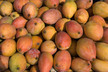
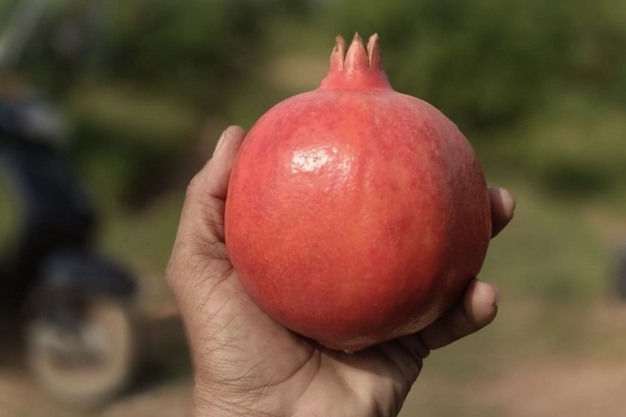
India's pomegranate season now runs from about March–April through November, centred on Maharashtra belts such as Ahilyanagar, Nashik, and Solapur, with Gujarat and Rajasthan supplying smaller but meaningful volumes later in the year. For export‑grade, 150–250 g fruits are the sweet spot, with 150–200 g preferred in the Gulf; and between 200–250 g and above increasingly favoured in Malaysia and Singapore.
 © Elevex Ventures Pvt. Ltd.
Farm‑gate prices for export‑grade fruit are currently around USD 1.7 per kg, with expectations of a gentle slide toward USD 1.6 per kg as more supply comes to market in the next 15 days. "Bigger‑sized fruit commands a premium, and this year we're actually seeing more of the 200–250‑gram fruit than usual," Abhijeet observes.
The biggest pressure point this season has been logistics, he admits. "Before the conflict, a 40‑foot container from JNPT to Jebel Ali would cost around USD 1900; now it has jumped to roughly USD 9000. Transit time has stretched too, from about six to seven days to around ten days, and even after arrival, clearance and delivery at Khor Fakkan can add several extra days."
Despite these bottlenecks, Indian pomegranates have held up as the fruit from Maharashtra, which supplies about 70–80% of exports, has a post‑harvest life of roughly one to one-and-a-half months. "The main pain point is not shelf life or quality deterioration, but the sharp rise in freight and clearance costs. At the same time, Abhijeet notes that realisation rates for Indian pomegranates remain healthy, which shows that demand and export growth are still strong."
Looking ahead, the sector is focusing on market diversification to reduce over‑reliance on the Gulf. Abhijeet shares plans of exploring Russia more seriously and testing small‑scale possibilities in Europe. "Indian traders will look to build a more balanced export‑market mix so that one trade corridor being hit by geopolitical or logistical issues does not derail the overall growth story."
For more information:
Abhijeet Jadhav
Elevex Ventures
Tel: +91 84 22 999 683
Email: [email protected]
www.elevexventures.com