Following a bumper lychee harvest in 2024, 2025 is widely regarded as a lower-yield year. Feedback from major producing regions such as Hainan and Guangdong indicates that overall lychee flowering this year has been poor, with a significant reduction in production expected. The market generally anticipates that prices will remain high.
 © MaxTasti
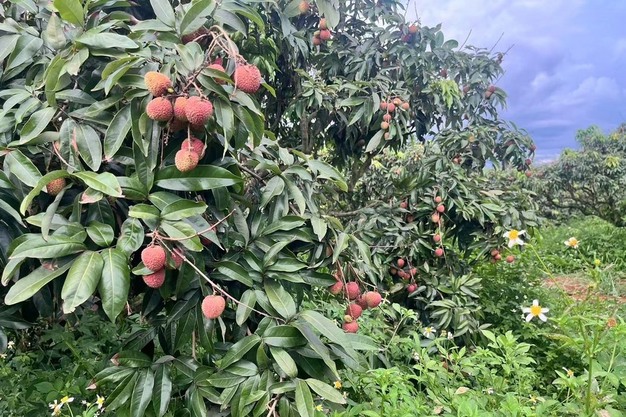
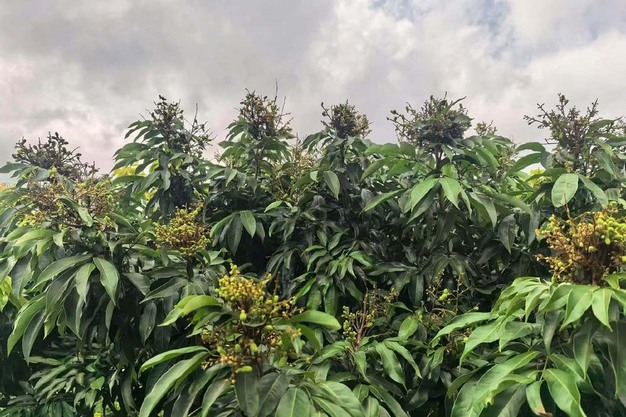
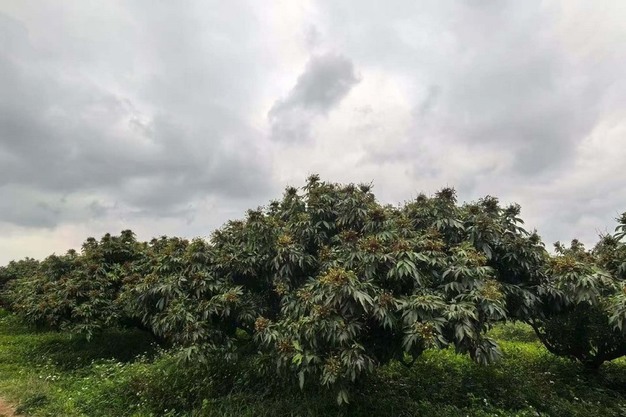
Liu Han, head of the TastiMax brand, stated that her company began exploring export channels for high-quality, pesticide-free lychees last year, targeting the mid- to high-end international market. Currently, its products are exported to Dubai and Saudi Arabia. Liu Han described the current season's production situation: "Lychee trees enter their flowering period in March, and the number of flowers directly determines annual yield. At present, most orchards are able to make a preliminary assessment of this year's production. Compared with the dense flower spikes seen in previous years, lychee trees across various production areas are flowering sparsely this year, with many trees showing only a few scattered spikes. In particular, premium varieties such as Guiwei and Nuomici have much lower flowering rates, with some orchards experiencing little to no flowering, and overall conditions are well below normal levels. In comparison, varieties such as Feizixiao, Heiye, and Baitangying are performing slightly better, but flower development is still not ideal, and final yields remain highly uncertain."
"This year, there may be virtually no Guiwei lychees on the market, and varieties such as Guiwei and Nuomici may even face complete crop failure," Liu Han said. These varieties are an important part of Guangdong's lychee production, and their reduced output will have a significant impact on overall supply.
 © MaxTasti
Hainan is the earliest lychee-producing region in China to enter the market and is also known for its relatively high price levels. The main varieties grown in Hainan are Guihuaxiang and Feizixiao. Among them, the earliest variety to reach the market, Guihuaxiang, has already seen prices rise to ¥120–160 per kilogram (US$0.80–1.05). "Due to the overall reduction in production, Feizixiao is expected to enter the market in early May this year, and its price is likely to be higher than during the same period last year," Liu Han added.
"Our lychees are shipped exclusively by air," Liu Han stated. "Our lychees have achieved zero detectable pesticide residue for 11 consecutive years, despite experiencing two years of severe crop failure. To ensure the best possible eating quality, we harvest in batches, allowing each fruit to reach around 85% ripeness. To preserve the taste and quality of these carefully cultivated lychees, air freight is the only viable option."
 © MaxTasti
Although China is the world's largest producer of lychees and has many years of export experience, exports have historically been driven mainly by price competitiveness. Liu Han noted that since 2025, the company has been actively developing export channels for premium lychees and expanding into mid- to high-end international markets. Currently, its products are exported to Dubai and Saudi Arabia, where they have received positive feedback and strong repeat purchase rates. "This year, we hope to export TastiMax lychees to more countries, especially markets with high standards for lychee quality and taste, such as Europe."