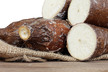
Cambodia's cassava sector continues to expand, with farmers shifting from subsistence production to export-oriented cultivation. Smallholders produced nearly 16 million tons of cassava last year, while exports of fresh and dried cassava and cassava starch were valued at about US$690 million in 2025.
"The kingdom is blessed with large, fertile land suitable for growing various crops, including cassava. Naturally, it is favourable, and farmers are more motivated to farm rather than migrating abroad (to work)," said Chray Son, chairman of the Cambodian Cassava Federation.
According to the Cambodian commerce ministry's iTrade bulletin, cassava varieties grown locally are high in starch, easy to cultivate, disease-resistant, and high-yielding. Cassava is now the second-largest export crop after rice, alongside other crops such as cashew nuts, pepper, mangoes, and bananas.
Production is supported by climatic conditions, including tropical weather, sunlight, and rainfall, allowing cultivation across most provinces. Cultivated area increased from 663,929 hectares in 2020 to 774,843 hectares last year. Average yield is around 20 tons per acre.
"The federation supports farmers in the cultivation techniques, use of good quality varieties that are resistant to diseases and weather. Crops are high in powder and have the standard quality required by factories and buyers," Chray said.
Cambodia is among the exporters of fresh and dried cassava and ranks fourth globally in cassava starch exports, with earnings of about US$28 million. According to projections, cassava exports could reach US$1.2 billion by 2030, while cassava starch exports could reach US$26 million.
Global demand remains linked to uses such as animal feed, fertilisers, biotechnological products, and biogas. Liquid glucose can also be derived from cassava.
Production in 2026 may decline slightly due to high temperatures. "It is estimated that there will be a slight decrease to about 15 million tons. Very hot summers can have some side effects, with extreme heat causing the death of the cassava plants in some areas," Chray said.
China remains a key market, with demand for cassava pellets used in animal feed and biofuel. Within Southeast Asia, Cambodia competes with Thailand, Indonesia, and Vietnam, where production volumes are reported at 30 million tons, 17 million tons, and 18 million tons, respectively.
Source: FMT