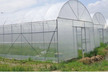
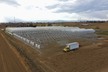
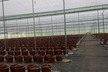
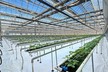
In a decision with far-reaching implications for UK food security, the Rivenhall Greenhouse project has today been granted planning approval by Essex County Council, paving the way for one of Europe's largest and most advanced low-carbon Controlled Environment Agriculture (CEA) developments.
The approval marks a significant moment in the UK's ability to re-shore food production at scale, at a time when the country remains heavily dependent on imported fresh produce and increasingly exposed to global supply disruption, energy volatility, and climate risk.
Developed by Rivenhall Greenhouse Limited, the project represents a new model of British horticulture — combining greenhouse production at strategic scale with co-located energy infrastructure to deliver consistent, year-round supply with significantly lower carbon intensity.
Central to the model is a strategic partnership with the Indaver Integrated Waste Management Facility, through which the greenhouse will source approximately 90% of its heat, alongside 100% of its electricity and a sustainable supply of CO₂ for crop growth. This circular economy approach —capturing and reusing energy and resources that would otherwise be lost — provides a materially more stable and predictable energy cost base than conventional UK and European greenhouse operations.
 © Rivenhall Greenhouse
At a time when rising standing charges, carbon pricing, and energy market volatility are expected to place increasing pressure on domestic and European growers, the ability to anchor energy inputs through industrial co-location represents a step change in the economics of UK food production.
Set against a backdrop of persistent food price inflation, the development highlights structural vulnerabilities in the UK's current food system. Heavy reliance on imports — particularly from climate- stressed regions like southern Spain and Morocco — has left UK consumers exposed to external shocks, contributing to volatility in fresh produce pricing in recent years.
Rivenhall offers a materially different approach: large-scale domestic production, insulated not only from seasonal and geopolitical disruption, but also from the full impact of wholesale energy market fluctuations.
The project is expected to deliver substantial volumes of fresh produce directly into UK supply chains, reducing food miles, reducing waste, improving supply resilience, and supporting long-term price stability. At full capacity, the site could produce up to 30,000 tonnes of tomatoes annually — equivalent to around 7.5% of current UK imports — representing a meaningful step towards domestic supply resilience. The site could also grow cucumbers, peppers or strawberries.
The £150 million investment is also expected to create over 400 direct jobs and position Essex as a UK and European centre for low-carbon CEA, supporting further development in research, skills, and education.
A further pipeline of five comparable large-scale CEA developments has been identified across the UK, representing a significant opportunity to accelerate domestic food production capacity. However, delivery at scale will depend on a more supportive policy environment, including financial incentives, planning reform and recognition of CEA (along with sovereign food production) as a strategically important component of national infrastructure and a Frontier Industry within the UK's emerging Industrial Strategy.
More broadly, the approval raises a fundamental question for policymakers: whether the UK should continue to depend on imported food in an increasingly uncertain global market or accelerate investment in strategically important domestic production infrastructure.
"Rivenhall is widely seen as a blueprint for the future of UK CEA — demonstrating how scale, advanced technology, and industrial co-location can be combined to transform the economics, carbon intensity and resilience of food production", says Ed Moorhouse – Rivenhall Greenhouse Project Director. "Today's decision marks the culmination of four years' intensive work with our partners at Indaver and Wren Renewables. From the outset, we saw the opportunity presented by the Rivenhall site as transformational in how CEA facilities are designed, located and operated. We are delighted that this vision has been supported by Essex County Council today and look forward to working with them and developing the site and county as a leading CEA European hub. This is a good day for UK horticultural and the nation's food security and resilience".
Micheal Geary – Indaver said: "Today's approval is a strong endorsement of the role that industrial collaboration and circular economy thinking can play in supporting the UK's future food security. At Rivenhall, recovered resources will be put to productive use — providing reliable heat, electricity and sustainable CO₂ to power large-scale domestic food production.
This partnership demonstrates how industry and agriculture can work together to reduce carbon emissions, improve resource efficiency and strengthen supply resilience. We are proud to support a project that sets a new benchmark for sustainable infrastructure and showcases the wider economic and environmental value of integrated resource recovery."
Richard Gudgeon of Wren Renewables [Landowner] said:
"We are delighted that Rivenhall Greenhouses Limited have secured Planning approval for their greenhouse project co-located on our site at Rivenhall. This project is a significant CHP heat user and further compliments the renewable credentials of the development"