Can a fruit trading company also offer higher education? The answer is yes—and Earth University in Costa Rica proves it, combining banana cultivation and export with an educational mission centred on sustainable agriculture, innovation, and leadership development.
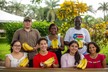
Earth offers a four-year undergraduate programme in Agricultural Sciences. "We have a student body of more than 400 future change-makers from around 40 countries across the Americas, the Caribbean, and Africa. Fifty-two percent are women," says Fernando Gil, CEO of Earth Ventures, the university's commercial division.
 © EARTH Ventures
Around a quarter of students come from Africa, partly thanks to a scholarship programme funded by the Mastercard Foundation. "More than 90% of students receive financial support," Gil adds.
Bananas as brand ambassadors
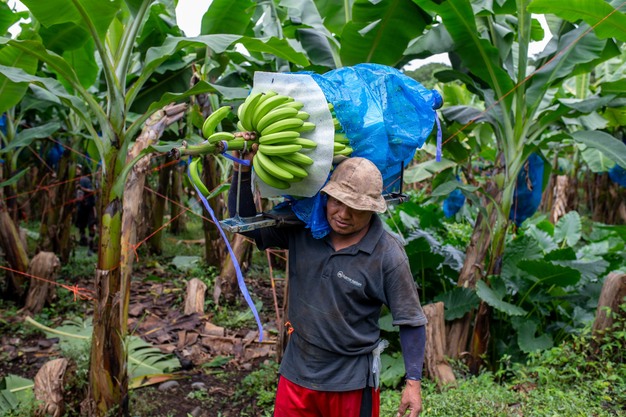
Earth's commercial operations are not a side activity; they sit at the heart of both the institution's financial model and its values. Through them, core institutional values are put into practice, above all, sustainability and social responsibility. EEARTH Ventures contributes funds to the university's annual operating budget. "Our bananas are like ambassadors for our mission," says Adrián Jiménez, commercial crops manager.
 © FreshPlaza
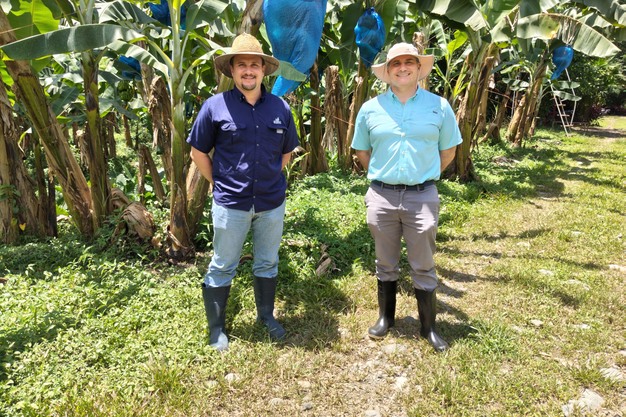
Adrián Jiménez, Commercial Crops Manager, and Fernando Gil, CEO of Earth Ventures, the commercial division of Earth University.
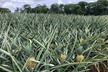
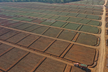
Earth's estate, located in Limón province, covers 3,376 hectares, of which 450 are planted with bananas. Annual production is around 1.1 million boxes, all of the Cavendish variety. The most important market is the United States, where Whole Foods Market has been EARTH's main customer for over 23 years. "It's a very important partner, not just for the commercial operation but for the university," says Jiménez.
The second market is Germany, through a partnership with supermarket chain EDEKA. "All profits from this operation go towards student scholarships and Earth's operating funds. They also generate high levels of employment in the surrounding communities, creating more than 300 jobs," Gil emphasises.
A university like no other
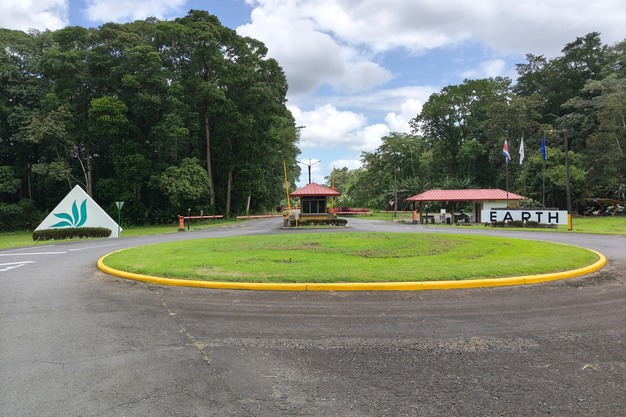
Earth was founded in 1986 as a private, non-profit international institution. Its origins lie in a joint initiative between the governments of Costa Rica and the United States during the turbulent 1980s, a period marked by armed conflict across Central America. Costa Rica's president at the time made a compelling argument to Washington: what the region needed was not more weapons, but education. "By training leaders who could transform their communities for the better, we could make a real difference in the region," says Jiménez.
 © FreshPlaza
The admissions process is highly competitive: more than 1,000 applications arrive each year from over 50 countries, for an intake of around 120 students. Candidates are interviewed—both individually and in groups in their home countries—to assess qualities that are hard to measure in an academic aptitude test, such as leadership potential and values. The goal is not simply to train agronomists. "It's less about being an engineer and more about being a leader," Gil explains. "Because if the purpose is to transform food systems, leadership is everything."
The curriculum reflects that ambition. Students attend classes six days a week, eleven months a year. "The programme gives students the knowledge, skills, and practical competencies needed to work in sustainable agriculture and responsible natural resource management," Gil explains. "It also provides hands-on entrepreneurial experience, all of which makes Earth graduates genuinely well-rounded professionals."
A pioneering sustainability project
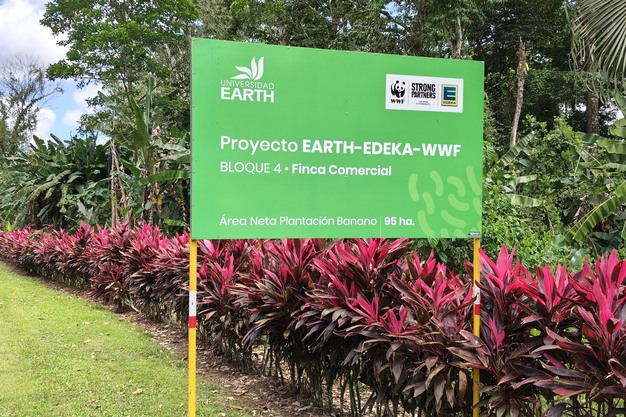
Around 20% of Earth's banana farms are managed under a special programme developed in partnership with German retailer EDEKA and the World Wildlife Fund (WWF). The area is being used to trial regenerative farming practices: reducing herbicide use, developing alternatives for nematode control, monitoring biodiversity, cutting greenhouse gas emissions, and improving working conditions for farm workers.
 © FreshPlaza
The ambition, as Jiménez describes it, is to find a middle ground between conventional and organic banana production. "Organic isn't for everyone. But the way we're currently growing bananas isn't sustainable in the long run. We need to find an alternative," he says.
Fully organic production is largely unviable in the humid tropical climate where the plantation sits, but conventional methods are becoming increasingly problematic. The project aims to serve as a reference model for the sector as a whole.
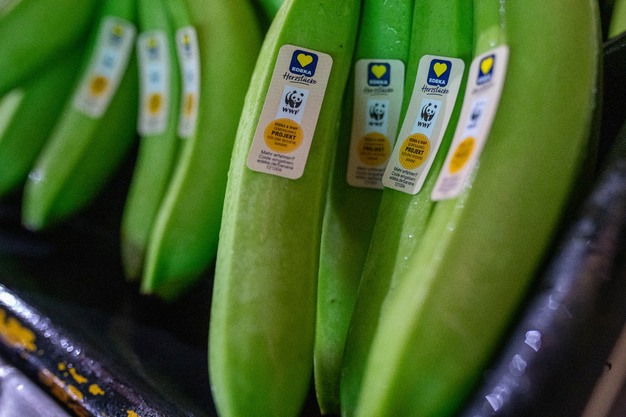
The commercial challenge, however, is considerable. Convincing consumers that this approach justifies a higher price is no easy task. "When you walk into a supermarket, you decide what to buy in a matter of seconds. It's almost instinctive," Jiménez reflects. "Getting the sustainability message across to shoppers requires the right commercial partners. those whose values genuinely align with Earth's mission."
 © EARTH Ventures
Disease: the biggest threat on the horizon
On the agronomic side, Jiménez doesn't shy away from the threats facing the banana sector. Black sigatoka is currently the most pressing concern in Costa Rica. "The fungus has evolved. The climatic conditions we have now are very favourable for it, and we have fewer and fewer tools to control it. The underlying problem is that the global banana sector is simply too small to attract major investment in new fungicides. Most of the products currently in use were borrowed from other crops. We have no new molecules, and the traditional alternatives are becoming less and less effective." The only viable long-term solution, in his view, is resistant varieties.
As for Fusarium Tropical Race 4, Costa Rica remains free of it for now, but Jiménez has no illusions. "We'll be next. That's a given." He sees three essential responses: resistant varieties, strong organisational discipline, and soil health.
 © EARTH Ventures
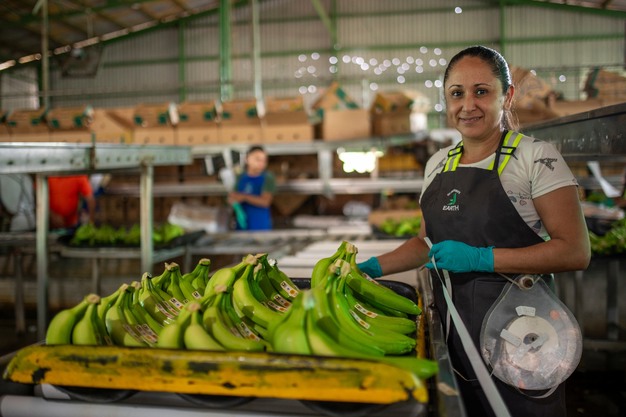
On the moko front, Earth itself reduced cases by 90% in just six years through consistent protocol compliance. The university is also close to becoming the first farm in the region to install on-site bioreactors to produce biological "cocktails" that control nematodes. "Our tropical soils are weakening year by year. Root systems are in very poor shape. We need to reintroduce beneficial microorganisms on a large scale to restore the soil to the natural state it was in when we started," Jiménez notes.
Room for one more
Earth is actively seeking new commercial partnerships in Europe. Jiménez believes there is capacity for one more significant client, ideally a retailer with strong sustainability credentials and a customer base that values the story behind the product over price alone. Earth took part in Fruit Logistica 2025 through Procomer, Costa Rica's export promotion agency, primarily to strengthen its relationship with EDEKA, and plans to continue attending trade shows.
"Earth doesn't just sell bananas," Jiménez concludes. "It sells a model of education, sustainability, community impact, and responsible farming—that, along the way, also produces very good bananas. There's a powerful story behind every banana we offer."
 For more information:
Adrián Jiménez Zúñiga (Commercial Crops Manager)
Earth University
Costa Rica
Tel.: +506 8315-4816
[email protected]
www.earth.ac.cr
Fernando Gil (CEO Earth Ventures)
Tel.: +506 2713-0000
[email protected]