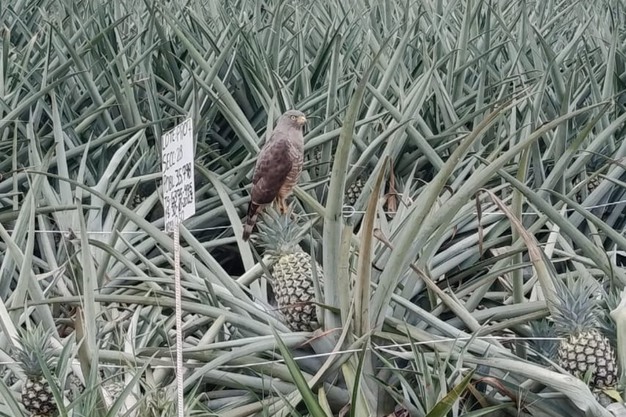
In the green hills of northern Costa Rica, a pineapple company is doing something no one else in the country dares to claim: growing entirely without pesticides. But selling that story to the world? That's the harder part.
"Right now in Costa Rica, we are the only company with pesticide-free certification," says Brandon Hernández Suárez, sales manager of PCC – Piñas Cultivadas de Costa Rica. The company is based in Santa Rosa de Pocosol, in the north of the country, and has quietly built one of the most sustainable pineapple operations on the continent.
Yet paradoxically, not all of their fruit reaches consumers with that certification visibly attached. "Our production is all pesticide-free, but right now we cannot sell the pineapple with the tack in the crown," Hernández explains. The reason is frustratingly simple: most customers aren't willing to pay extra for it—at least not yet. Market preferences vary wildly. "France prefers pesticide-free, but Italy prefers coloured fruit."
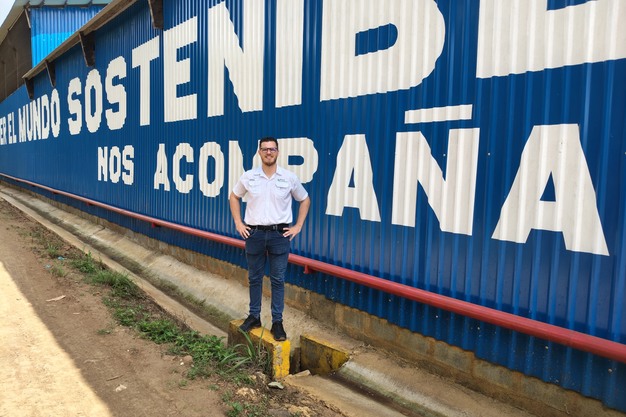 © FreshPlazaBrandon Hernández Suárez, sales manager at PCC – Piñas Cultivadas de Costa Rica
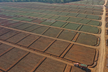
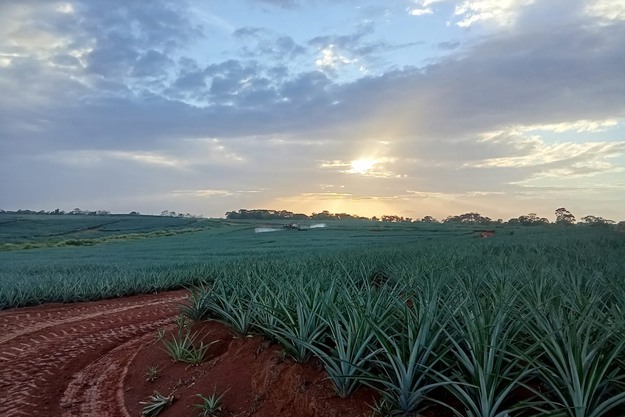
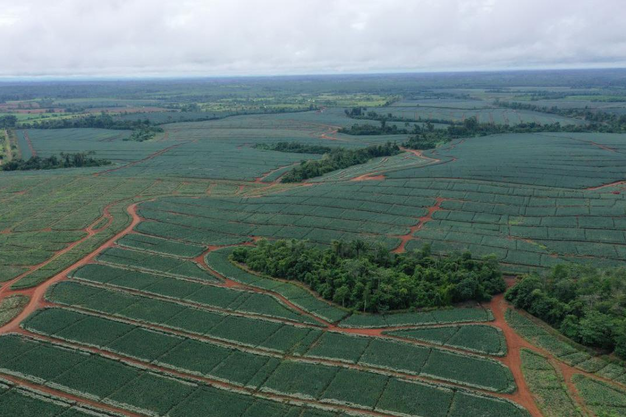
PCC currently cultivates more than 1,400 hectares of pineapple, shipping roughly 45 to 55 containers per week, about 2,900 containers per year.
America first, Europe second
PCC's main markets are the United States, which accounts for approximately 60% of sales, and Europe, making up the remaining 40%. The company has also been testing the waters in Russia, handling around one or two containers per week. Hernández doesn't sugarcoat the risks: "I think it's a dangerous market because the transit time is very long — around 28 to 30 days — and the payment terms are very complicated." PCC currently requires upfront payment for all Russian orders.
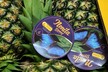
In the U.S., PCC works closely with Honeybears, a trader and importer that shares its sustainability vision. Together they developed "Topless"—a crownless, pesticide-free pineapple now sold in Sprouts Farmers Market, a U.S. retail chain focused on organic and clean-label products. "They share the same vision about trying to change the world and be different and do special things for our environment," Hernández says.
 © Grupo Los Nacientes
The circular economy behind the fruit
Perhaps PCC's most remarkable achievement is what happens after the pineapple is harvested. Through its sister company Biopro, PCC has built a circular economy model that has slashed agrochemical use by 82% compared to conventional farms.
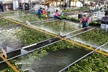
Nothing goes to waste. Crowns and pulp are either fed to cattle or turned into compost. Liquid waste flows into a biodigester—with a capacity of one million liters—that produces two outputs: methane gas for energy, and a mineral-rich liquid used to make biofertilizers that go straight back onto the fields.
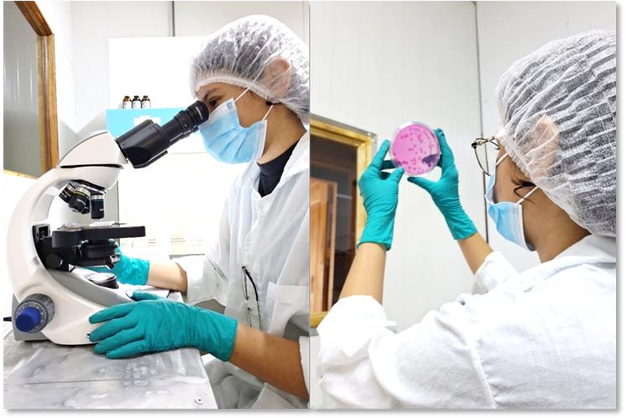
Biopro also develops biocontrol products using fungi and bacteria to target harmful insects. "With this product, we only attack bad insects, but not other animals. We want to create a balance in a good ecosystem." Among the pests in their sights: a beetle that attacks pineapple roots and fruit, and the Tekla butterfly.
 © Grupo Los Nacientes
"Entomopathogenic fungi allow us to biologically control pests and diseases across the plantation's 1,400 hectares," says Ashlin Osorio, who is responsible for verifying the quality of the fungi. Both the microalgae and the natural extracts, as well as the biolaboratory, are part of Biopro, which is made up mostly of women heads of household from rural areas of the country.
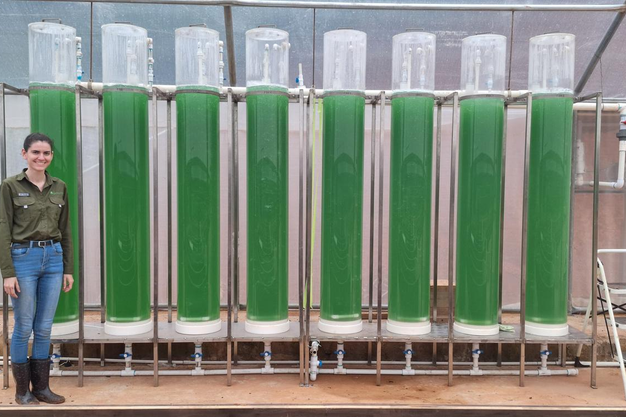
The company also produces biostimulants under its own brand—including Biollenado, which helps manage natural flowering* and plant stress resistance, and a spirulina-based product designed to boost fruit size and quality. These products aren't kept in-house: Biopro sells them to other farms, spreading sustainable practices beyond PCC's own fields. Over 300 solar panels round out the eco-credentials of the facility.
 © Grupo Los Nacientes
"Microalgae allow us to biostimulate the plant, helping to improve its resistance to diseases, cope with episodes of stress, and achieve better fruit filling," says Ana Castro, a biotechnologist who has developed and technically advanced a microalgae project, specifically involving spirulina.
Climate, oversupply, and the cost of a strong colón
For all its innovation, PCC is not immune to the pressures facing the broader industry. Climate change tops the list. "For the first time," Hernández notes, temperatures in the region dropped to 16 degrees Celsius. That kind of cold triggers internal breakdown in the fruit, known locally as mancha de agua, and unusually heavy rains damage the roads needed for harvest logistics.
Then there's oversupply. Costa Rica has been expanding pineapple production at a pace that market demand simply hasn't matched, pushing prices down. Hernández links part of the problem to economic uncertainty in the US: "The people are thinking more about whether they want to buy pineapple or not." On the upside, tariffs on pineapple have reportedly been eliminated under the current U.S. administration.
 © Grupo Los Nacientes
Currency is another headache. The Costa Rican colón has been appreciating against the dollar. That's bad news for a company that gets paid in dollars but pays its workers and suppliers in local currency. Labour competition is growing too, particularly in the north, where multiple pineapple producers are expanding simultaneously. PCC employs Nicaraguan workers near the border, providing transport and legal guarantees.
Growing organic, growing the story
Looking ahead, Hernández sees real opportunity in the shift toward healthier, more conscious consumption. "Right now, the new customer — younger people — prefer healthy food over conventional food." His message to the market is simple but pointed: the pesticide-free story is a genuine differentiator. "That is a USP for the market."
An organic pineapple project is already underway near the existing facility, with around three hectares being planted every week. This production won't go fresh; it's destined for processed goods like juice, dried pineapple, and snacks.
About the company
PCC is part of the Los Nacientes Group, a family-owned agroindustrial conglomerate with over 40 years of experience, led by Luis Arturo Salazar Rodríguez and his daughter Jennifer. Alongside PCC, the group includes FEE, an avocado operation in Upala, Biopro (biostimulants, biofertilizers, and biocontrols), and Maderas Cultivadas de Costa Rica, a timber and wood products company managing some 4,700 hectares of Melina across Costa Rica and Nicaragua. PCC itself launched in 2016 as part of the group's diversification strategy.
 © Grupo Los Nacientes
PCC holds certifications including GlobalG.A.P., Rainforest Alliance, LEAF, Nurture, and its prized pesticide-free certification by Kiwa. The company already exhibits at Fruit Attraction in Madrid and plans to appear at Viva Fresh Expo in Texas and the Organic Produce Summit in Monterey, California.
*Natural flowering in pineapple is triggered by cold, drought, or ethylene stress once the plant is mature, but its unpredictability is why commercial growers prefer controlled induction for uniform production.
 For more information:
Jennifer Salazar (Commercial Manager)
PCC – Piñas Cultivadas de Costa Rica
Pocosol, Alajuela, Costa Rica
Tel.: +506 2105-3580
[email protected]
www.losnacientes.com