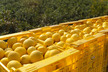
Ain Sokhna Port handles around 60 per cent of Egypt's citrus shipments, supporting the country's position among the top global exporters. The port connects Egyptian production areas with markets in the Gulf, India, and the Far East, supported by cold chain infrastructure for perishable cargo.
The port includes two dedicated reefer berths with capacities of 584 and 320 plugs. This infrastructure supports temperature control from storage through vessel loading. Ain Sokhna can accommodate multiple vessel types, including LNG carriers, dry bulk ships, and cruise liners, with ongoing capacity expansion.
With a quay length of 1.3 kilometres across three berths, the port handles around 1.75 million TEUs annually and employs more than 1,000 workers. The terminal has a capacity of 10,714 TGs or 38,424 TEUs, with a yard stacking area of approximately 2,340 TGs or 10,530 TEUs. Facilities are designed to handle large vessels and connect to international shipping networks.
In addition to maritime operations, the port offers rail and road connectivity. Daily rail services to Cairo's industrial areas move up to 60 TEUs per trip, supporting cargo flows while reducing emissions compared with road-only transport. The port is linked to a six-lane highway serving a consumer base of around 18 million people.
Operations cover storage, yard handling, and quayside activities, alongside intermodal transport and value-added services. This structure supports cargo movement across different sectors while maintaining trade flows.
For fresh produce supply chains, the port's infrastructure supports export efficiency. Reefer capacity, multimodal transport links, and vessel handling capacity contribute to maintaining product condition and facilitating access to export markets.
With global demand for citrus continuing, logistics capacity at Ain Sokhna supports Egypt's export volumes and access to international markets.
Source: Food Business