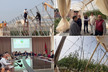
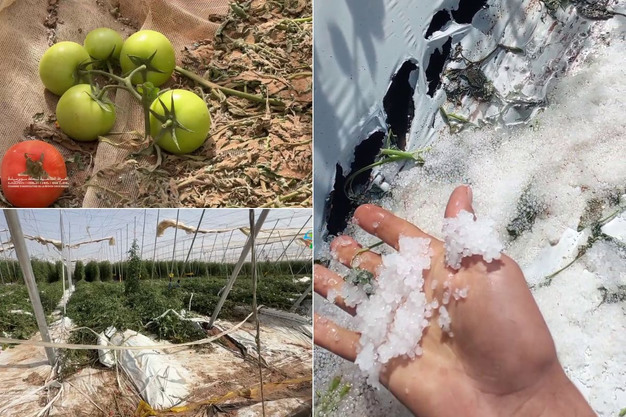
The damage caused by the storm that hit the Souss-Massa region between 26 and 27 February, which was particularly severe around Chtouka, continues to reverberate. Many growers remain adamant that the losses are catastrophic in scale, and the full extent of the impact has yet to be fully assessed. The consequences are already being felt in the markets, as high-quality tomatoes are becoming scarce in both the local Moroccan market and the export market.
A grower-exporter from the Chtouka region, speaking on condition of anonymity, describes a "seriously worrying situation". He says, "A month after the events, no one can yet estimate the damage. But time should soon reveal the full extent of what has happened."
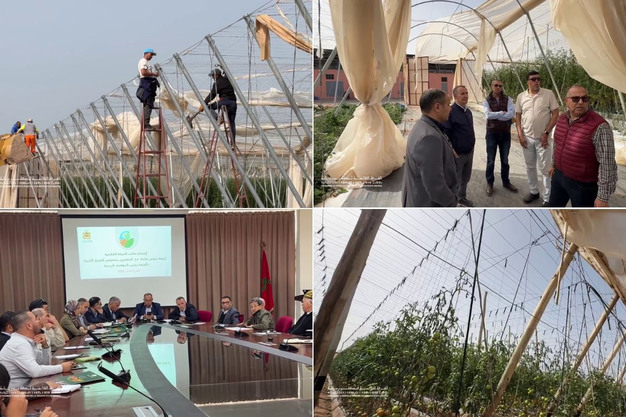 © Agricultural Chamber Souss Massa
Relevant public services, in conjunction with growers' representatives, have established a committee to assess the extent of the losses. However, some growers are skeptical of the assessment process. A grower close to this process, speaking on condition of anonymity, states, "Public services have done their job well. However, the body responsible for assessing the damage is delaying the publication of its findings, which we regret."
The same source asserts that the financial losses are catastrophic for many producers: "The losses amount to no less than one million MAD per hectare, between lost crops and fallen greenhouses that need to be rebuilt. For many growers, this means unpaid loans to their banks, and in some cases, the loss of their collateral assets. Some small-scale growers will not recover."
Another industry source close to the assessment process confirms: "We are indeed seeing a delay in the publication of the investigation's results. From what we understand, public services are being cautious about releasing figures that would commit them to compensation payments. It appears that the actual losses incurred by growers exceed what the government is willing to compensate, all the more so while many growers have not yet received subsidies for last year's tomato production, nor even for the construction of greenhouses two years ago. An initial figure of 4,000 hectares of destroyed greenhouses was unofficially cited at a trade show, but remains to be confirmed. In any case, a storm of this magnitude is without precedent and naturally entails a certain amount of confusion."
 © Agricultural Chamber Souss Massa
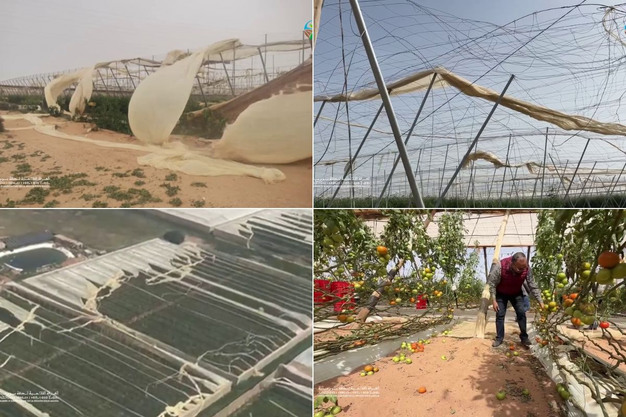
Hundreds of greenhouses that collapsed in the strong winds at the end of February still lie on the ground due to a shortage of labor and supplies. One grower says, "We have to admit that certain people have taken advantage of our crisis. The labor cost to rebuild a greenhouse has risen from 6,000 MAD to 35,000 MAD. This can be considered normal, given that damage was widespread and all growers were trying to salvage what they could, creating a rush. We also observed a shortage, followed by a sharp rise in prices for plastic, shade nets, wire, and even plant protection products."
According to the aforementioned grower, the rise in prices for greenhouse materials is exacerbated by the closure of the Strait of Hormuz, which has led to a shortage of plastic pellets in Morocco.
The same source warns, "there is an enormous risk of delays for the upcoming tomato and other early vegetables season. Unless measures are taken to facilitate the supply of raw materials, there is a high risk that the launch of next season's tomatoes and other early vegetables will be delayed. Without properly equipped greenhouses, it is impossible to order seedlings from nurseries. We are already anticipating a delay of two to three months in the growing season."
The Minister of Agriculture, after conducting a field visit and assessing the extent of the damage, pledged during a meeting with growers in Agadir to restore subsidies for greenhouse tomato production to 70,000 MAD per hectare, and to release last year's subsidy, which has not yet been distributed to all producers. One grower comments, "These subsidies are insufficient to cover all the damage, especially since many of us haven't even received last year's subsidies yet."
"The right course of action must begin with making the loss assessment public. Next, the government has to help growers get through this tough time and support them in their production efforts," he says.
 © Agricultural Chamber Souss Massa
The storm that struck the Souss Massa region and the damage it caused have been described as extremely rare and unprecedented in the history of commercial greenhouse production in this region, which is the main production hub for tomatoes and early vegetables destined for export.
Another storm, although less severe, hit the region this week, between April 6 and 7. Winds reached speeds of 80-100 km/h, damaging newly recovered greenhouses and further complicating the situation.