 © CAPCU FarmingLate summer rain and overcast weather are not very welcome to Polokwane vegetable farmer Francois Fourie, emerging from weeks of continuous rain culminating in severe flooding in Limpopo towards the end of January.
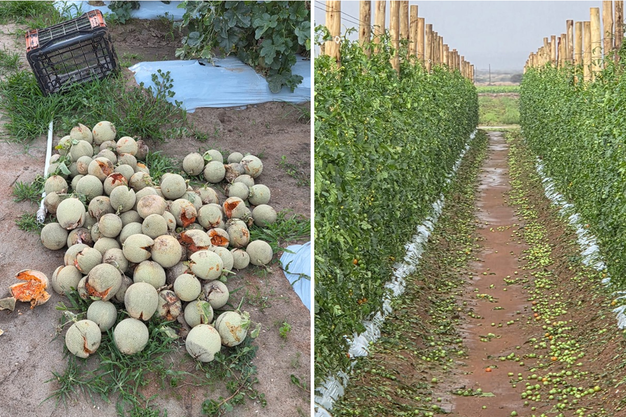
So much rain did they have, he says, that their melons split en masse at the blossom end and their watermelons developed white cracks in their flesh to an uncontrollable degree. They could barely deliver 5% of their retail melon and watermelon programme this year. (He quips that the pigs down the road got to savour GlobalG.A.P.'ed snacks.)
Right: peppers peppered by hail in November
Then the sweetcorn crop was lost to a "nasty" hail storm at the end of November. Between the rain and the hail, it's been a difficult year to farm, he says, and by now he'd like to see the back of rain (they've just had another 170mm over the previous seven days), and sweet peppers are colouring slowly in the dull weather.
What they'd like is sustained sunshine and heat to get cucumber production moving again: market supplies are so low at the moment that first-grade cucumbers sell out on some days.
"These are the best prices we have seen during the past ten years that we have been growing cucumbers," he says. "For XL cucumbers, I obtained R280 [€14.50] for a carton of fifteen, R250 for large, and R220 for mediums. The prices are excellent. Just a pity our volumes are so low, so it doesn't really help."
 © CAPCU Farming
Melons bursting due to excessive rain, left, and hailstorm damage to tomatoes
Enlisting the help of neighbouring ruminants
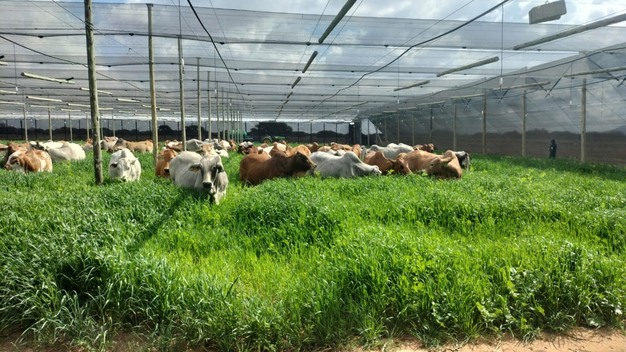
Outside of the watermelon growth season, the fields, both under cover and open land, are planted to a grass, legume, and brassica mixture formulated to draw salts from the soil. He's happy to note, he says, that this is not to rectify any mistake they'd made but as a precautionary measure, and yearly soil analyses show they're tipping the salinity scales in the right direction.
The grasses pull the salts into the leaves and are foraged by a neighbour's Boran herd, who go back home before they've had time to return it in digested form to the soil. On open land where the sweetcorn and green beans are grown, the grass is cut, baled, and sold to game farmers in the district.
 © CAPCU Farming
After the melon harvest, a cover mixture draws up salts, consumed by a neighbour's Boran herd and expelled elsewhere
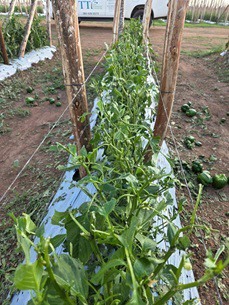
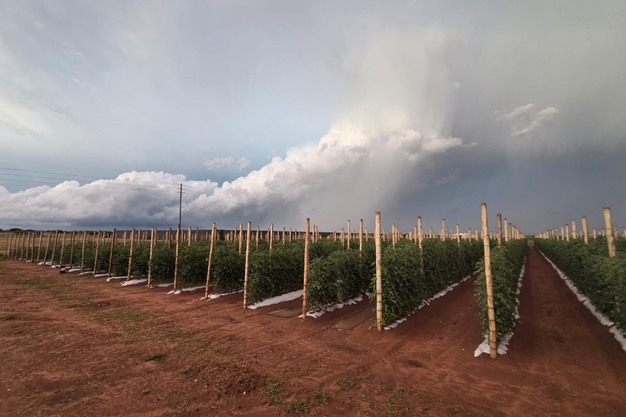
The plastic weed mulch, in place during the melon and watermelon growing seasons, reduces herbicide use, but it does come with the downside of increasing plastic waste on a farm. "I kept away from using plastic to cover the ridges and smother weed growth for a long time," Fourie says. " I'm not crazy about the plastic, but it does bring the benefit of bringing down water use, too."
The plastic mulch can only be used for a single season, and it's removed in order to sow the cover crops. This year, despite the rained-out melon and watermelon crop, they went to the trouble of washing the many metres of discarded plastic strips. A plastic recycler in Polokwane accepted the cleaned discarded plastic mulch, not for payment, but it's off the farm and into a proper waste stream, he notes.
 © CAPCU Farming
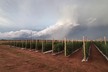
Giving thought to the post-user life of the plastic mulch, employed as an alternative to herbicides (in the background, a hailstorm approaches, November 2025)
For more information: Francois Fourie
CAPCU Farming & Turf Technology Irrigation
Tel: +27 83 626 6573
Email: [email protected]
https://tt-i.co.za/