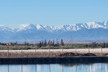
Morocco has emerged from a seven-year drought, recording significant and exceptional rainfall and snowfall between September 2025 and February 2026. This improvement has brought indicators back into the green, particularly with regard to increased water supplies and dam fill rates. In officially announcing the end of the long drought, the government has ensured the continuity of the seawater desalination policy throughout the country, as well as projects for "water highways" connecting different basins.
 © Elana Shabaily
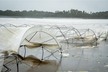
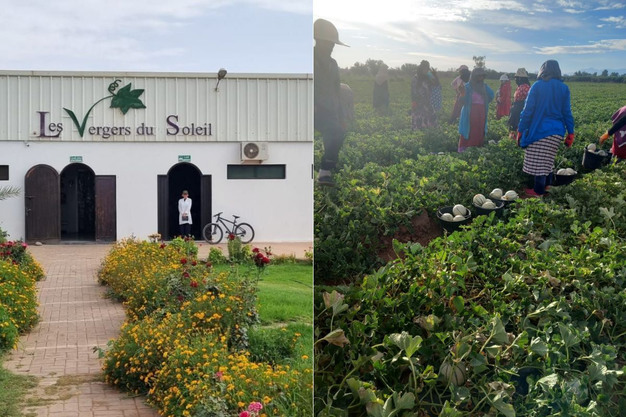
In the agricultural sector, recent rainfall has boosted morale despite excess stormy weather that caused losses in northern regions, particularly Gharb and Loukkos. Growers unanimously point to improved production conditions across several regions and for a wide range of products. Among them is Rafe Shabaily, director of operations at Vergers de Soleils, a company operating in the Taroudant and Marrakech regions.
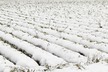
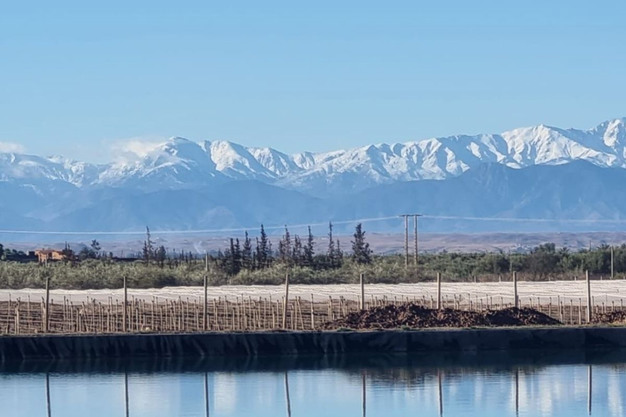
The grower says, "This has been the best winter we have seen in quite some years. The principal production regions of Marrakech and Taroudant/Agadir have benefited greatly from good rainfall and cold accumulation without experiencing the negative effects of flooding that have affected the North of Morocco and certain regions in southern Europe. The reservoirs are at their best levels in a long time. Nationally, the average fill is over 70%, and this continues to improve as the snow in the Atlas starts to melt."
 © Elana Shabaily
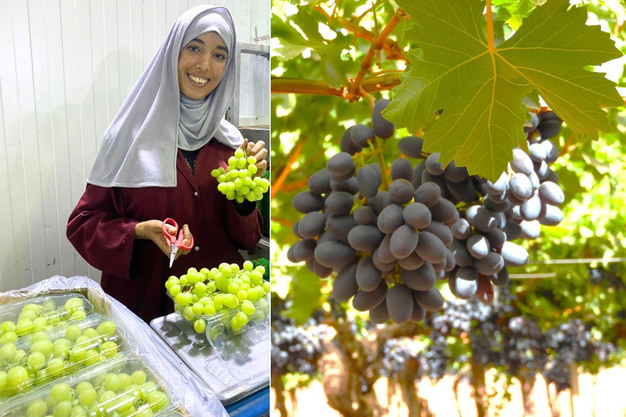
The regeneration of the water supply unleashes production potential previously constrained by drought. This impacts not only volumes but also varietal development and crop diversity. Shabaily cites the example of table grapes, his specialty: "The spread of varieties will increase in forthcoming years as breeders start to establish agreements with nurseries here in Morocco. This will have a commensurate effect on expansion of the table grape industry as a whole, as ease of access to suitable varieties will facilitate the changes we already see, for example, large citrus companies in the south look to diversify due to the lesser demands of grapes on available water."
Improved production conditions also bode well for quality, whereas drought has generally led to smaller sizes and challenging phytosanitary conditions across most products. "We already see that the bud break in the earlier table grape varieties is significantly more advanced than the previous two years, but there is a long road to travel yet," Shabaily adds.
 © Elana Shabaily
The ability to immediately leverage these positive developments, however, is contingent on the timing and seasonality of each product. As the grower explains, "For some products, like table grapes for instance, it is too early to say how this season's yields will be affected. Pruning finished only a couple of weeks ago, and the first signs of bud break are just upon us. What can be seen is that not all the effects were beneficial, particularly in horticulture. Melon producers in our region found it difficult to access their fields for planting due to the heavy rains, and hence a sizeable percentage was planted later than programmed. How this will affect returns will now depend very much on the market and whether or not these same delays will affect southern Europe also."
When looking at the reactions of industry players to the rainfall, what stands out is that the end of the drought has boosted growers' confidence after many years of uncertainty that led to shy, if not frozen, investment. "As a company, we have already started to extend our production again as both the recent rainfall and the realization of desalination projects, reservoir building, and improved water networks between the regions come into play and give us more confidence in the future. We have also been able to increase our offer to the market by affiliating capable growers who market their produce with us. This will continue strategically and prudently," Shabaily concludes.
For more information:
Rafe Shabaily
Les Vergers du Soleil
Email: [email protected]
www.lesvergersdusoleil.com