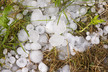
The latest storms that have hit the Spanish region of Andalusia have caused more than 10,000 incidents and forced more than 11,000 Andalusians out of their homes. There are also reports of "losses and millions of dollars' worth of damage to infrastructure affecting the main economic sectors of the autonomous community," says the regional government, warning that in some areas, there won't be a clear picture of the actual extent of the damage "until the water recedes."
Although the Regional Council of Agriculture already estimates that about 20% of the Andalusian agricultural production has been lost, which is already a catastrophe, COAG warns that "this figure is still bound to increase, as the storms are not over, water is still being released by reservoirs, and some damage has yet to come to light. The economic impact could exceed 3,000 million euros. It is estimated that around 75% of Andalusia's agricultural production has been affected to one degree or another.
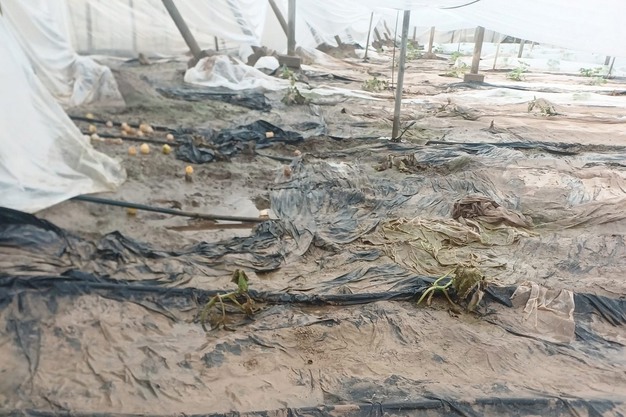
In the most easterly province of the region, Almeria, the rains have had "remarkable fungal and rotting effects on crops," says Coexphal Manager Luis Miguel Fernández. "However, the wind these days has contributed to mitigating these effects, allowing the drying of the plants and thus limiting the proliferation of fungal pathogens. In this context, wind plays a key role in counteracting the effects of excessive moisture."
The most unfavorable aspect for Almeria growers is the lack of sunlight. "Due to the many cloudy days, the photosynthetic capacity of the plants has been affected, and yields have been reduced. Production is estimated to have fallen by around 20% compared to the same period last season. Harvesting used to take place twice a week, but now it's only happening once every ten days.
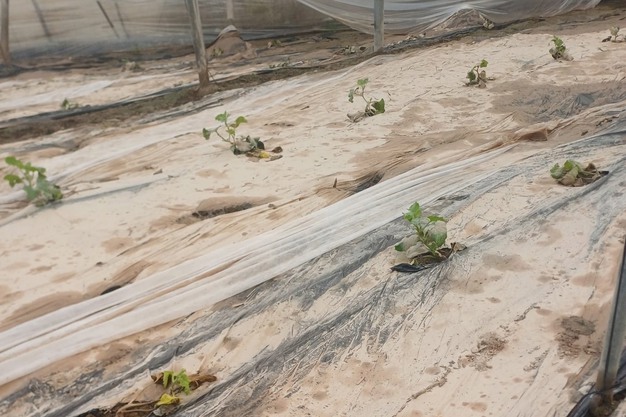
As far as agricultural infrastructure is concerned, there has been some damage, especially in the Dalías area, where some old greenhouses have collapsed. There have also been breakages of plastic sheeting, "although, in general, no severe incidents have been reported."
"In spite of this meteorological context, the greenhouse production model has once again shown its strength," he says. "Protected structures keep plants and fruits safe against extreme climatic phenomena, reducing risks and guaranteeing continuity in the supply. This highly efficient and sustainable system ensures that Europe can receive fresh vegetables even at the most difficult times of winter, and that's a testament to the sector's resilience and responsiveness."
Shattered greenhouses and crisis in Huelva's berry supply
While representatives of Huelva's berry sector, together with producing and marketing companies and cooperatives, were at the Fruit Logistica international trade fair in Berlin, Huelva was once again hit by another severe storm, Marta. This has caused even more damage to a sector that has been suffering the impact of adverse weather since the beginning of the season.
"When it rains, it pours," says Rafael Domínguez, manager of Freshuelva, the Association of Strawberry Growers and Exporters from Huelva. "We still hadn't recovered from the damage caused by Storm Kristin in late January. We have been affected by too much rain and cold weather since the beginning of the season, and now, Storm Marta has hit us hard."
The storm has once again caused damage to greenhouse infrastructures and tunnels devoted to strawberry, raspberry, blueberry, and blackberry cultivation, destroying a significant amount of fruit in plantations located in different parts of the province. Fields and roads have again been flooded, preventing access to plantations.
In addition to the fruit that has been lost directly in the field, there have also been plenty of damages in storage. "At the moment, we are harvesting about 50% of the volume we usually have at this time of year. And of this 50%, a lot has been damaged, mainly due to rot caused by excess moisture. As a result, very limited volumes are reaching the fresh market, taking harvesting and handling costs into account," says Rafael Domínguez.
"The situation is very concerning, and for many it is truly ruinous. There's a severe shortage in the supply from both Spain and Morocco, where they are facing a similar situation, and other countries, such as Greece, are taking advantage of that to position themselves in European markets, especially in Germany," says the manager of Freshuelva.
"In addition, it is worth recalling that maritime traffic in the strait has been closed for many days and has only recently been opened, so we are also dealing with a shortage of laborers from Morocco," he says.
"At Freshuelva, we are asking the Andalusian Regional Government to include us in the aid package for the areas affected by the storm. It will take us at least two weeks to recover a certain degree of normality," says Rafael Domínguez.
In the meantime, the province's citrus and avocado harvests, which were also fully underway, have also been affected.
Critical situation for the citrus season in the Vega del Guadalquivir in Cordoba
The persistent rains in the Vega del Guadalquivir are causing a severe crisis in Palma del Río, whose main economic engine, agriculture (especially the citrus sector), is under serious threat. Numerous orchards have been flooded by the rivers Genil and Guadalquivir, preventing the harvesting and saturating soils, which are incapable of absorbing more water.
The President of Palmanaranja, Antonio Carmona, describes the situation of the fruit supply as "critical." At the moment, warehouses are only working at 40% or 50% of their capacity, and rain forecasts are making it difficult to resume harvesting. Thus, many companies involved in national and international distribution may be left with no stock. This standstill is also facilitating the entry of fruit from third countries to make up for the lack of local products.
Faced with this situation, some crews have been working intermittently, making the best of the few dry intervals, and working even in some rain. For many families in the municipality, whose main source of income is citrus fruit production, the activity is a serious economic problem.
The social impact is already clear. Mayoress Matilde Esteo has reported a drastic increase in requests for food aid managed by the Red Cross. From around 15 requests prior to the storm, the number has risen to nearly 200, which shows the extent of the crisis among the most vulnerable families.
On the agricultural side, excess water, moisture, wind, and hail are taking a severe toll on the fruit. Fungal attacks are causing oranges to fall, and the impossibility of accessing farms is preventing the application of phytosanitary treatments. Damage is particularly severe in orchards near rivers, where flooding may affect not only the current crop, but also future seasons.
Around 40% of the production had initially been expected to be lost in the Guadalquivir Valley, but between 5% and 10% more could be added to that due to this storm. On a more positive note, the abundant rainfall has allowed reservoirs to be filled, so restrictions are now unlikely to be needed in the next irrigation season.
Damage to infrastructure, avocado, citrus, and cut flowers in Cádiz
In Cádiz, the floods have taken a toll on thousands of hectares of horticultural crops, cut flowers, and avocado and citrus fruits, among others. There has also been some serious damage to agricultural infrastructure.
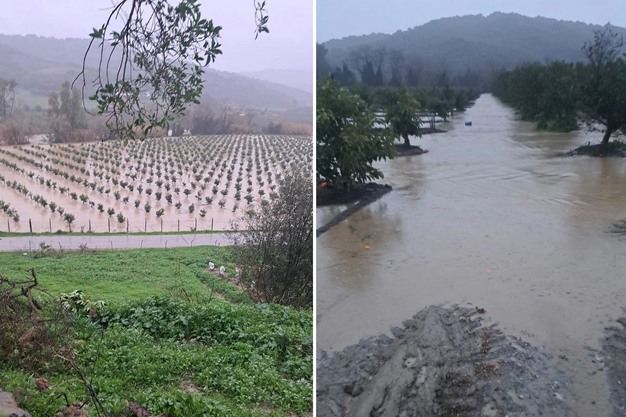
Growers in the Guadiaro Valley are facing one of the most devastating winters in recent years following a series of severe storms that have caused flooding and millions of dollars' worth of damage. Farms have been flooded by the Guadiaro and Hozgarganta rivers, especially avocado and citrus crops. There has also been damage to warehouses, tools, and equipment.
 © Alcoaxarquia
This Monday, many farms have started the procedures to evaluate their losses, which are already expected to be very high. According to José Andrés Ramos Blanquer, technical director of Agropeco and secretary of the San Pablo de Buceite Irrigation Community, Storm Francis had already destroyed more than 30% of production in municipalities such as San Martín del Tesorillo, Jimena, and Castellar. After the passage of seven other storms in just five weeks, the losses continue to increase. Of the 4,000 hectares of irrigated land in the valley, some 2,000 have been affected, and around 1,500 hectares of unirrigated land have also suffered significant damage.
In Malaga, the rains have generally been beneficial, although damage has been recorded in accesses and avocado and mango farms, especially in areas of the Serrania de Ronda and the western Costa del Sol, where the storm has been most intense. The rainfall in the avocado-growing areas has made harvesting very difficult and is contributing to keeping the Spanish supply limited.
In Granada, the rain and wind have had an impact on horticultural crops, olive groves, subtropical crops, and fruit trees, with damage to plastic and structures, slopes collapsing, diseases spreading, and fruit falling to the ground. The situation is especially severe for avocados, whose harvesting season is currently in full swing.
Cooperativas Agroalimentarias de Granada (FAECA) is assessing the damage caused by the recent floods in different parts of the province, especially in the municipality of Huétor Tájar, where several green asparagus farms have been affected.
In Seville, the situation is "critical", with very significant production losses, the impossibility of sowing herbaceous crops, considerable losses in olive groves, and severe damage to vegetables and cut flowers, as these sectors are particularly sensitive to excess moisture.