Nepal's love for Fuji apples is getting stronger every year, and this season was no exception, says Mukesh Kumar Jaiswal, CEO of Divyani Enterprises Pvt Ltd, a Nepalese fresh produce importer. "Nepal's appetite for Fuji apples continues its upward march, with imports growing 5-8% this season to reach approximately 85,000 to 90,000 MT annually. Fuji now accounts for around 70% of all apple imports into Nepal, with Kathmandu Valley alone taking roughly 60% of national consumption as the apple shifts from an occasional treat to an everyday staple in urban homes."
Mukesh points out that this preference is not unique to Nepal. Globally, premium apples like Fuji, Gala, and Pink Lady are gaining space, while older varieties lose ground. "In 2026, premium apple prices rose by about 12 to 18% worldwide due to weather issues from Washington State to Europe. What we are seeing in Nepal is in line with global trends rather than a local exception," he says.
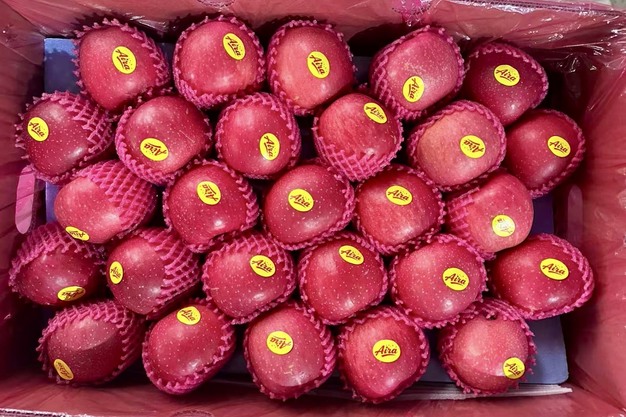
The 2025/26 season, however, was far from smooth due to unfavourable weather in China. "For a large part of the year, Nepal relied heavily on China's Yantai region, which supplies 60-70% of its Fuji imports. This year, prolonged rain in Yantai caused serious rusting issues, with 25-30% of export-grade fruit affected. Rejection rates jumped to 15-20%, compared to the usual 5-8%, compelling importers to shift more volume to Gansu province, which emerged as the more reliable origin on quality," Mukesh notes.
 © Divyani Enterprises Pvt. Ltd
December brought another layer of pressure with logistics. He explains, "Because of geopolitical issues, some shipping routes were disturbed, delaying containers by 2 to 4 weeks, and that created a big gap during the wedding and festival season. Market availability dropped by an estimated 35-40%, pushing retail prices up by 20-25% to around USD 1.50-1.80 per kg. At the same time, a 4-6% appreciation of the US Dollar against the Nepali Rupee added roughly USD 0.06-0.09 per kilo to landed costs, lifting retail prices by 17-20% year-on-year."
Despite all of this, consumers largely stayed loyal to Fuji. Instead of shifting to other fruits, most customers preferred to wait for Fuji to come back, Mukesh observes. "When faced with mixed quality, buyers deliberately chose Gansu Fuji, even though it was 15–25% more expensive. As a result, Gansu's share in Nepal's Fuji imports grew from about 15% to nearly 35% this season. Retail prices for Gansu Fuji ranged around USD 1.35-1.65, while standard Fuji traded closer to USD 1.05-1.35.
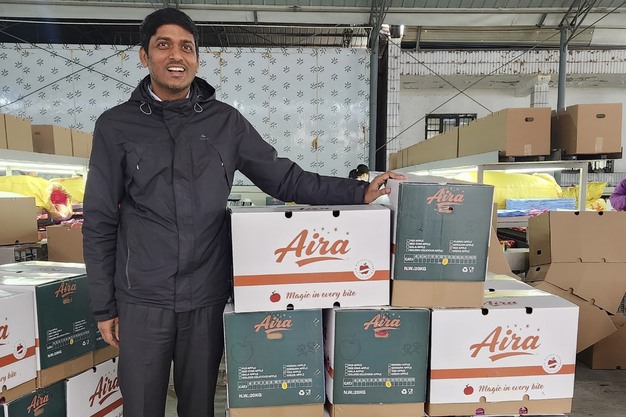
Other Chinese varieties such as Qinguan and Jiguan also saw sharp percentage growth of around 50% and 40% respectively, but Mukesh is clear that they remain secondary options. "These varieties mainly attracted temporary buyers when Fuji was short. Once supply improved, we saw 80–85% of consumers returning to Fuji," he states. In his view, these apples serve different price and value segments rather than truly competing with Fuji's core position.
 © Divyani Enterprises Pvt. Ltd
"Nepal's domestic production of Red Delicious and Fuji meets 10-15% of total volumes and offers better quality than Chinese imports, though it cannot match import scale," Mukesh highlights. He anticipates Fuji demand to rise further on the back of urbanization and a growing middle class, but emphasizes that there are clear risks in Nepal's current sourcing pattern, as almost 90% of Fuji imports come from China. "This season showed us that such concentration is risky. India remains on the radar for August-September when Chinese supply tightens, assuming quality holds."
"For us, the key message from this season is that Fuji demand in Nepal is structural, not temporary. The supply chains that evolve to meet demand with diversified origins, consistent quality, and logistics resilience will capture substantial value," Mukesh concludes.
For more information:
Mukesh Kumar Jaiswal
Divyani Enterprises Pvt Ltd
Tel: +97 79 82 53 22 850
Email: [email protected]