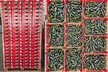
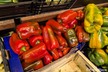
Due to the cold and rainy weather in December and January, the supply of vegetables in southern Spain and Morocco is currently limited. More weather-sensitive specialties, such as hot peppers and Sweet Bites mini sweet peppers, are the most affected by this.
"December has undoubtedly been one of the coldest and rainiest months in recent years. This has led to a drop in the supply of some products and has put pressure on prices in the chili pepper segment," says Miriam Escobar, Product Manager for Chilies at Agroatlas.
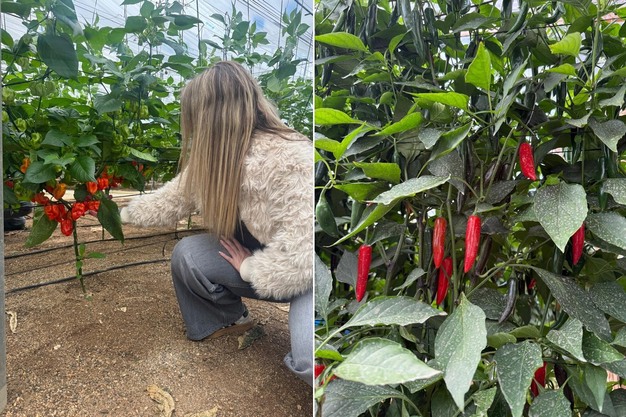 © Agroatlas
"Still, we have remained focused on ensuring continuity. We have managed to keep the supply going for almost the entire range and to meet our programs, even in such a difficult context. We have noticed a greater impact on the Padrón and Jalapeño types, although our varietal strategy allows us to work with more resistant materials and minimize volatility," she says.
According to Escobar, "although demand for these specialties is usually more stable than for commodity products, just now, after the Christmas period, consumption is beginning to accelerate and retail sales increase for many products."
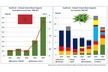
Agroatlas produces various vegetables in Morocco via its subsidiary Nature Growers, with a strong specialization in green beans and hot peppers. "We started to invest in this category around 10 years ago together with strategic partners, and since then we have achieved constant growth, at a rate of around 20% a year," she says.
Furthermore, in line with retailer demand, the company has expanded its portfolio in recent years with products providing a high turnover and added value, such as the My Cubies snack cucumber and Sweet Bites snack peppers.
"Today, we have around 80 hectares devoted to chili peppers in Morocco. In terms of scale and volume, this makes us one of the big players in the segment," says Escobar. "We work with varieties such as the jalapeño, Padrón, finger chili, cayenne, sriracha, and habanero, among others, as well as snack and Sweet Bite cucumbers."
Production is carried out from October to June and is intended for both retailers and specialist wholesalers, with the main focus on the United Kingdom, the Netherlands, and France, and to a lesser extent, on Nordic and Eastern countries.
"Consumption is growing non-stop," says Escobar. "We are seeing a very clear development of the category in retail. One of the big drivers is the introduction of meal kits: ready-to-cook packs that include fresh ingredients and recipes. But chilies are also becoming a regular part of consumer purchases. We work with 50 to 65-gram bags and also in bulk in some chains where products are bought by the unit."
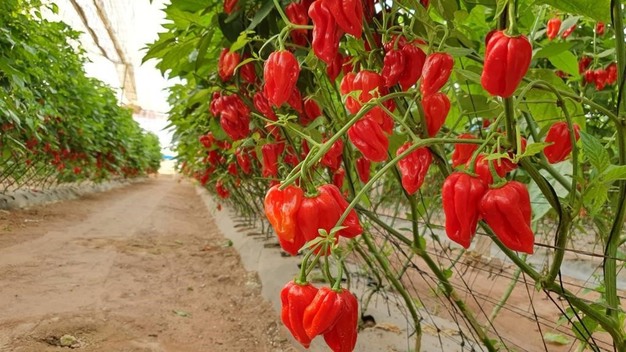 © Agroatlas
"The influence of international cuisines is giving a boost to the trend. Hot peppers have gone from being a niche product to a strategic category, marketed both fresh and in prepared dishes, sauces, and other processed products," she says.
According to the Agroatlas Product Manager, competition has been increasing in recent years, with production also growing in Spain, Turkey, and Senegal. However, the company remains focused on its value-added supply at the source.
"Morocco has a strong competitive advantage: a milder weather in winter, proximity to Europe, and the capacity to respond. And that is where we stand out the most," says Escobar. "We differentiate ourselves through a very extensive range, consistent volumes throughout the season, and great flexibility to deliver mixed pallets with multiple varieties. This is essential for our customers, as it reduces complexity, improves efficiency, and allows us to boost the category on the shelf.
"The segment has a very promising future," says Escobar. "We continue to grow in our current markets while also seeking new opportunities outside Europe. The Middle East offers significant potential due to the high consumption of spicy foods and their relevance in local gastronomies."
The specialist points out that the United Arab Emirates stands out as a strategic destination. "It is directly connected by air with Morocco, although logistical costs are a limiting factor. Even so, there are very clear opportunities for well-structured programs."
According to Escobar, one of the greatest challenges for the sector is the growing pressure from pests and diseases and the effect this has on yields. "Our answer is clear: betting on genetics. We are incorporating more resistant varieties, although the cost is higher, because this is the only way to guarantee consistency and continuity in the supply."
Agroatlas also has an experimental greenhouse in Morocco, where it is working together with breeders to test new materials. "The aim is to maintain our competitive advantage: to ensure stability in the production, higher yields and quality protection throughout the season," she says.
Agroatlas will be present at the Berlin trade fair, Fruit Logistica, as an exhibitor in Hall 22, stand G40.
 For more information:
Miriam Escobar
Agroatlas
Tel.: +34 950 573 988
Tel.: +34 685 650 996
[email protected]
www.agroatlas.es