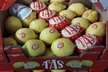
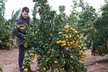
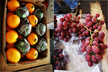
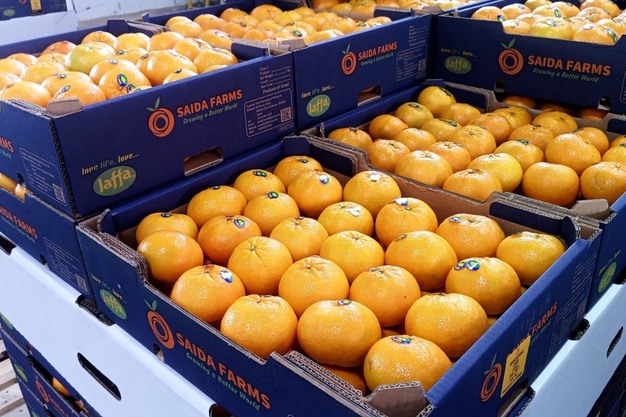
The Orri mandarin, a premium easy-peeler variety that was developed in Israel, continues to captivate global markets, says Betsalel Ohana, export manager of Planet Israel Farms: "As we enter the 2026 export season, Israeli growers and exporters are optimistic about the campaign ahead. Originating from the Volcani Center's breeding program in the 1980s, the Orri has become a flagship product for Israel's citrus industry, renowned for its long shelf life and resistance to post-harvest issues."
The yield for Orri mandarins is expected to be higher than it was last year, Ohana states. "The 2026 Orri mandarin season in Israel is projected to yield approximately 100,000 metric tons, marking a modest increase of about 5-10% over the 2025 season's estimated 92,000-95,000 tons. This uptick can be attributed to several factors, including expanded acreage under cultivation and improved orchard management practices. In recent years, Israeli citrus farmers have invested in high-density planting and advanced irrigation systems, which have helped stabilize yields despite variable environmental conditions."
 © Planet Israel
Export volumes are stable, with a small increase in total exportable yield, Ohana explains: "Comparing 2026 to the previous season, export volumes have stabilized. While 2025 was characterized by an 'off-year' in the natural biennial bearing cycle of the trees, 2026 is seeing a 5 to 8% increase in total exportable yield. Current estimates suggest Israel will export approximately 55,000 to 60,000 tons of Orri mandarins this season. While this is lower than the historical peaks seen five years ago, largely due to some older orchards being phased out or grafted to new varieties, the yield per hectare in the core growing regions of the Galilee and the Sharon plain has been impressively high."
According to Ohana, the size distribution for the 2026 Orri crop is expected to favor medium to large fruits. "There's a predominant range of 1X to 1XXX calibers, approximately 60-80 mm in diameter. This shift toward larger sizes is a positive development compared to the 2025 season, where smaller fruits, 2-3 calibers, made up a higher proportion due to uneven fruit set. Growers report that optimal pollination and fruit thinning techniques have contributed to this improvement, resulting in a more uniform crop."
 © Planet Israel
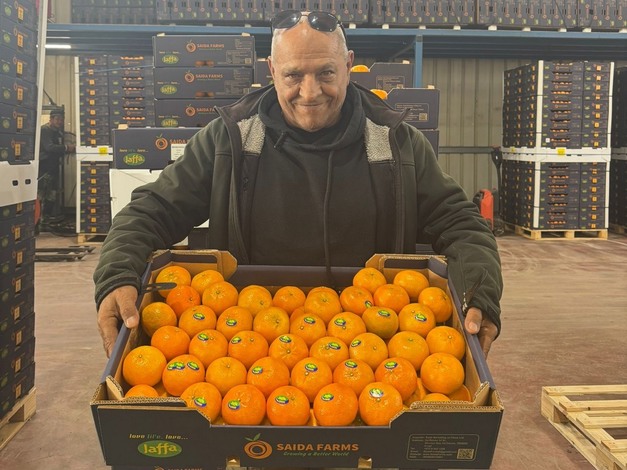
Moshe Saidi - The Founder of Saida Farms
Demand for Israeli Orri mandarins remains strong in both Europe and North America, says Ohana: "In Europe, where the variety commands a premium position, demand is particularly robust in France, Germany, and the UK, with retailers reporting year-over-year sales growth of 15-20%. The Orri's extended shelf life, up to three weeks under optimal conditions, makes it ideal for supermarket chains, and promotional campaigns highlighting its Israeli origin and nutritional benefits, such as high vitamin C and low calories, have boosted visibility."
"In North America, demand is steadily growing, showing a 12% growth, particularly in the United States and Canada, where awareness of Orri has increased over recent seasons. Retailers appreciate its long shelf life and ability to maintain eating quality after long transit times. While competition from locally grown mandarins exists earlier in the season, Orri benefits from its late-season availability, filling a crucial market gap."
 © Planet Israel
The primary export markets for Israeli Orri mandarins in 2026 continue to be Europe and North America, which account for over 70% of shipments, Ohana explains: "France leads in Europe with an estimated 25,000 tons, nearly 35% of the European market, followed by Italy (15,000 tons), the Netherlands (10,000 tons), and Germany (8,000 tons). North America, particularly the U.S. East Coast and Canada, is expected to absorb around 12,000-15,000 tons, up 10% from 2025, thanks to targeted marketing and trade agreements. Emerging markets in Asia, such as China and Japan, represent growth opportunities, with shipments potentially reaching 5,000 tons amid protocols for phytosanitary compliance."
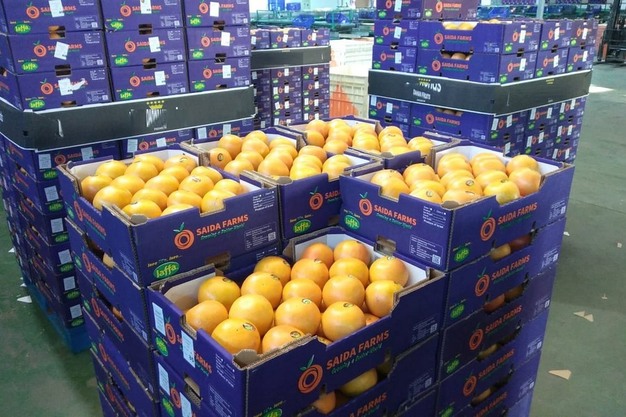
Orri mandarins are being sold for higher prices this year, but prices could soften as supplies ramp up, Ohana emphasizes. "Compared to the 2025 season, average FOB prices are projected to be 10-15% higher, depending on size, market, and timing. Prices for Orri mandarins in the 2026 season are anticipated to start strong at €2.50-3.00 per kg FOB, reflecting high initial demand and limited early volumes. As supplies ramp up in mid-season, prices may soften to €1.80-2.20 per kg, still commanding a premium over standard mandarins due to the variety's superior attributes. Compared to 2025, when average prices hovered around €2.00-2.50 per kg amid supply constraints, this year's figures represent a slight stabilization, potentially 5-10% lower due to increased volumes."
 © Planet Israel
"Historical trends show Orri prices peaking in the 2023 season at €3.00+ per kg amid global shortages, while 2024 saw dips to €1.50-2.00 per kg from oversupply in competing origins. Factors influencing 2026 pricing include freight costs, which are up 15% year-over-year, and currency fluctuations, but the variety's niche positioning ensures profitability for growers. Wholesale markets in Europe report Orri fetching 20-30% more than clementines, underscoring its value proposition."
"Retailers are accepting these higher price points because the Orri offers a 'zero-waste' proposition; its shelf life is so stable that 'shrinking' at the retail level is significantly lower than other easy-peelers. One of the most notable trends this season is the continued emphasis on sustainability and quality assurance. Growers are increasingly adopting water-saving technologies, integrated pest management, and digital orchard monitoring systems. These efforts not only support environmental goals but also enhance fruit consistency and traceability," Ohana concludes.
For more information:
Betsalel Ohana
Planet Israel Farms
Tel: +972 54 738 3436
Email: [email protected]
www.planetisrael.farm