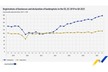
The South African rand reached its strongest level against the US dollar in three and a half years on Monday, supported by higher precious metal prices and improved investor sentiment. The currency touched 16 per dollar for the first time since June 2022 before easing slightly to 16.03 by midday GMT.
The move followed a surge in global gold prices to a new record above US$5,100 per ounce, driven by investor demand amid geopolitical risks and market volatility. Platinum prices also reached a record level on Monday. Gold and platinum are key South African export commodities, and their price performance has supported the rand, which gained about 14 per cent against the dollar last year and more than 3 per cent so far this year.
Investor positioning towards South Africa has shifted after a prolonged period of weak growth and rising debt. Market participants note improved sentiment as economic reforms progress and fiscal indicators show some stabilisation. Fund managers point to a broad re-rating of South African assets following years of underperformance.
Government bonds have drawn attention, with benchmark 10-year yields falling to their lowest levels since 2019, supported by slower inflation trends. Malcolm Charles, portfolio manager at Ninety One, said, "We've got one of the highest real yields in the emerging-market universe, which makes South Africa stand out for global investors."
Equities also moved higher, with the Johannesburg Stock Exchange All-Share Index rising 1.3 per cent to a new record. The benchmark 2035 government bond strengthened, with yields declining by 4.5 basis points to 8.1 per cent. Goldman Sachs said South African equities may benefit from local interest rate cuts, particularly in sectors that have lagged.
Attention is now turning to South Africa's first interest rate announcement of 2026, scheduled for Thursday. A Reuters poll showed that 18 of 26 analysts expect the central bank to keep its repo rate unchanged, while eight forecast a 25 basis point reduction to 6.50 per cent.
Some analysts suggest that stronger growth data reduce the immediate need for easing, while others point to the stronger rand and stable inflation as factors supporting a potential rate cut. Inflation rose to 3.6 per cent year on year in December from 3.5 per cent in November, remaining within the central bank's target range.
Source: Polity