To harvest potatoes, pears, or lemons, an occasional rainfall is indispensable. As growers adapt their crop choices to the average climate conditions of each area, they are usually satisfied with a "normal" year in terms of rainfall. That was not immediately the case in 2025 in Spain and the Netherlands, among others. Let us put some figures side by side.
Take Vlissingen. There, according to KNMI statistics, 484 mm of precipitation fell last year. The ten-year average is 765 mm. Groningen usually receives slightly more rain, and that was certainly the case last year: 741 mm. Nevertheless, precipitation in the north of the country also remained below the ten-year average of 800 mm.
In the south of Spain, rainfall is generally lower, averaging between 500 mm and 550 mm per year in Seville, known for its orange crop, Huelva (citrus and soft fruit), and Málaga (subtropical fruit), according to data from Spain's national weather service Aemet. In Almería, Europe's pre-eminent greenhouse-growing region, the average rainfall is just 200 mm.
We can therefore say that there was less rainfall in Vlissingen last year than is usual in Seville. In itself, this is remarkable, but if we look at the previous year's rainfall figures in southern Spain, the roles were completely reversed: 591 mm in Málaga, 798 mm in Seville, and 822 mm in Huelva. Seville and Huelva actually experienced a wetter year in 2025 than usual in the Netherlands. Only Almería remained as dry as ever, with 149 mm.
Murcia and Valencia also recorded wetter-than-normal years last year, with 440 mm compared to a multi-year average of 313 mm, and 694 mm compared to 461 mm, respectively.
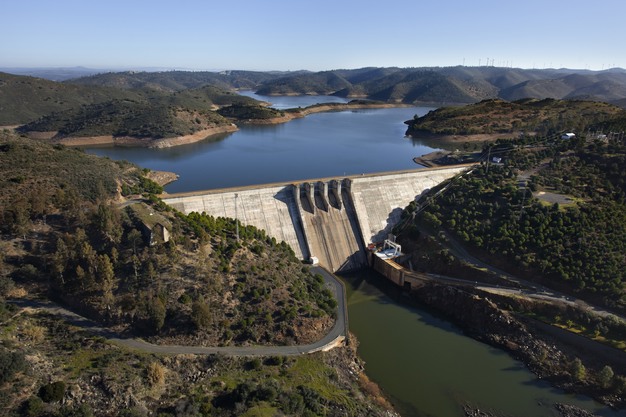 © ID 23344062 ©Tangencial | Dreamstime.com
Reservoir in Andalusia
A welcome consequence of Spain's heavy rainfall is that reservoirs have been able to fill up. Growers should worry less about water shortages for the coming season. In Seville, reservoir capacity stood at 78 per cent of the total last week, up from 64 per cent last year in Week 3 and 56 per cent as the ten-year average. Huelva showed a similar picture, at 77 per cent compared to 43 per cent last year and 58 per cent as the average between 2016–2025, according to figures from embalses.net.
Avocado growers in Málaga can also breathe a sigh of relief: water stocks are at 56 per cent, up from 28 per cent last year and 44 per cent on average. Almería remains the worry area, at 8 per cent against 9 per cent last year and an 11 per cent average. Murcia is also doing a little better than last year or the past decade, at 29 per cent compared to 20 per cent and 26 per cent, respectively. Finally, in Valencia, the basins are 46 per cent full, the same as last year and 2 per cent more than the ten-year average.