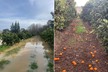
The recent heavy rains in Morocco have given citrus growers a much-needed morale boost, with short-term benefits this season in the form of improved yields and fruit quality across all varieties, but above all, restoring confidence among industry players after several difficult years. Improved production conditions come hand in hand with encouraging signs on the commercial front. Soufiane Bendennoune from Citrus Mogador comments on the latest developments.
 © Citrus Mogador
"The recent rains that have blessed Morocco lately are very beneficial; we were desperately waiting for them after long years of drought. The impact is certainly positive nationwide, but it varies from region to region. In the Gharb and Beni Mellal, we have received more rainfall than in Agadir, for example. The mood among citrus producers is at its best, and we are very pleased and confident," Bendennoune says.
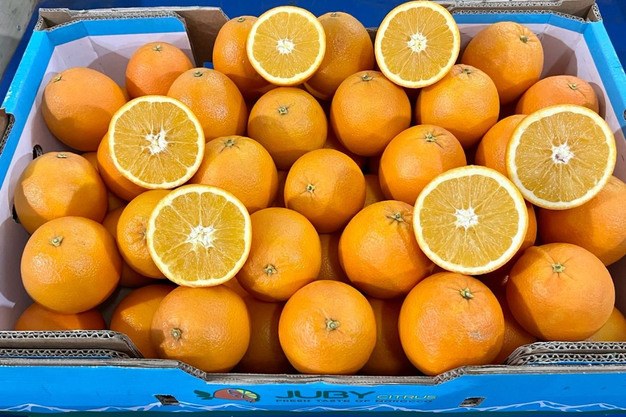
The benefits of the rainfall will be felt very quickly, starting this season, according to the grower. He explains, "It will help us to obtain larger fruit sizes and faster, more consistent coloring. The timing of the rainfall is beneficial for all varieties, especially mandarins, Navel and Valencia oranges, and later Morocco Late oranges. This weather also helps to control pests such as mites and thrips, thereby minimizing the need for intensive treatments. In the medium term, the rains will help us meet the challenge of achieving consistently high yields, a struggle we have faced for many years."
The weather, however, has slowed down harvesting, according to Bendennoune, due to accessibility to orchards, as well as to growers' practices, which usually allow two to three days of clear weather before harvesting to preserve fruit quality. A temporary complication.
 © Citrus Mogador
In the citrus industry, oranges were the first victims of the prolonged drought that hit the country. Difficult production conditions are exacerbated by an unfavorable market where fierce competition from Egypt is driving prices down. Nevertheless, this season gives Bendennoune reason to hope for a resurgence in the competitiveness of Moroccan oranges.
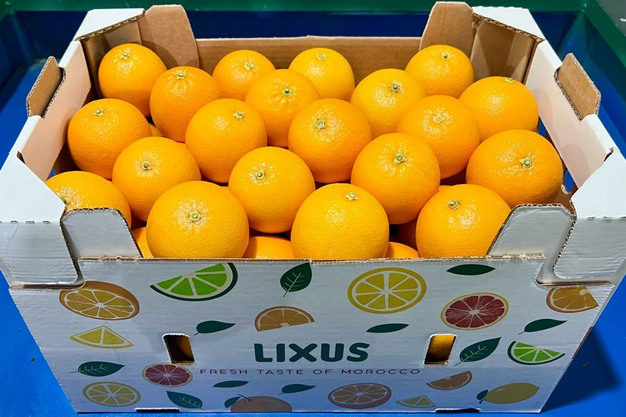
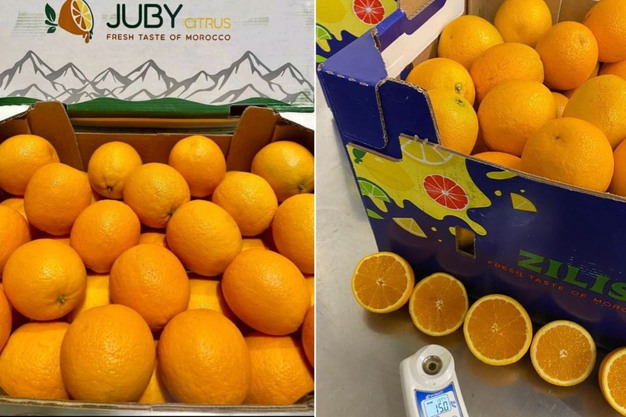
The grower explains, "The Moroccan Navel orange season has already started, as early as week 48 of 2025, and it's a pretty good year in terms of production volumes. Prices on the local market are decent, but consumption isn't high enough to absorb all the production. Moroccan exporters are managing to remain competitive in certain niche markets, including the United States and the United Kingdom. But it is important to remember that climatic conditions are not the only obstacle facing Moroccan oranges; it all depends on competitiveness with Egypt."
Moroccan exporters are watching their counterparts in Egypt and welcoming the recent developments there with relief. The resolution of the crisis in the Red Sea, although at the beginning of 2026, warns that security in the Bab Al Mandab strait remains very fragile, and the growth in local demand in Egypt, driven by the orange processing industry, are two particularly positive indicator. Bendennoune comments, "The resolution of the crisis in the Red Sea is as much good news for the Egyptians as it is for us. It means that Egyptian exporters will regain full access to their Asian markets, which account for a third of their export volumes, and therefore less oversupply in the rest of the global markets, especially Europe. The emergence of the orange concentrate industry in Egypt is also a good indicator since it reduces the volume of fresh oranges on the market, although its breakthrough last season will be difficult to replicate this season."
 © Citrus Mogador
"Overall, I can say that Morocco's orange export performance will depend primarily on Egyptian supply and then on weather conditions in Morocco. It seems that Egypt is still trying to find a balance between huge export volumes and export value, with a better geographical distribution across markets. Ideally, Egypt will finally find this balance and succeed in adding value to its oranges, including through access to the Asian market and sustained demand from local concentrate and juice factories," Bendennoune continues. The arrival of Moroccan Valencia oranges on the market will coincide with greater clarity. Expected in April, this is the timeframe announced by the largest shipping companies for a return to normal operations in the Red Sea, but it is also the peak period for demand for oranges from the processing industry, to the extent that the Egyptian Valencia orange season ended abruptly in April last season, compared to the usual end in August.
Despite this favourable outlook, it is unlikely that orange acreage will increase in Morocco in the near future. Bendennoune explains, "There is little incentive to expand acreage in the short term. The industry must first recover and revitalise itself, particularly by increasing yields per hectare, which is a more relevant indicator than acreage figures. In the Beni Mellal region, for example, if we are able to reach a yield of 30 tons per hectare, the total potential volume of citrus would be 500,000 tonnes for the entire region including more than 300,000 tonnes of oranges. We hope to return very quickly to the yield levels recorded five years ago, and most importantly, we are now confident that we're on track to achieve this performance."
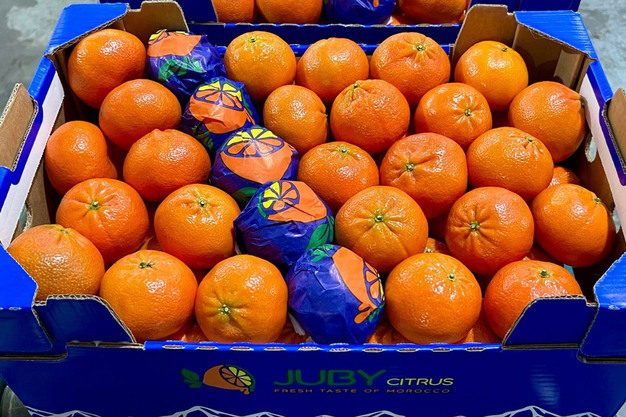 © Citrus Mogador
Ultimately, the grower emphasizes that the opportunity lies in late production with Maroc Late oranges, which stand out on the international market with a seasonality where few other competitive origins are on the market. "At Citrus Mogador, we are in business eleven months of the year, now with lemons, Navel oranges, and Nadorcott mandarins, and later with Valencia oranges, and until September with Maroc Late oranges, alongside several other citrus varieties in between."
The grower invites buyers to join him at the next edition of Fruit Logistica in February, where Citrus Mogador is a regular exhibitor. "Good winds are blowing in favor of Moroccan citrus after several years of tough working conditions," he concludes.
For more information:
Soufiane Bendennoune
Citrus Mogador
Tel: +212 690-191337
Email: [email protected]